




Drowsy Driving: A Risk for Everyone
Driver fatigue impairs reaction time and often results in crashes. While a number of factors contribute to drowsy driving, precautions can be taken to prevent falling asleep at the wheel.


The National Highway Traffic Safety Administration (NHTSA) estimates that more than 100,000 people are killed or injured each year in crashes attributed to a driver asleep at the wheel or driving while severely drowsy. As it is difficult to attribute crashes to sleepiness, this number may be even higher. Company drivers who must often drive more than the average person are at increased risk of crashes due to drowsiness.
A common characteristic of sleep-related crashes is the likelihood of them occurring at night or in mid-afternoon, when people have a natural propensity to be asleep, according to the American Automobile Association (AAA). In addition, sleep-related crashes are more likely to involve a single vehicle running off the road. These crashes are more likely to result in serious injuries. Typically, there is no indication of braking or attempts to avoid the crash.
Sleep Deprivation Dangers
Americans are often reminded about the seriousness of drunk or distracted driving. Many do not know that tired drivers are just as dangerous. A 2008 AAA survey found that two out of every five drivers (41 percent) admit to having fallen asleep at the wheel at some point.
Researchers found that extreme sleep deprivation can impair brain function as much as a 0.10 blood-alcohol level, equivalent to drunk driving. Fatigue impairs reaction time and attention, and it slows down the ability to process information in much the same manner as alcohol.
According to the National Safety Council (NSC), the human body often compensates for lack of sleep by taking “micro-sleeps.” These tiny naps last only a few seconds, but can have deadly results. A car traveling 55 mph can cross more than the length of a football field during a four-second nap.
Everyone is at Risk
Sleep is a natural function of the human body, and lack of sufficient sleep the night before or an accumulation of sleep debt can lead to serious consequences on the road. Fatigue affects reaction time, attention, and information processing — all critical aspects of safe driving.
Everyone is at risk of falling asleep at the wheel. Certain characteristics or events greatly increase that risk, including age (younger drivers tend to be more susceptible to fall-asleep crashes), disrupted sleep patterns, untreated or unrecognized sleep disorders, sedating medications, and driving patterns and the number of miles/hours traveled per day.
It’s commonly believed that commercial truck drivers are the most at-risk group for falling asleep behind the wheel, but statistics show that all drivers should be concerned.
In a 2010 AAA study, tired drivers were responsible for one in six fatal crashes, or one in eight crashes that sent someone to the hospital.
A “Sleep in America” poll conducted in 2009 by the National Sleep Foundation found that more than half of adults had driven a vehicle while feeling drowsy in the prior year, while 1 percent admitted they had an accident or near-accident because they dozed off or were too tired to drive.
Warning Signs of Sleepiness
One of the most dangerous aspects of fall-asleep crashes is that many drivers don’t even realize they are drowsy. It is important to recognize the warning signs. A driver feeling tired should stop to rest or take a coffee break if their eyes begin to close or go out of focus, their head begins to bob, the desire to yawn becomes excessive, and/or thinking begins to wander or become disconnected, etc.
Some common ways to prevent drowsy driving include getting plenty of good, quality sleep; avoid driving between midnight and 6 a.m.; take a break every two hours; and, if possible, drive with someone else who is awake in the passenger seat.
If signs of fatigue begin to show, drive to a well-lit area to take a short nap.
More Safety

Nexar-Nauto Merger Aims to Give Fleets Better Safety Intelligence Through Larger Driving Dataset
Stefan Heck tells Automotive Fleet that combining more than 10 billion miles of driving history with Nexar's AI models will give fleets deeper insights into driver risk and roadway conditions than either company could provide independently.
Read More →
Don't Wait for a Crisis: 5 Ways to Build Mental Health Into Your Fleet Safety Program
For Suicide Prevention Month, fleet and safety leaders have an opportunity to put mental health where it belongs: at the center of workplace safety.
Read More →
How Camera Data Can Strengthen a Fleet’s Insurance Renewal
Insights from a commercial insurance carrier and a broker show how fleets can turn video telematic data, driver coaching, and improved claims results into a stronger case at insurance renewal.
Read More →
The Safest Fleets Aren’t the Ones with the Most Technology
You’ve made the telematics investment. Here’s how to capture the other half of its value and build the safest fleet on the road.
Read More →
Hidden in Plain Sight: Fleet Compliance Risks
Fleet compliance isn't just about having policies — it's about consistently enforcing them. This practical guide reveals six hidden compliance risks common in public sector and shared fleet operations and outlines proven strategies to improve visibility, accountability, and audit readiness
Read More →
NETS Sets 2026 Fleet Safety Benchmark Conference for Indianapolis
The Sept. 15–17 program will feature fleet benchmarking data, case studies, emerging technologies, and implementation strategies while running alongside the NSC Safety Congress & Expo.
Read More →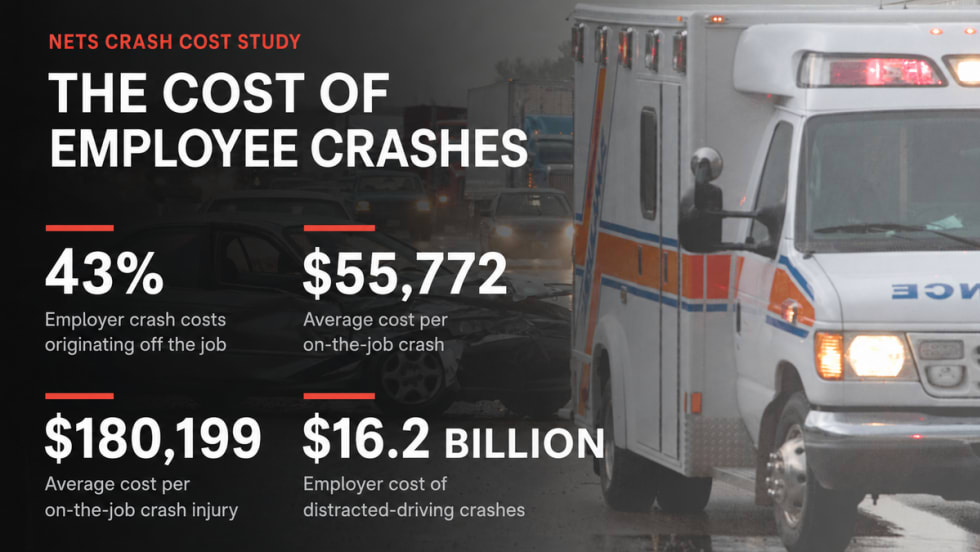
Off-the-Job Crashes Account for 43% of Employers’ $61.7 Billion Crash Burden
NETS quantifies costs dispersed across fleet, risk, HR, and other departments while providing new per-crash benchmarks for employers.
Read More →
Ram Recalls More Than 1.27 Million 1500 Pickups for Seat Belt Anchor Issue
The recall affects certain 2019-2026 Ram 1500 pickups that may have improperly attached second-row seat belt buckle anchors.
Read More →
How Better Visibility Cut Speeding Violations by 48%
Fleet leaders don't need more data, they need clearer visibility into what the data is saying. This case study explores how one utility replaced speeding-event counts with a single metric — miles driven in violation — to strengthen safety and significantly reduce speeding violations.
Read More →
Operation Safe Driver Week: Why the Industry's Oldest Safety Campaign Still Matters to Fleets
A look at how a 2007 enforcement initiative became one of the most consequential weeks on the fleet safety calendar, and what it means for your drivers in 2026.
Read More →