




CARB Approves New Emissions Rules for MY-2017 Through 2025
LOS ANGELES - Automotive Fleet contacted the California Air Resources Board to find out how these new standards will affect fleet orders and vehicle costs.
LOS ANGELES - The California Air Resources Board (CARB) unanimously approved new emissions rules, up through 2025, for cars and light-duty trucks sold in California.
Automotive Fleet contacted Dave Clegern, the public information officer for CARB, about what this will mean for fleets and how these new rules will affect vehicle acquisition costs.
Called the “Advanced Clean Cars” program, these new rules cover four specific areas: a set of greenhouse gas standards for model-years 2017-2025; a required reduction in smog-forming emissions; a Zero Emission Vehicle (ZEV) quota; and the construction of more hydrogen fueling stations across California.
When asked about how these regulations will affect fleets with a national, or at least a multi-state, presence, Clegern said there are no direct requirements that fleet managers will have to deal with.
“If what you're asking is whether we will require fleet operators to buy certain kinds of vehicles, the answer is no,” Clegern said. “Our new regulations make emission reductions the responsibility of vehicle manufacturers, and the infrastructure needs for fueling new low and Zero Emission Vehicles the responsibility of fuel producers.”
According to Clegern, the new standards will affect vehicle selection, but there are certain measures in place that discourage a regional strategy when it comes to vehicle availability.
“That's a statewide number, and reflects the number of clean cars ARB estimates will be needed to hit our 2025 standards,” Clegern said. “Other states that adopt our regulations will take a certain number of vehicles on a similar schedule, though their numbers are lower. That way there will be less pressure for regional solutions.”
Of course with new standards comes an increase in acquisition price, although Clegern said CARB and the National Highway Traffic Safety Administration (NHTSA's) estimated price increase from the current proposed 2017-2025 CAFE standards are about the same (i.e. the price increase is around $2,000 per vehicle to meet the CAFE standards and CARB's standards).
Clegern explained that the slight difference in estimates comes from the fact that although CARB is basing its per-vehicle cost increase estimate on the same base cost estimate data that NHTSA is using, CARB makes different assumptions specific to California's fleet. Clegern added that CARB estimates fuel and maintenance savings will end up producing net savings for buyers.
“There will be some upfront price increases; we estimate up to $1,900 a car,” Clegern said. "However, we also believe the savings in maintenance and fuel over the first 5-6 years will ultimately amount to about $6,000 per vehicle. The history of auto technology also tells us that as the market grows and the technology becomes more mainstream, the price will drop dramatically.”
Opinions vary as to whether these requirements will save the roughly $6,000 in fuel and maintenance NHTSA and CARB estimate (NHTSA gives a range of $5,200 to $6,600 for those two expenses, for a net savings of $3,000 to $4,400).
At this point only time will tell whether advancements in technology, and major changes to vehicle design (smaller, lighter vehicles, for example), will eventually bring acquisition costs down.
New Regulations
The new regulations themselves cover everything from the percentage of ZEVs to be sold in 2025 to the number of grams per mile of greenhouse gas emissions allowed. For example, by 2025, all 15.4% of vehicles sold in California must be ZEVs.
For example, as part of the new Low Emissions Vehicle 3 (LEV III) program requirements, the greenhouse gas emissions standard for vehicles intended for sale in California will be 166 grams per mile, which is a reduction of 34% when compared with 2016 levels. The new rules require the replacement of separate NMOG and oxides of nitrogen (NOx) standards with combined NMOG plus NOx standards. CARB’s summary states that the combined reactive organic gases (ROG) plus NOx standard will decline from 0.100 for passenger cars and light-duty trucks, and 0.119 for light-duty trucks and medium duty passenger vehicles in 2015, to a standard of 0.030 for all vehicle categories by 2030.
The rules also require an increase of full useful life durability requirements from 120,000 miles to 150,000 miles in order to guarantee longer vehicle operating life at low particulate emissions levels.
Other requirements for the LEV III program include more stringent particulate matter standards for light- and medium-duty vehicles; zero fuel evaporative emission standards for passenger cars and light-duty trucks; more stringent evaporative standards for medium-duty vehicles; and a “backstop” to assure continued production of super ultra-low-emission vehicles after PZEVs as a category are moved from the Zero-Emission Vehicle program to the LEV program in 2018.
By Greg Basich
More Operations

How to Manage Conflict for Your Fleet Operations
Conflict management is becoming a core leadership skill. Here are five strategies fleet leaders should know.
Read More →
Turning Connected Vehicle Data Into Decisions That Matter
Fleet leaders have more data than ever, but turning that data into clear, actionable decisions remains a challenge. This white paper shows how leading organizations are using connected vehicle data to improve safety, reduce costs, and optimize fleet performance. Learn how to turn insight into action across your fleet.
Read More →
Cameras, Safety and Insurance: From Reactive Claims to Real-time Prevention
Commercial auto remains one of the most challenging and costly lines of coverage for fleet operators and insurers alike. Learn more about how to effectively address these issues from Onur Aksan, Enterprise Business Development Executive, Geotab.
Read More →

Are You Tracking Your Fleet's True Total Cost of Ownership?
Bobit Business Media surveyed 190 fleet professionals and found that while most fleets are tracking costs, fragmented systems and data gaps are keeping true TCO visibility out of reach. With rising pressure to control spend in an increasingly volatile environment, the gap between what fleets think they know and what the data actually shows is wider than you might expect. See how your peers are managing costs today and where the industry still has room to improve.
Read More →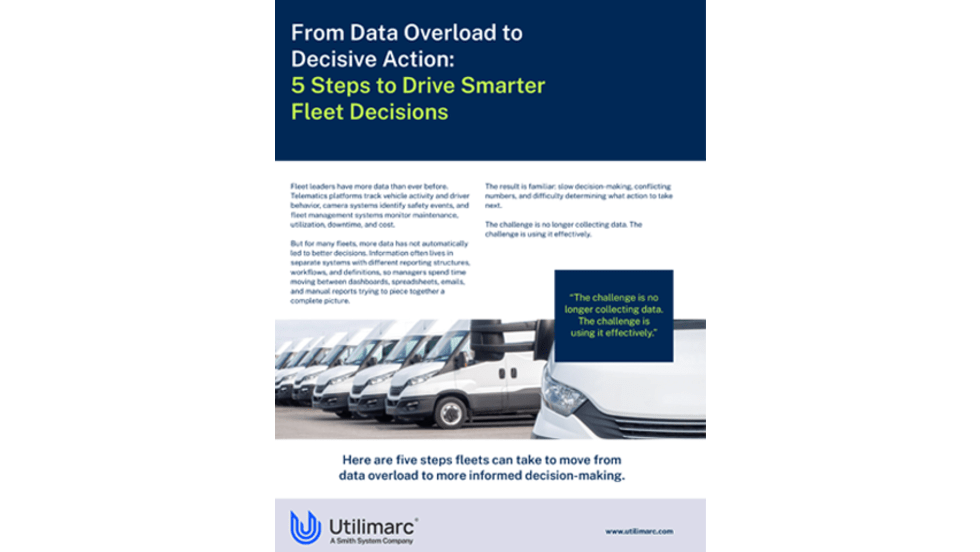
Turn Fleet Data Into Smarter Decisions
Fleet leaders have access to more operational data than ever, but disconnected systems and unclear metrics often slow decision-making instead of improving it. This article outlines five practical steps fleets can take to transform fragmented data into actionable insights that improve planning, safety, utilization, and long-term performance.
Read More →
Hybrids: Electrification Without the Challenges
For fleet managers, fuel is one of the biggest line items in the budget — and it's one hybrids can shrink without changing how your people work. Download the eBook to see the numbers, understand the technology, and get a step-by-step guide to making the switch.
Read More →
How NOV Uses Telematics to Improve Fleet Safety Across 160 Locations
James Victory of NOV discusses how the company manages fleet safety, maintenance, and telematics across more than 150 locations supporting oilfield operations throughout the U.S.
Read More →
Fleet Meets: Steven Santostasi
This edition of the Fleet Meets series features Steven Santostasi, the current TSP channel manager for Ford Pro.
Read More →
Why Fleet Managers Are Replacing Departmental Vehicles with Shared Motor Pools
Departmentally assigned vehicles often create hidden costs through underutilization, poor visibility, and increased administrative burden. This white paper explores how shared motor pool strategies help fleets reduce costs, improve accountability, and optimize vehicle utilization.
Read More →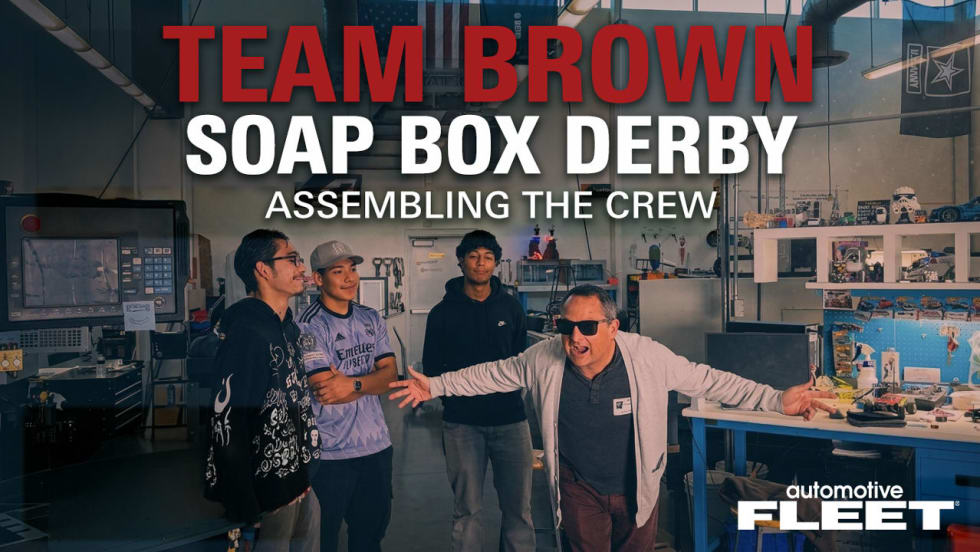
Soap Box Derby Challenge: Assembling the Crew
Meet Gabriel, Matthew, and Angel — the team helping bring this soap box derby build to life.
Read More →