




BMW ActiveHybrid 5 to Get 40-Plus MPG With Six-Cylinder Engine
MUNICH – BMW released information about its new ActiveHybrid 5, a new hybrid from the German automaker that’s part of its 5 Series of sedans.
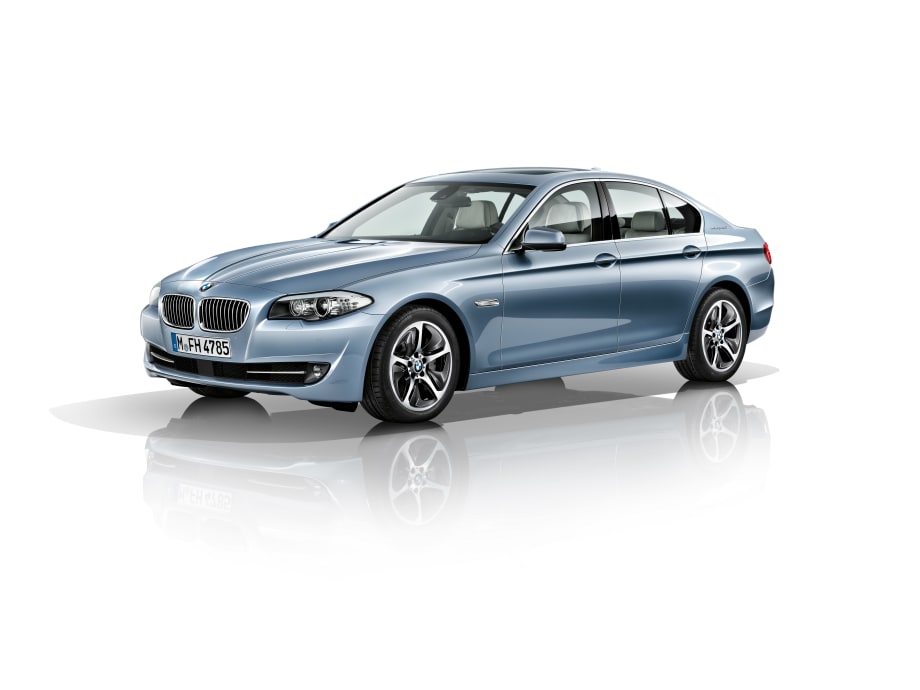
MUNICH – BMW released information about its new ActiveHybrid 5, a new hybrid from the German automaker that’s part of its 5 Series of sedans.
Engine and Performance
Inside, the ActiveHybrid 5 features a BMW TwinPower Turb inline-six engine, an electric drive system, and an eight-speed automatic gearbox. The engine and electric drive system can generate up to 340 horsepower, and the car can be driven on electric power alone up to speeds of 37 mph. The electric drive system is powered by a lithium ion battery and delivers 55 horsepower and 155 lb.-ft. of torque off the line on its own. The sedan can accelerate from 0 to 62 mpg in 5.9 seconds. Fuel economy is 40 to 44 mpg, according to BMW.
The lithium-ion battery charges during coasting or braking, with the electric motor acting as a generator for the battery. When the vehicle accelerates, the electric motor provides more power. The engine is a 3.0L model with a twin-scroll turbocharger, High Precision Direct Injection and VALVETRONIC variable valve timing. It produces 306 horsepower and 295 lb.-ft. of torque,
Exterior
The BMW ActiveHybrid 5 takes its exterior design from the automaker’s 5 Series, but has a number of cosmetic differences designed to communicate the vehicle has a hybrid powetrain. For example, the C pillars have ActiveHybrid 5 lettering; the door still strips also have this lettering, the same goes for the casing covering the lithium ion battery in the luggage area.
The BMW ActiveHybrid 5 features a double-wishbone front axle and integral rear axle, power steering including the Servotronic speed-sensitive power assist function, a high-performance brake system, and 17-inch alloy wheels. Exterior options include 18-inch Streamline light-alloy wheels and a Bluewater metallic paint color. A BMW kidney grille with galvanized slats and matte chrome exhaust pipes are other exterior touches designed to set the ActiveHybrid 5 apart from other models in the 5 Series.
Interior
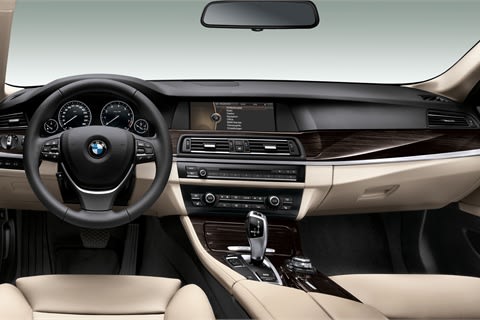
For the interior, the upholstery and trim options are the same as on other 5 Series sedan models. The cabin features a four-zone climate control system with stationary air conditioning as standard. The vehicle offers BMW’s ConnectedDrive telematics system as an option, the same as other 5 Series sedans.
The displays show the operating status of powertrain components, including the boost the electric motor is providing and energy recovery. A display in the iDrive interface shows the li-ion battery’s charge and the power shared between the engine and the electric motor during a trip.
Interior options include active seats and seat ventilation, Comfort Access, a Soft Close Automatic function for the doors, a powered glass roof, and audio and a rear-seat entertainment system option.
Safety
The ActiveHybrid 5 comes with a number of safety options. They include Dynamic Stability Control, which incorporates Dynamic Traction Control, anti-lock brakes, Dynamic Brake Control, Brake Assist, Fading Compensation, a Dry Braking Function, and Start-Off Assistant, and five standard air bags, front and side air bags and side-curtain head airbags for both rows of seats. Dynamic Damper Control, which provides electronically controlling damping, is optional.
Three-point inertia-reel belts are standard on all seats, as are belt force limiters and belt latch tensioners on the front seats, and ISOFIX child seat attachments in the rear.
Other options include Park Distance Control, a rear-view camera, Surround View, Adaptive Headlights, High-Beam Assistant, Speed Limit Info, BMW Parking Assistant, Lane Change Warning, Lane Departure Warning, BMW Night Vision with pedestrian recognition, and the BMW Head-Up Display.
More Operations

How Fleets Can Recruit and Train Veterans for Technician Roles
Here's how the technician shortage has affected uptime for fleets, and what to do about it.
Read More →
Avis Budget Group Deploys Neology Toll Management Technology Across Major Brands
Neology’s neoFleet platform will manage toll transactions and toll-authority operations for vehicles across Avis, Budget, Payless, Budget Truck and Zipcar.
Read More →
Fleet Personal-Use Charges Edge Higher in 2026
Nearly eight in 10 surveyed fleets allow personal use of company vehicles, while just over half of respondents report charging employees for the privilege.
Read More →
The Future of Fleet + What’s Changing Right Now | AF News Recap
Could developments overseas offer a preview of what’s coming for U.S. fleets? This week, we’re looking at the future of AI, autonomy, and electrification, plus Ford Pro’s new certified pre-owned program, smarter vehicle offboarding, and a new way for fleets to manage toll expenses.
Read More →
How to Handle Vehicle Offboarding
What do fleet managers need to do when a driver leaves?
Read More →
Fleet Manager’s Ultimate Playbook: Navigating the New Standard in OEM Connectivity
Rising operating costs, driver safety concerns, and unplanned downtime are putting unprecedented pressure on modern fleets. Discover how fleet managers use embedded OEM connectivity and real-time vehicle data to cut TCO, prevent downtime, and protect drivers without aftermarket telematics hardware.
Read More →
U.S. Bank Adds Verra Mobility Toll Management to Voyager Fleet Platform
The integration allows U.S. Bank Voyager fleet customers to manage toll payments and violations alongside fuel, EV charging and maintenance expenses.
Read More →
ADAS Prevents Crashes. But Repairs Cost More | AF News Recap
ADAS-equipped vehicles may crash less often, but they can cost more when they do. This week, we’re breaking down what that tradeoff means for fleets, plus Subaru’s first Forester Wilderness Hybrid, Nissan’s new e-POWER Rogue, and why Calstart has become Catalyst Mobility.
Read More →
Moventum Fleet Management Names Mark Iorillo Head of Sales
Iorillo brings nearly 20 years of fleet management and sales experience to the role, including previous positions at Element Fleet Management, CEI, Donlen and Ryder.
Read More →
Fleet Has a Talent Pipeline Problem. What Comes Next? | AF News Recap
Where will fleet’s next generation of leaders come from? This week, we’re looking at the industry’s talent pipeline, what certification can add to a fleet career, how to build an award-worthy track record, and the return of Automotive Fleet’s Personal Use Survey.
Read More →