




Bosch Safety Systems Behind New Audi A8
FARMINGTON HILLS, MI - The Bosch automatic emergency braking system is going into series production for the first time in the new Audi A8, as part of the "pre-sense" package.
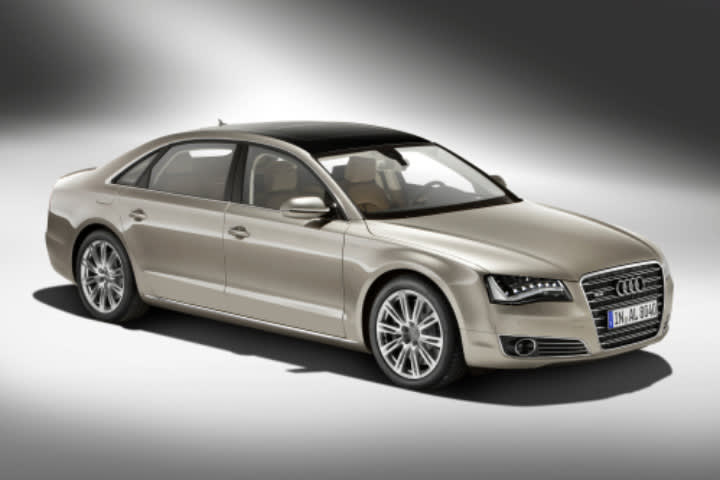
2011 Audi A8
FARMINGTON HILLS, MI - The Bosch automatic emergency braking system is going into series production for the first time in the new Audi A8, as part of the "pre-sense" package. It provides effective support for drivers in critical situations in which there is the threat of a rear-end collision.
"Roughly 80 percent of drivers do not hit the brakes at all before a rear-end collision, or do not use the car's full braking capacity," said Dr. Werner Struth, president of the Bosch Chassis Systems Control division, summarizing an analysis of GIDAS, the German accident database.
The Bosch system helps drivers to react properly. The technical basis of this system is the ESP electronic stability program and the LRR3 long-range radar sensors of the ACC adaptive cruise control system, which are complemented by a video sensor.
Sensor data fusion for the best possible recognition of the traffic situation
Of all the accidents involving injury and fatalities in Germany, 15 percent are rear-end collisions. Predictive systems that interpret the state of the traffic ahead of the vehicle, warn drivers, support them, and finally react automatically can help to significantly reduce the number of such accidents.
The earlier and the more precisely the situation in front of the vehicle can be interpreted, the better the driver assistance functions can help the driver. Bosch engineers have thus made an interplay of radar and video data possible, for optimum recognition of traffic situations.
Apart from the high-performance Bosch ESP premium brake control system, the Audi A8 features two long-range radar sensors, which are housed at the left and right of the front bumper. These new Bosch generation 3 sensors can detect objects within a beam width of approximately 40 degrees at a distance of up to 250 meters, and can determine their position and speed. The video camera is positioned behind the front windscreen, at the same height as the rear-view mirror. The advantage of video technology is the high level of information content, which makes persons, vehicles, or traffic signs easy to identify.
Another benefit is the technology's ability to set off one image against another, as well as the angle detection of objects. The radar signals, for their part, deliver precise data as to the position and speed of the persons, vehicles, or traffic signs featured in the video images.
In a first step, if the predictive emergency braking system detects a potential obstacle, such as a vehicle that is slowing down very fast or coming to a standstill, the brake is primed for the emergency braking that may follow. This involves the brake control system imperceptibly building up slight pressure, which brings the brake pads up close to the discs, so that they can provide immediate deceleration in the event of a subsequent braking operation. If the driver does not react, and the vehicle comes closer, an acoustic warning is given, followed by automatic partial braking, initiated via a brief jerk on the brakes. If the driver still does not react, and if a collision can no longer be prevented, the system brakes automatically at maximum pressure roughly half a second before impact, in order to reduce speed of impact and mitigate the consequences of the accident.
The ACC function has also been extended. With the help of the video data for example, the system reacts more quickly when overtaking other vehicles and when other cars veer into the lane ahead. Moreover, in the new Audi, the signals from the Bosch video camera are used for the automatic headlight control and for the lane departure warning system. Additional functions in the ESP provide further comfort and safety features. The hill-hold control, for example, can prevent the vehicle from rolling backwards on an incline. When towing, ESP detects whether a trailer is weaving dangerously, and helps the driver to counteract.
Many other systems and components in the new Audi A8 are also made by Bosch: there is the instrument cluster with its large color display, the control unit and sensors for the passenger restraint system, a domain control unit, the starter, and the wiper drive. For the gasoline engines of the new Audi A8, Bosch supplies various engine control units, and the two initially available diesel engines use Bosch injection systems with piezo valves and injection pressure of up to 2,000 bar.
More Safety
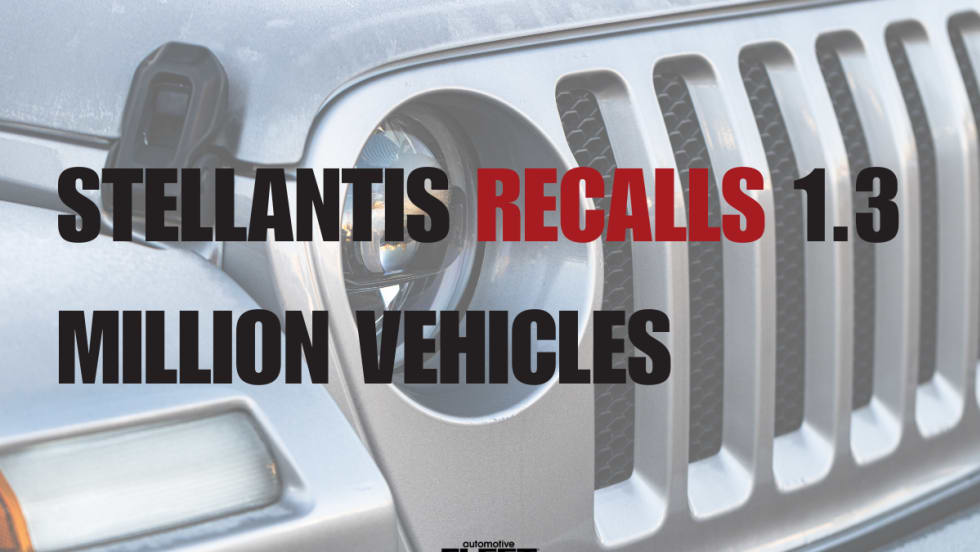
Stellantis Recalls 1.3 Million Jeep Vehicles Worldwide Over Fire Risk
Stellantis is recalling more than 1.3 million Jeep Wrangler and Gladiator models worldwide over a fire risk linked to power steering pump wiring.
Read More →
Coaching Is Not Training, Even When AI Is Doing It
AI-powered safety platforms can detect risky behaviors and deliver immediate feedback. But effective driver development still requires a foundation of training followed by coaching that reinforces those skills.
Read More →
How Emotions Behind the Wheel Can Affect Fleet Safety
During National Safety Month, fleets are encouraged to look beyond distracted driving and recognize how stress, fatigue, and emotional well-being influence driver performance and crash risk.
Read More →

Nominations Open for 2026 Fleet Safety Award
Nominations have officially opened for the 2026 Fleet Safety Award Winner.
Read More →
Turning Connected Vehicle Data Into Decisions That Matter
Fleet leaders have more data than ever, but turning that data into clear, actionable decisions remains a challenge. This white paper shows how leading organizations are using connected vehicle data to improve safety, reduce costs, and optimize fleet performance. Learn how to turn insight into action across your fleet.
Read More →
Cameras, Safety and Insurance: From Reactive Claims to Real-time Prevention
Commercial auto remains one of the most challenging and costly lines of coverage for fleet operators and insurers alike. Learn more about how to effectively address these issues from Onur Aksan, Enterprise Business Development Executive, Geotab.
Read More →
NAFA Fleet Safety Symposium to Collocate With 2026 Fleet Forward Conference
The daylong certificate program will precede the Fleet Forward Conference at the Gaylord National Harbor in Maryland.
Read More →
The Distractions You Can’t Turn Off: What Drivers Face Outside the Vehicle
Fleet drivers face constant visual, cognitive, and environmental interruptions the moment they hit the road. From roadside chaos to mental fatigue and digital overload, today’s biggest driving risks often come from outside the vehicle itself.
Read More →
FLASH Weather AI Launches First Deep-Learning Hail Prediction Model With High-Resolution Forecasting
FLASH Weather AI has launched a first-of-its-kind hail prediction model capable of forecasting hail size and arrival time at 1-kilometer resolution up to 55 minutes ahead, giving fleets and insurers critical time to prepare for severe storms.
Read More →
How Coca-Cola United Protects Its Fleet from Growing Legal Risk
As litigation risk rises, vehicles are increasingly targeted. This Coca-Cola bottler shares how it’s reducing exposure through driver training, technology, and a proactive risk management approach.
Read More →