




Distracted Driving Summit Leads to Nationwide Efforts
WASHINGTON - In addition to an Executive Order issued by President Obama prohibiting federal employees from text messaging while driving on official business, the Department of Transportation also urged state and local governments to take action.
WASHINGTON - At the conclusion of the two-day summit on distracted driving in Washington, D.C., U.S. Transportation Secretary Ray LaHood announced a series of concrete actions the Obama Administration and the U.S. Department of Transportation (USDOT) are taking to help put an end to distracted driving.
President Obama announced Oct. 1 an Executive Order directing federal employees not to engage in text messaging while driving government-owned vehicles; when using electronic equipment supplied by the government while driving; or while driving privately-owned vehicles when they're on official government business. The order also encourages federal contractors and others doing business with the government to adopt and enforce their own policies banning texting while driving on the job.
"This order sends a very clear signal to the American public that distracted driving is dangerous and unacceptable. It shows that the federal government is leading by example," said LaHood. "I fully expect that all 58,000 DOT employees and contractors will take this order seriously."
LaHood pledged to work with Congress to ensure that the issue of distracted driving is appropriately addressed. He also announced a number of immediate actions the Department is taking to combat distracted driving, including the Department's plan to create three separate rulemakings that would consider:
Making permanent restrictions on the use of cell phones and other electronic devices in rail operations.
Banning text messaging altogether, and restrict the use of cell phones by truck and interstate bus operators.
Disqualifying school bus drivers convicted of texting while driving, from maintaining their commercial driver's licenses.
The Secretary also called on state and local governments to work with USDOT to reduce fatalities and crashes by making distracted driving part of their state highway plans, and by continuing to pass state and local laws against distracted driving in all types of vehicles, especially school buses. He asked states and local governments to back up public awareness campaigns with high-visibility enforcement actions. And he said the Department is establishing an on-line clearinghouse on the risks of distracted driving, aimed especially at young people, which will give them information to help encourage good decisions.
Secretary LaHood also pledged to continue the DOT's research on how to best combat distracted driving. As part of this pledge, the DOT will launch a new demonstration program this year to evaluate techniques that states can use to get the most out of their efforts to end this destructive behavior.
The two-day summit brought together safety experts, researchers, industry representatives, elected officials and members of the public who shared their expertise, experiences and ideas for reducing distracted driving behavior and addressed the safety risk posed by this growing problem across all modes of transportation. Authoritative speakers from around the nation led interactive sessions on a number of key topics including the extent and impact of distracted driving, current research, regulations and best practices. Individuals from 49 states participated in the summit via the web.
Secretary LaHood's video blog on distracted driving is available at www.dot.gov. The full webcast of the summit will also be available later this week on the DOT Web site.
More Safety
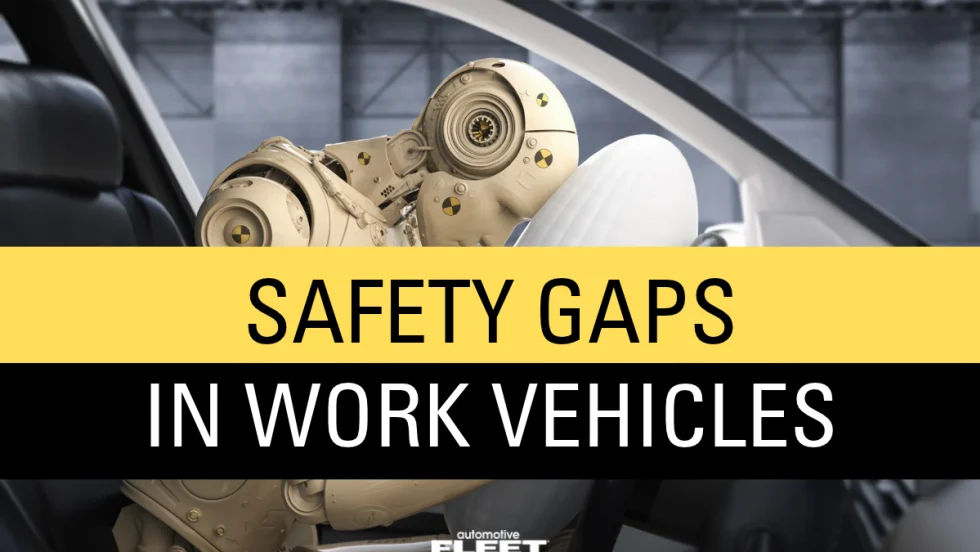
IIHS Crash Avoidance Tests Reveal Safety Gaps in Cargo Vans and Work Trucks
New crash-avoidance ratings from the Insurance Institute for Highway Safety reveal inconsistent performance among commercial vehicles, with several popular cargo vans and heavy-duty pickups struggling to avoid collisions with other vehicles and pedestrians.
Read More →
What’s Next for Fleet? Safety, AI & Industry Recognition | AF News Recap
Could your company's culture be encouraging distracted driving? This week, we're exploring how workplace expectations affect driver safety, what AI, EVs, and autonomous vehicles could mean for the future of fleet management, and how fleet professionals can strengthen their award nominations.
Read More →
Does Your Fleet's Culture Encourage Distracted Driving?
What happens when the people responsible for enforcing safety rules are the ones setting the wrong example? The answer may reveal why some of the biggest risks to fleet drivers have little to do with what's written in the employee handbook.
Read More →
Fleet Manager’s Ultimate Playbook: Navigating the New Standard in OEM Connectivity
Rising operating costs, driver safety concerns, and unplanned downtime are putting unprecedented pressure on modern fleets. Discover how fleet managers use embedded OEM connectivity and real-time vehicle data to cut TCO, prevent downtime, and protect drivers without aftermarket telematics hardware.
Read More →
From Driver Well-Being to EV Charging | AF News Recap
Mental health belongs in the fleet safety conversation. This week, we’re looking at five ways fleets can support employee well-being before a crisis, plus Holman’s expansion in Mexico, new one-day Fleet Forward passes, and why EV charging demand is outpacing infrastructure growth.
Read More →
Nexar-Nauto Merger Aims to Give Fleets Better Safety Intelligence Through Larger Driving Dataset
Stefan Heck tells Automotive Fleet that combining more than 10 billion miles of driving history with Nexar's AI models will give fleets deeper insights into driver risk and roadway conditions than either company could provide independently.
Read More →
Don't Wait for a Crisis: 5 Ways to Build Mental Health Into Your Fleet Safety Program
For Suicide Prevention Month, fleet and safety leaders have an opportunity to put mental health where it belongs: at the center of workplace safety.
Read More →
How Camera Data Can Strengthen a Fleet’s Insurance Renewal
Insights from a commercial insurance carrier and a broker show how fleets can turn video telematic data, driver coaching, and improved claims results into a stronger case at insurance renewal.
Read More →
The Safest Fleets Aren’t the Ones with the Most Technology
You’ve made the telematics investment. Here’s how to capture the other half of its value and build the safest fleet on the road.
Read More →
Hidden in Plain Sight: Fleet Compliance Risks
Fleet compliance isn't just about having policies — it's about consistently enforcing them. This practical guide reveals six hidden compliance risks common in public sector and shared fleet operations and outlines proven strategies to improve visibility, accountability, and audit readiness
Read More →