




Study: Alexandria, Va., Drivers Most Improved
NORTHBROOK, IL --- The Allstate Insurance Co. today released its fifth annual Allstate America's Best Drivers Report, which ranks America's 200 largest cities in terms of car collision frequency to identify which cities have the safest drivers according to Allstate data.
NORTHBROOK, IL --- The Allstate Insurance Co. today released its fifth annual Allstate America's Best Drivers Report, which ranks America's 200 largest cities in terms of car collision frequency to identify which cities have the safest drivers according to Allstate data.
This year's report highlights America's most improved motorists. This year's top honor of "America's Most Improved Driving City" is Alexandria, Va. According to the report, the average driver in Alexandria will experience an auto collision every 7.2 years, an improvement of 1.8 years since 2005. Allstate will congratulate motorists in Alexandria for their safe driving improvements with a free gas giveaway today.
"We are thrilled to see cities making progress toward keeping America's roadways safer," said Mike Roche, senior vice president of Allstate's claim organization.
To view the full report, which includes averages for collision likelihood as well as the years between collisions, you can go to www.allstatenewsroom.com.
Following Alexandria, the other nine metropolitan areas making the top 10 most-improved list are: Lexington-Fayette, Ky.; Arlington, Texas; Hampton, Va.; Virginia Beach, Va.; Aurora, Colo.; Chesapeake, Va.; Reno, Nev.; Richmond, Va.; and Shreveport, La.
The top 10 safest driving cities overall, according to Allstate data, are: Sioux Falls, S.D.; Fort Collins, Colo.; Chattanooga, Tenn.; Cedar Rapids, Iowa; Knoxville, Tenn.; Fort Wayne, Ind.; Lexington-Fayette, Ky.; Eugene, Ore.; Boise, Idaho; and Colorado Springs, Col.
The top 10 cities with populations of more than 1 million are: Phoenix, San Diego, New York City, Houston, San Antonio, Chicago, Dallas, Los Angeles and Philadelphia.
Auto crashes in general have declined over the last few years, but crash fatalities still average around an alarming 40,000 every year despite technological advances, according to the National Highway Traffic Safety Administration.
"Human error is the biggest cause of accidents. It is vital for us to educate drivers across the country on the importance of being tolerant and attentive behind the wheel," said Roche.
More Safety

Nexar-Nauto Merger Aims to Give Fleets Better Safety Intelligence Through Larger Driving Dataset
Stefan Heck tells Automotive Fleet that combining more than 10 billion miles of driving history with Nexar's AI models will give fleets deeper insights into driver risk and roadway conditions than either company could provide independently.
Read More →
Don't Wait for a Crisis: 5 Ways to Build Mental Health Into Your Fleet Safety Program
For Suicide Prevention Month, fleet and safety leaders have an opportunity to put mental health where it belongs: at the center of workplace safety.
Read More →
How Camera Data Can Strengthen a Fleet’s Insurance Renewal
Insights from a commercial insurance carrier and a broker show how fleets can turn video telematic data, driver coaching, and improved claims results into a stronger case at insurance renewal.
Read More →
The Safest Fleets Aren’t the Ones with the Most Technology
You’ve made the telematics investment. Here’s how to capture the other half of its value and build the safest fleet on the road.
Read More →
Hidden in Plain Sight: Fleet Compliance Risks
Fleet compliance isn't just about having policies — it's about consistently enforcing them. This practical guide reveals six hidden compliance risks common in public sector and shared fleet operations and outlines proven strategies to improve visibility, accountability, and audit readiness
Read More →
NETS Sets 2026 Fleet Safety Benchmark Conference for Indianapolis
The Sept. 15–17 program will feature fleet benchmarking data, case studies, emerging technologies, and implementation strategies while running alongside the NSC Safety Congress & Expo.
Read More →
Off-the-Job Crashes Account for 43% of Employers’ $61.7 Billion Crash Burden
NETS quantifies costs dispersed across fleet, risk, HR, and other departments while providing new per-crash benchmarks for employers.
Read More →
Ram Recalls More Than 1.27 Million 1500 Pickups for Seat Belt Anchor Issue
The recall affects certain 2019-2026 Ram 1500 pickups that may have improperly attached second-row seat belt buckle anchors.
Read More →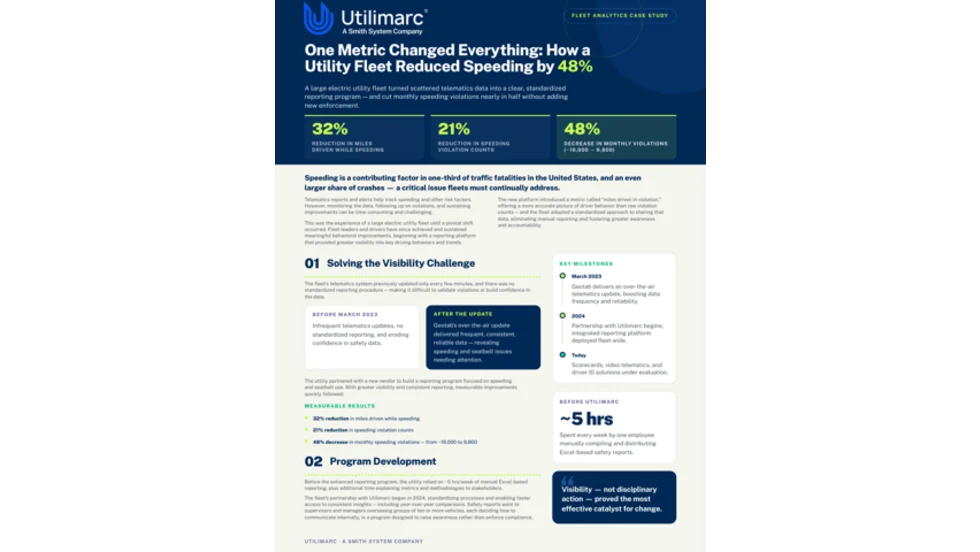
How Better Visibility Cut Speeding Violations by 48%
Fleet leaders don't need more data, they need clearer visibility into what the data is saying. This case study explores how one utility replaced speeding-event counts with a single metric — miles driven in violation — to strengthen safety and significantly reduce speeding violations.
Read More →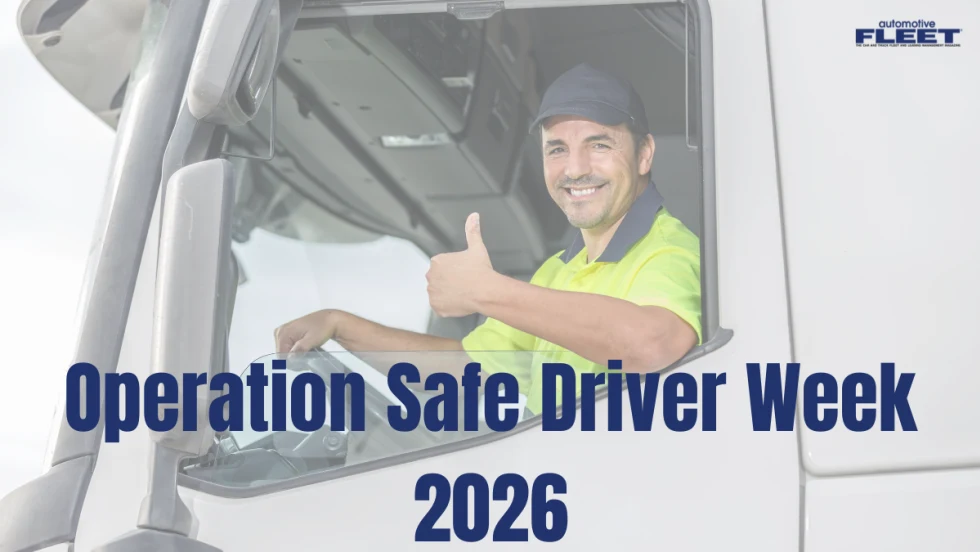
Operation Safe Driver Week: Why the Industry's Oldest Safety Campaign Still Matters to Fleets
A look at how a 2007 enforcement initiative became one of the most consequential weeks on the fleet safety calendar, and what it means for your drivers in 2026.
Read More →