




GM Introduces Cadillac ATS at Detroit Auto Show
DETROIT - GM said the new luxury sedan goes on sale summer of 2012. The automaker also said it expects the vehicle to get better than 30 mpg.
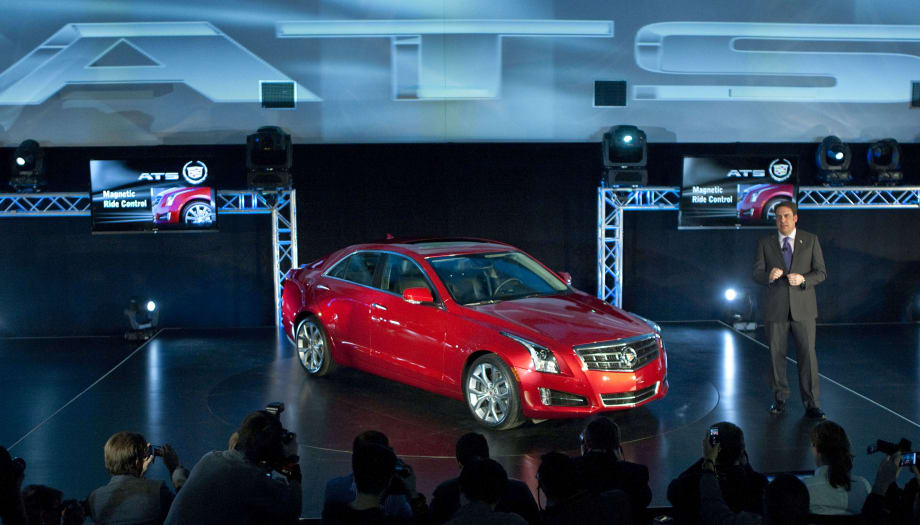
General Motors North America President Mark Reuss introduces the 2013 Cadillac ATS compact luxury sports sedan at a special event prior to the start of the North American International Auto Show Sunday, January 8, 2012 in Detroit, Michigan. The Cadillac ATS goes on sale this summer in North America. (Photo by John F. Martin for Cadillac)
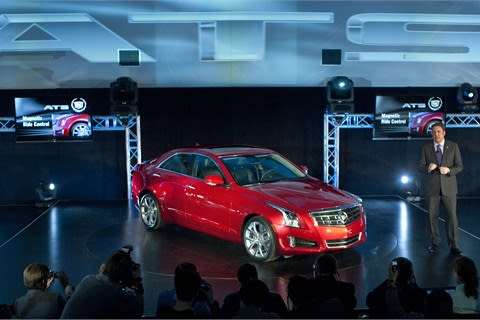
General Motors North America President Mark Reuss introduces the 2013 Cadillac ATS compact luxury sports sedan at a special event prior to the start of the North American International Auto Show Sunday, January 8, 2012 in Detroit, Michigan. The Cadillac ATS goes on sale this summer in North America. (Photo by John F. Martin for Cadillac)
DETROIT – General Motors Cadillac brand introduced its new Cadillac ATS, its new luxury sports sedan, at the North American International Auto Show in Detroit. GM said Cadillac engineers used a new lightweight vehicle architecture for the four-door sedan, and that it goes on sale summer of 2012. GM is manufacturing the vehicle at its Lansing Grand River Assembly plant in Lansing, Mich.
You can view a gallery of additional photos of the ATS here.
Performance
Cadillac is offering three engine choices for the ATS, including two four-cylinder engines and a V-6 (for North America), specifically an all-new 2.0L turbocharged four-cylinder rated at 270 horsepower (201 kW) and Cadillac’s 3.6L V-6, estimated at 320 horsepower (238 kW). The automaker is offering the ATS with manual and automatic six-speed transmission options and rear-wheel and all-wheel-drive configurations. Although GM hasn’t announced official fuel-economy numbers yet, the automaker said peak highway fuel economy will be more than 30 mpg.
The ATS uses Cadillac’s first five-link independent rear suspension. This suspension system uses lightweight, high-strength steel and efficient straight link designs, which help the sedan achieve a 50/50 weight balance. The ATS also offers four-channel ABS and available Brembo brakes.
“Low weight gives the ATS a more nimble and controllable feel, while also optimizing the performance and efficiency of the powertrains,” said David Masch, ATS chief engineer. “But we were careful to manage the weight while maintaining Cadillac’s signature levels of refinement.”
Exterior
Cadillac said the new vehicle “interprets Cadillac’s Art & Science design language in a new proportion” while still focusing on attention to detail and technological elements. The wheelbase is 109.3 inches, the sedan is 182.8 inches long, and it’s 55.9 inches high.
The sedan features vertical lighting elements that include a new LED front signature lighting detail and active grille shutters that close above a highway speed threshold to reduce drag and boost fuel economy. Wheels come in a standard 17-inch size, but 18-inch wheels are available.
Interior
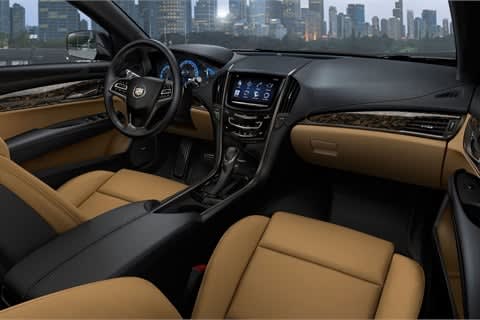
The new ATS offers seven interior and trim combinations and Cadillac's new CUE infotainment system.
The ATS’ interior features a number of interior trim choices, from real wood to metal plating or carbon fiber elements. Each interior color choice features a unique accent trim material, according to Cadillac. Performance seats are also available. A total of seven different interior color and trim combinations are available, GM stated.
The ATS features Cadillac’s new available CUE infotainment system, which stands for Cadillac User Experience. The system can interface with up to 10 different connections, for example via mobile devices equipped with Bluetooth, USB, SD cards, and MP3 players. The CUE system has an eight-inch LCD touchscreen integrated into the top of the central instrument panel. It also has a motorized fully capacitive faceplate at the bottom, which conceals a storage area.
You can read more about the CUE system here.
Other available technologies are available in addition to CUE, including Bluetooth phone connectivity with voice recognition; USB, auxiliary, and SD memory card ports; SiriusXM Satellite Radio with three-month trial subscription; keyless access and keyless push-button start; a reconfigurable 5.7-inch instrument panel cluster display; and a full-color reconfigurable heads-up display.
ATS also features OnStar as standard for one year. It can use GPS and cellular phone technology to automatically call for help in the event of a crash. OnStar service also includes myCadillac and OnStar myLink mobile apps, available for the iPhone or Android smartphones.
Cadillac said it offers the ATS as a standard model and in Luxury, Performance, and Premium Collections.
Safety
Safety technologies in the new ATS use radar, cameras, and ultrasonic sensors to prevent collisions, according to GM. One of the advanced safety features on the vehicle, according to GM, is called “Front and Rear Automatic Brakes,” which use short-range radar and ultrasonic sensors to prevent front and rear low-speed collisions. The system alerts the driver when it detects a potential collision and will apply the brakes if the driver doesn’t respond.
Other optional safety features include Full Speed Range Adaptive Cruise Control; Intelligent Brake Assist; Forward Collision Alert; Brake Pre-Fill Automatic Collision Preparation; Lane Departure Warning; Side Blind Zone Alert; Rear Vision Camera With Dynamic Guidelines; Adaptive Forward Lighting; and Hill Hold/Start Assist (Standard, manual transmission).
Other safety features include eight standard airbags (10 with optional features), safety belt pretensioners and load limiters, StabiliTrak electronic stability control system with traction control, and four-wheel disc brakes with four-channel ABS.
More Operations

Fleet Has a Talent Pipeline Problem. What Comes Next? | AF News Recap
Where will fleet’s next generation of leaders come from? This week, we’re looking at the industry’s talent pipeline, what certification can add to a fleet career, how to build an award-worthy track record, and the return of Automotive Fleet’s Personal Use Survey.
Read More →
Smith System Launches Driver Risk Management Program
Fleets have more driver data than ever, but identifying risky behavior doesn't necessarily correct it. Smith System's new Driver Risk Management program combines monitoring, training, and follow-up coaching to help fleets connect risk signals with driver intervention.
Read More →
Automotive Fleet Opens 2026 Personal Use Survey for Commercial Fleet Managers
Less than two weeks left! Commercial and corporate fleet managers are invited to share how their organizations handle company vehicle personal-use policies, charges, and driver eligibility.
Read More →
From AI Prompts to AI-Generated Safety Songs | AF News Recap
Can better prompts make AI more useful for fleet managers? This week, we’re breaking down smarter fleet analysis, an AI-assisted experiment that turned safety training into music, and what happened to fuel prices in August.
Read More →
How to Write Better AI Prompts for Fleet Analysis
Include these six elements in your fleet prompts to generate more relevant analysis and accurate answers.
Read More →
Fleet Meets: Eric Kilgore
This edition of the Fleet Meets series features one of the industry's best leaders driving multi-market and national operations.
Read More →
Why Reactive Fleet Management Is Becoming Too Expensive to Sustain
Research highlights a growing need for proactive management strategies to address rising costs in fleet operations effectively.
Read More →
What Your Fleet KPIs Aren’t Telling You
Tracking fleet metrics is only useful when the data leads to better decisions. This guide helps fleet leaders assess cost, utilization, and downtime more accurately, identify performance gaps, and prioritize the actions that can improve operational results.
Read More →
Hidden in Plain Sight: Fleet Compliance Risks
Fleet compliance isn't just about having policies — it's about consistently enforcing them. This practical guide reveals six hidden compliance risks common in public sector and shared fleet operations and outlines proven strategies to improve visibility, accountability, and audit readiness
Read More →
Turning Fleet Payment Data into Executive Insights
Does data alone drive results in operations?
Read More →