




GM Unveils 2013-MY Chevrolet Spark
LOS ANGELES - General Motors plans to unveil its 2013 model-year Chevrolet Spark subcompact at the Los Angeles Auto Show, which begins Nov. 16. The automaker provided information on the vehicle and its specs in advance of the event.
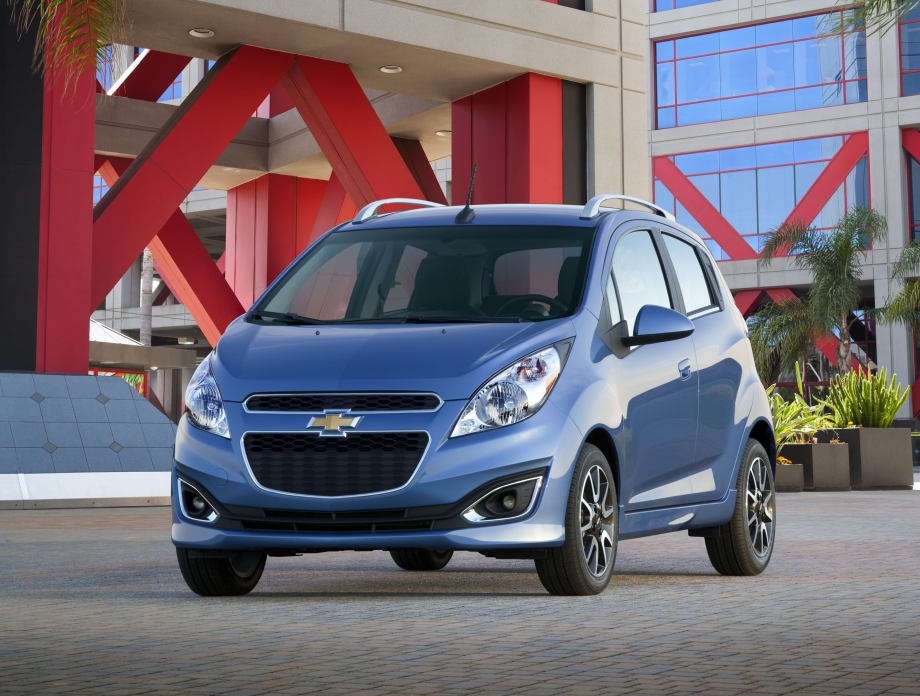
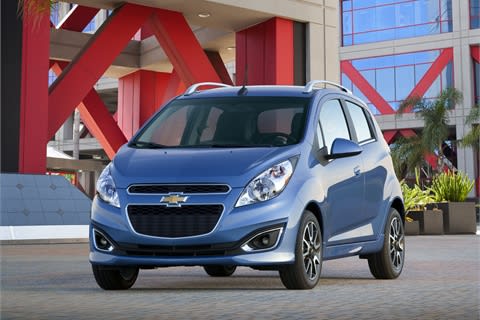
LOS ANGELES – General Motors plans to unveil its 2013 model-year Chevrolet Spark subcompact at the Los Angeles Auto Show, which begins Nov. 16. The automaker provided information on the vehicle and its specs in advance of the event.
Performance
General Motors said that for the U.S. and Canadian versions of the Spark, the vehicle will be powered by a 1.2L dual-overhead cam four-cylinder engine with variable valve timing. The engine can deliver an estimated 85 horsepower (63 kW), according to GM. It is mated to a standard five-speed manual transmission, and a four-speed automatic transmission will also be available.
GM said the powertrain uses technologies such as dual continuous variable cam phasing, an electronically controlled thermostat and low-friction engine oil. The automaker has not yet provided estimates for fuel economy.
Exterior
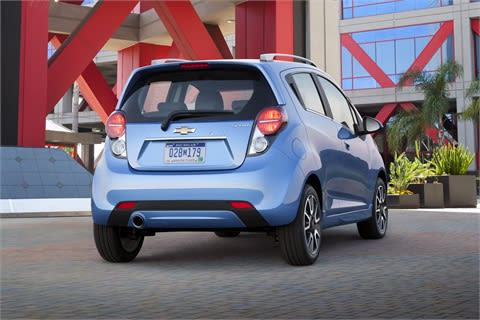
The Spark is a four-passenger, five-door hatchback that looks similar to a three-door hatchback due to the vehicle’s design. GM said its engineers disguised the rear doors by integrating the handles into the C-pillar area. The vehicle will come with an integrated spoiler over the rear hatch door, which GM said is used to enhance fuel economy and the vehicle’s appearance.
The Spark features a new grille and front fascia, a longer rear fascia, and modified headlamps and taillamps, in addition to redesigned outside rearview mirrors (which GM said also improve the Spark’s aerodynamics).
The Spark has 15-inch alloy wheels as standard. Exterior paint schemes come in the following colors: Grey Area, Black Granite, Silver Ice, Summit White, Salsa, Jalapeno, Denim, Lemonade, and Techno Pink.
The tires use a silica compound and have a revised tread design for better “feel” on the road. They offer low-rolling resistance for improved fuel economy.
Interior
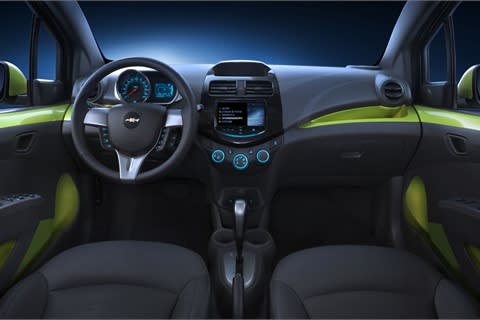
The Spark comes with air conditioning and power windows as standard features. The dash features a lower instrument panel and a lower center console for maximum visibility and storage. The vehicle also comes with decorative inserts in the front door and instrument panel, ice-blue ambient lighting, and faceplates across the door pockets and dash. Heated leatherette seats and leather-wrapped steering wheel are included on Spark 2LT model.
Inside, the Spark features the Chevrolet MyLink infotainment system, which is included on 1LT and 2LT Spark models and features a seven-inch color touch screen.
Safety
The Spark provides a number of safety features, such as anti-lock brakes, standard StabiliTrack electronic stability control, and vented front disc and rear drum brakes with low-compressibility brake pads for improved braking performance.
The Spark features 10 airbags as standard. Other safety technologies include a rollover sensing system; three-point safety belts in all four seating positions; seat belt pretensioners in the front driver and passenger seats; the LATCH child seat attachment system; releasable pedals; adjustable head restraints; and a collapsible steering column. The vehicle also is equipped with the OnStar safety and security system
The Spark provides a five-year, 100,000-mile powertrain warranty.
The automaker also recently announced it plans to build an electric version of this vehicle, starting in 2013.
More Operations

Fleet Has a Talent Pipeline Problem. What Comes Next? | AF News Recap
Where will fleet’s next generation of leaders come from? This week, we’re looking at the industry’s talent pipeline, what certification can add to a fleet career, how to build an award-worthy track record, and the return of Automotive Fleet’s Personal Use Survey.
Read More →
Smith System Launches Driver Risk Management Program
Fleets have more driver data than ever, but identifying risky behavior doesn't necessarily correct it. Smith System's new Driver Risk Management program combines monitoring, training, and follow-up coaching to help fleets connect risk signals with driver intervention.
Read More →
Automotive Fleet Opens 2026 Personal Use Survey for Commercial Fleet Managers
Less than two weeks left! Commercial and corporate fleet managers are invited to share how their organizations handle company vehicle personal-use policies, charges, and driver eligibility.
Read More →
From AI Prompts to AI-Generated Safety Songs | AF News Recap
Can better prompts make AI more useful for fleet managers? This week, we’re breaking down smarter fleet analysis, an AI-assisted experiment that turned safety training into music, and what happened to fuel prices in August.
Read More →
How to Write Better AI Prompts for Fleet Analysis
Include these six elements in your fleet prompts to generate more relevant analysis and accurate answers.
Read More →
Fleet Meets: Eric Kilgore
This edition of the Fleet Meets series features one of the industry's best leaders driving multi-market and national operations.
Read More →
Why Reactive Fleet Management Is Becoming Too Expensive to Sustain
Research highlights a growing need for proactive management strategies to address rising costs in fleet operations effectively.
Read More →
What Your Fleet KPIs Aren’t Telling You
Tracking fleet metrics is only useful when the data leads to better decisions. This guide helps fleet leaders assess cost, utilization, and downtime more accurately, identify performance gaps, and prioritize the actions that can improve operational results.
Read More →
Hidden in Plain Sight: Fleet Compliance Risks
Fleet compliance isn't just about having policies — it's about consistently enforcing them. This practical guide reveals six hidden compliance risks common in public sector and shared fleet operations and outlines proven strategies to improve visibility, accountability, and audit readiness
Read More →
Turning Fleet Payment Data into Executive Insights
Does data alone drive results in operations?
Read More →