




Doctor Convicted in L.A. Bicycle Crash Case
LOS ANGELES --- A Los Angeles physician accused of deliberately injuring two bicyclists by slamming on his car's brakes was convicted of mayhem, assault with a deadly weapon and other criminal charges on Nov. 2.
LOS ANGELES --- A Los Angeles physician accused of deliberately injuring two bicyclists by slamming on his car's brakes was convicted of mayhem, assault with a deadly weapon and other criminal charges on Nov. 2.
Dr. Christopher Thompson, an emergency room doctor who had worked more than two decades at Beverly Hospital in Montebello, Calif., was also convicted of battery with serious injury and reckless driving causing injury, the Los Angeles Times reported. When he is sentenced Dec. 3, he faces up to 10 years in prison.
Prosecutors alleged that on July 4, 2008, on a stretch of Mandeville Canyon Road in Brentwood, Thompson stopped his car after passing two cyclists and shouting at them to ride single file. The cyclists, Ron Peterson and Christian Stoehr, testified that they had begun maneuvering to start riding single file when they saw Thompson's car speed up, pass them dangerously close and then brake abruptly.
Peterson, a coach for USC's and UCLA's cycling team, was thrown face-first into the rear windshield of the doctor's car. He broke his front teeth and nose and his face suffered lacerations. Stoehr was thrown to the sidewalk and suffered a separated shoulder. A police officer testified that Thompson told him shortly after the accident that the cyclists had cursed at him so he slammed on his brakes "to teach them a lesson."
Thompson, however, testified that he never intended to hurt the cyclists and had stopped his car to take a photo of them, believing he had left enough room for them. Thompson said he and a number of residents in the area were disturbed by what they viewed as unsafe behavior by cyclists regularly riding that particular road.
The trial placed a spotlight on how tensions can build between motorists and bicyclists sharing the road -- not just in Los Angeles but across the country.
In most states, bycyclists are legally entitled to use of the full lane, just like other vehicle operators.
Here are some safety tips, compiled by Hamilton County, Ohio, to help motorists share the road safely with bicyclists:
Entering the roadway -- When entering the street from a driveway or alley, always look in both directions for bicycle (or pedestrian traffic) before pulling across a path, the sidewalk, or onto the street. Bicyclists might be riding on sidewalks or paths as well as the roadway and approaching from either direction, and are typically traveling much faster than pedestrians.
At intersections (including with bike paths) -- Observe right-of-way rules with bicyclists, and make eye contact to ensure a safe interaction. Bicyclists may have difficulty clearing an intersection before signal changes, so always check in all directions before starting into a signalized intersection. At stop-controlled intersections, stop at stop lines or before the crosswalk area and check for bicycle and foot traffic from the left and the right before driving forward and into the intersection. Be on the lookout for bicyclists, including children, who may ride into the intersection from an unexpected direction or from a sidewalk.
Making left turns -- Always look for and yield to oncoming bicyclists when making left turns at intersections or driveways. Bicyclists may be traveling faster than you think and cannot slow or stop suddenly to avoid you. Be sure to check over your left shoulder for bicyclists that might ride off the sidewalk into your path.
Making right turns -- Bicyclists traveling straight have the right-of-way (right to proceed first) over vehicles turning or merging right across their path. Do not pass bicycles, usually traveling along the right side of the roadway, and then make a quick right turn in front of them. Before merging or turning right, check to the right and over your right shoulder for approaching bicycles, signal your intentions, and merge or turn when it is safe to do so. Make sure you are aware of the speed of any approaching bicyclists. Also look for bicyclists approaching on the sidewalk or adjacent path before making any turn.
Passing bicyclists -- When overtaking a bicycle, slow down and wait for a safe opportunity to pass, just as you would when following a slower motor vehicle. Allow at least 3 feet of side clearance between your vehicle and the bicycle's handlebars. Watch for hand signals, shoulder checks, or other evidence such as weaving that may indicate the bicyclist needs to merge or turn left. Bicyclists also often have to avoid hazards along the edge of the roadway and may swerve suddenly into your path, so allow plenty of space. If there are large mirrors or other projections on your vehicle, allow extra clearance. Check over your right shoulder before moving back right, and again, give the bicyclist plenty of room considering the bicyclist's speed and position. If using your horn to alert a bicyclist to your presence, use caution and a light touch before you begin your pass. Don't honk your horn loudly during your passing maneuver since it may startle them and cause them to swerve into your path.
More Safety

From Driver Well-Being to EV Charging | AF News Recap
Mental health belongs in the fleet safety conversation. This week, we’re looking at five ways fleets can support employee well-being before a crisis, plus Holman’s expansion in Mexico, new one-day Fleet Forward passes, and why EV charging demand is outpacing infrastructure growth.
Read More →
Nexar-Nauto Merger Aims to Give Fleets Better Safety Intelligence Through Larger Driving Dataset
Stefan Heck tells Automotive Fleet that combining more than 10 billion miles of driving history with Nexar's AI models will give fleets deeper insights into driver risk and roadway conditions than either company could provide independently.
Read More →
Don't Wait for a Crisis: 5 Ways to Build Mental Health Into Your Fleet Safety Program
For Suicide Prevention Month, fleet and safety leaders have an opportunity to put mental health where it belongs: at the center of workplace safety.
Read More →
How Camera Data Can Strengthen a Fleet’s Insurance Renewal
Insights from a commercial insurance carrier and a broker show how fleets can turn video telematic data, driver coaching, and improved claims results into a stronger case at insurance renewal.
Read More →
The Safest Fleets Aren’t the Ones with the Most Technology
You’ve made the telematics investment. Here’s how to capture the other half of its value and build the safest fleet on the road.
Read More →
Hidden in Plain Sight: Fleet Compliance Risks
Fleet compliance isn't just about having policies — it's about consistently enforcing them. This practical guide reveals six hidden compliance risks common in public sector and shared fleet operations and outlines proven strategies to improve visibility, accountability, and audit readiness
Read More →
NETS Sets 2026 Fleet Safety Benchmark Conference for Indianapolis
The Sept. 15–17 program will feature fleet benchmarking data, case studies, emerging technologies, and implementation strategies while running alongside the NSC Safety Congress & Expo.
Read More →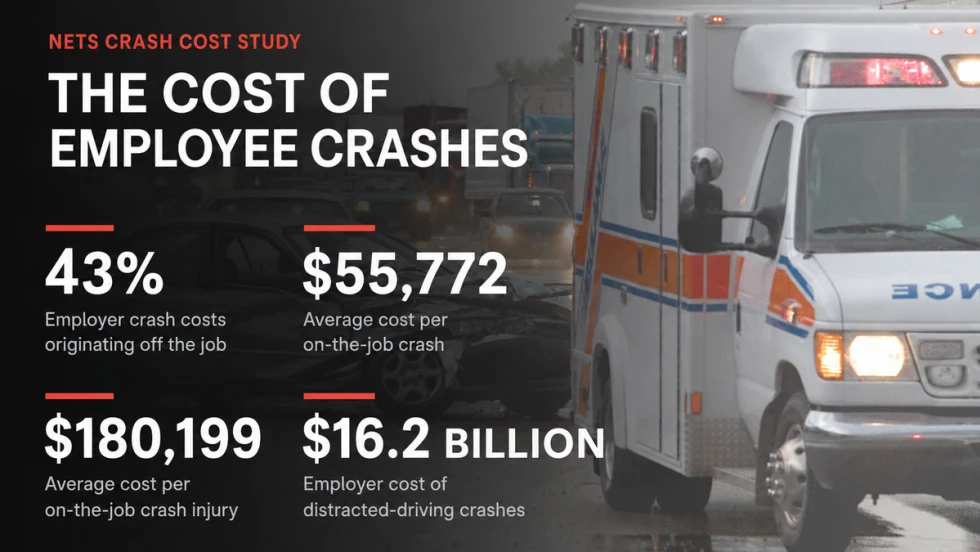
Off-the-Job Crashes Account for 43% of Employers’ $61.7 Billion Crash Burden
NETS quantifies costs dispersed across fleet, risk, HR, and other departments while providing new per-crash benchmarks for employers.
Read More →
Ram Recalls More Than 1.27 Million 1500 Pickups for Seat Belt Anchor Issue
The recall affects certain 2019-2026 Ram 1500 pickups that may have improperly attached second-row seat belt buckle anchors.
Read More →
Operation Safe Driver Week: Why the Industry's Oldest Safety Campaign Still Matters to Fleets
A look at how a 2007 enforcement initiative became one of the most consequential weeks on the fleet safety calendar, and what it means for your drivers in 2026.
Read More →