





2023 Update: Survey - 37% of U.S. Drivers Texted Behind the Wheel in Past Month
Texting While Driving: A Major No-No!
Texting while driving, one of the latest forms of driver distraction, poses significant accident risks and has gained the attention of lawmakers developing anti-texting laws.
January 15, 2009
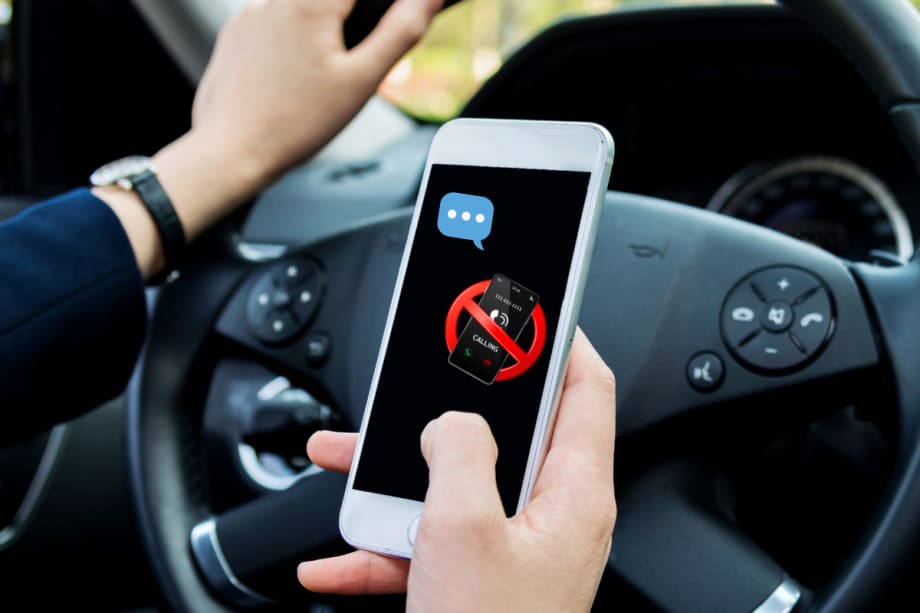
Cell phones with text-messaging capabilities further increase the risk of driver distraction.
Photo: Automotive Fleet
3 min to read
Driving while texting on an electronic device is the major driver distraction danger.
A study by the National Highway Traffic Safety Administration (NHTSA) distracted driving is dangerous, claiming 3,522 lives in 2021. According to a NHTSA and VTTI study, the principal distraction that led to vehicle crashes include:
Cell phone use.
Reaching for moving objects inside the vehicle.
Looking at an object or event outside of the vehicle.
Reading while driving.
Applying makeup.
Cell phones with text-messaging capabilities further increase the risk of driver distraction.
In December 2006, a 71-year-old woman was awarded $4.1 million because a company driver ran a red light. He was distracted by his BlackBerry’s navigation, which he was using to help locate his destination, and crashed into the woman, leaving her with serious and permanent injuries. The situation would have been avoided had the driver kept his eyes on the road and both hands on the steering wheel.
Safety Concerns Keep Fleets on Guard
Increasingly, fleet managers rank driver safety among their top two challenges (after the cost of fuel). One reason for heightened concern, fleet managers report, is an increase in preventable accidents, with the root cause of driver distraction. A contributing factor to these preventable accidents is the increased workload of company drivers.
Drivers multitasking while operating their company cars has become a common practice and is a major factor in driver distraction. Use of text messaging while driving is a dangerous habit. Drivers who engage in mobile texting spend about 400-percent more time taking their eyes off the road and are 70% less likely to stay in their lane, according to an Australian study.
It is not uncommon to see drivers resting a cell phone on top of the steering wheel while using their thumbs to tap in a text message. A driver talking on a cell phone can watch the road, but someone responding to a text message must stare at his or her hands.
In May 2007, the state of Washington passed the nation’s first driving while texting (DWT) ban, followed by New Jersey and the City of Phoenix. Washington’s state legislators took action after a 53-year-old male driver, checking his e-mail, caused a five-car pileup on Interstate 5 outside Seattle in December 2006, said state representative Joyce McDonald. “I was able to use that accident and show it wasn’t just young people doing this.”
California enacted a cell phone law last July prohibiting driving while talking on handheld cell phones. State Senator Joe Simitian of Palo Alto, Calif., subsequently introduced a new bill to ban adult DWT. The state of California already prohibits 16- and 17-year-olds from using any device to talk or text while driving.
“Cell phones are the number one cause of distracted driving accidents in California. And accidents by drivers using handheld cell phones outnumber those driving hands-free by a ratio of something like 15 to one. The difference between hand-held and hands-free is the difference between life and death,” Simitian told Palo Alto Weekly.
In 2007, the City of Phoenix jumped on the DWT ban bandwagon and Scottsdale also is considering such a ban.
Scottsdale Transportation Commission member condemned the practice of DWT, calling it “per se dangerous,” “intolerable,” and “unsafe.”
Bottom Line on Texting & Cell Phone Distractions
Text messaging is fine when you’re sitting at an airport or at home, but not while driving.
Fleets need to get ahead of the curve and proactively prohibit this activity. Drivers need to be placed on notice that there is zero tolerance to use these devices while driving a company vehicle. This is not only to safeguard the company and its assets, but also to protect the employee, a company’s greatest asset.
Subscribe to Our Newsletter
More Safety
What’s Next for Fleet? Safety, AI & Industry Recognition | AF News Recap
Could your company's culture be encouraging distracted driving? This week, we're exploring how workplace expectations affect driver safety, what AI, EVs, and autonomous vehicles could mean for the future of fleet management, and how fleet professionals can strengthen their award nominations.
Read More →
Does Your Fleet's Culture Encourage Distracted Driving?
What happens when the people responsible for enforcing safety rules are the ones setting the wrong example? The answer may reveal why some of the biggest risks to fleet drivers have little to do with what's written in the employee handbook.
Read More →
Sponsored•October 1, 2026
Fleet Manager’s Ultimate Playbook: Navigating the New Standard in OEM Connectivity
Rising operating costs, driver safety concerns, and unplanned downtime are putting unprecedented pressure on modern fleets. Discover how fleet managers use embedded OEM connectivity and real-time vehicle data to cut TCO, prevent downtime, and protect drivers without aftermarket telematics hardware.
Read More →
From Driver Well-Being to EV Charging | AF News Recap
Mental health belongs in the fleet safety conversation. This week, we’re looking at five ways fleets can support employee well-being before a crisis, plus Holman’s expansion in Mexico, new one-day Fleet Forward passes, and why EV charging demand is outpacing infrastructure growth.
Read More →
Nexar-Nauto Merger Aims to Give Fleets Better Safety Intelligence Through Larger Driving Dataset
Stefan Heck tells Automotive Fleet that combining more than 10 billion miles of driving history with Nexar's AI models will give fleets deeper insights into driver risk and roadway conditions than either company could provide independently.
Read More →
Don't Wait for a Crisis: 5 Ways to Build Mental Health Into Your Fleet Safety Program
For Suicide Prevention Month, fleet and safety leaders have an opportunity to put mental health where it belongs: at the center of workplace safety.
Read More →
How Camera Data Can Strengthen a Fleet’s Insurance Renewal
Insights from a commercial insurance carrier and a broker show how fleets can turn video telematic data, driver coaching, and improved claims results into a stronger case at insurance renewal.
Read More →
The Safest Fleets Aren’t the Ones with the Most Technology
You’ve made the telematics investment. Here’s how to capture the other half of its value and build the safest fleet on the road.
Read More →
Sponsored•August 7, 2026
Hidden in Plain Sight: Fleet Compliance Risks
Fleet compliance isn't just about having policies — it's about consistently enforcing them. This practical guide reveals six hidden compliance risks common in public sector and shared fleet operations and outlines proven strategies to improve visibility, accountability, and audit readiness
Read More →
NETS Sets 2026 Fleet Safety Benchmark Conference for Indianapolis
The Sept. 15–17 program will feature fleet benchmarking data, case studies, emerging technologies, and implementation strategies while running alongside the NSC Safety Congress & Expo.
Read More →