




White House Throws GM & Chrysler $17.4 Billion Financial Lifeline
WASHINGTON – In an early morning televised announcement, President Bush announced a plan to offer the struggling automakers $17.4 billion in short-term financing, $13.4 immediately available and another $4 billion likely available in February. But the plan comes with strict conditions.
WASHINGTON – President Bush today announced a plan to help struggling General Motors and Chrysler LLC avoid bankruptcy, offering the carmakers $17.4 billion in short-term financing.
Under the plan, roughly similar to the bailout package that failed in Congress last week, General Motors and Chrysler will have immediate access to $13.4 billion of the funds, drawn from the $700 billion Troubled Asset Relief Program (TARP). Another $4 billion would likely be available in February.
Citing extraordinary times, Bush said he put aside his initial inclination to let the companies fail, “as punishment for their own bad business decisions.” But, he noted, the country is in the midst of a financial crisis and a recession and “allowing the U.S. auto industry to collapse is not a responsible action.”
The plan allows GM and Chrysler breathing room to avoid bankruptcy while restructuring their organizations.
The long-awaited financial lifeline comes with strict conditions. The automakers must prove they are viable by March 31 or the money could be recalled for immediate repayment to the Treasury.
In his early Friday morning televised speech, the President said to work, the plan requires concessions from all parties — automakers, creditors, shareholders, the union, dealers, and suppliers.
Under the plan, the automakers must to reach an agreement with the United Auto Workers union to bring wages and benefits in line with those of employees of foreign-based automakers working in the U.S.
Executive compensation and other perks would be limited. The manufacturers would have to provide warrants for non-voting stocks and allow government oversight that could veto any transaction over $100 million. The rescue plan also requires the OEMs to adhere to fuel-efficiency and emission standards.
In a statement released short after the President’s announcement, Chrysler Chairman and CEO Bob Nardelli thanked the Administration and Treasury “for their confidence” in the company.
“A letter of intent was signed which outlines the specific requirements that must be achieved,” said Nardelli. “These requirements will require consideration from all constituents, requiring commitment first in principal, leading to implementation this coming year. Chrysler is committed to meeting these requirements.”
GM also released a statement of thanks, in addition noting, “This action helps to preserve many jobs, and supports the continued operation of GM and the many suppliers, dealers and small businesses across the country that depend on us.”
The statement further said the plan will allow GM to “accelerate the completion of our aggressive restructuring plan for long-term, sustainable success. It will lead to a leaner, stronger General Motors.” The company said it intends “to continue to be transparent as we execute our plan, and we will provide regular updates on our progress. We again thank the Administration for this important support of our industry at this challenging time, and we look forward to proving what American ingenuity can achieve.”
More Operations
How to Manage Conflict for Your Fleet Operations
Conflict management is becoming a core leadership skill. Here are five strategies fleet leaders should know.
Read More →
Turning Connected Vehicle Data Into Decisions That Matter
Fleet leaders have more data than ever, but turning that data into clear, actionable decisions remains a challenge. This white paper shows how leading organizations are using connected vehicle data to improve safety, reduce costs, and optimize fleet performance. Learn how to turn insight into action across your fleet.
Read More →
Cameras, Safety and Insurance: From Reactive Claims to Real-time Prevention
Commercial auto remains one of the most challenging and costly lines of coverage for fleet operators and insurers alike. Learn more about how to effectively address these issues from Onur Aksan, Enterprise Business Development Executive, Geotab.
Read More →

Are You Tracking Your Fleet's True Total Cost of Ownership?
Bobit Business Media surveyed 190 fleet professionals and found that while most fleets are tracking costs, fragmented systems and data gaps are keeping true TCO visibility out of reach. With rising pressure to control spend in an increasingly volatile environment, the gap between what fleets think they know and what the data actually shows is wider than you might expect. See how your peers are managing costs today and where the industry still has room to improve.
Read More →
Turn Fleet Data Into Smarter Decisions
Fleet leaders have access to more operational data than ever, but disconnected systems and unclear metrics often slow decision-making instead of improving it. This article outlines five practical steps fleets can take to transform fragmented data into actionable insights that improve planning, safety, utilization, and long-term performance.
Read More →
Hybrids: Electrification Without the Challenges
For fleet managers, fuel is one of the biggest line items in the budget — and it's one hybrids can shrink without changing how your people work. Download the eBook to see the numbers, understand the technology, and get a step-by-step guide to making the switch.
Read More →
How NOV Uses Telematics to Improve Fleet Safety Across 160 Locations
James Victory of NOV discusses how the company manages fleet safety, maintenance, and telematics across more than 150 locations supporting oilfield operations throughout the U.S.
Read More →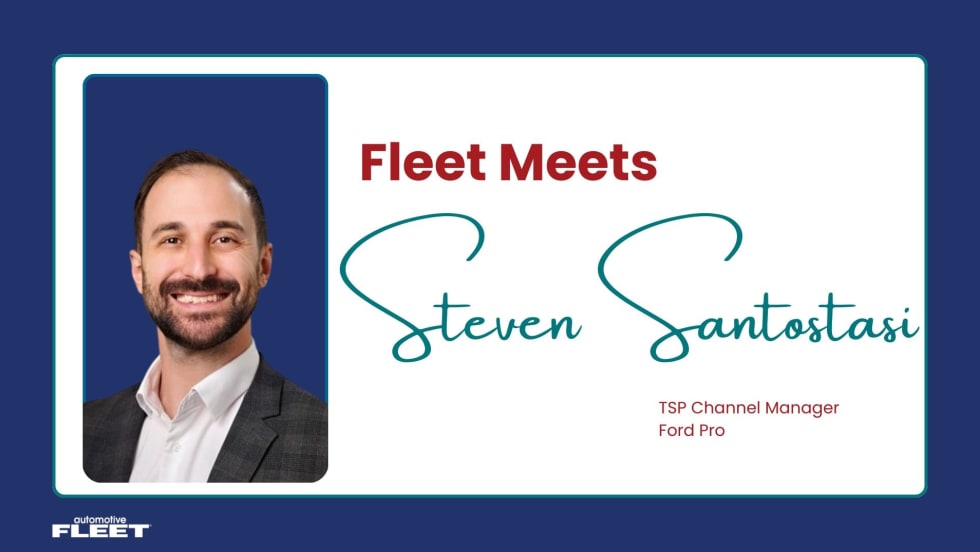
Fleet Meets: Steven Santostasi
This edition of the Fleet Meets series features Steven Santostasi, the current TSP channel manager for Ford Pro.
Read More →
Why Fleet Managers Are Replacing Departmental Vehicles with Shared Motor Pools
Departmentally assigned vehicles often create hidden costs through underutilization, poor visibility, and increased administrative burden. This white paper explores how shared motor pool strategies help fleets reduce costs, improve accountability, and optimize vehicle utilization.
Read More →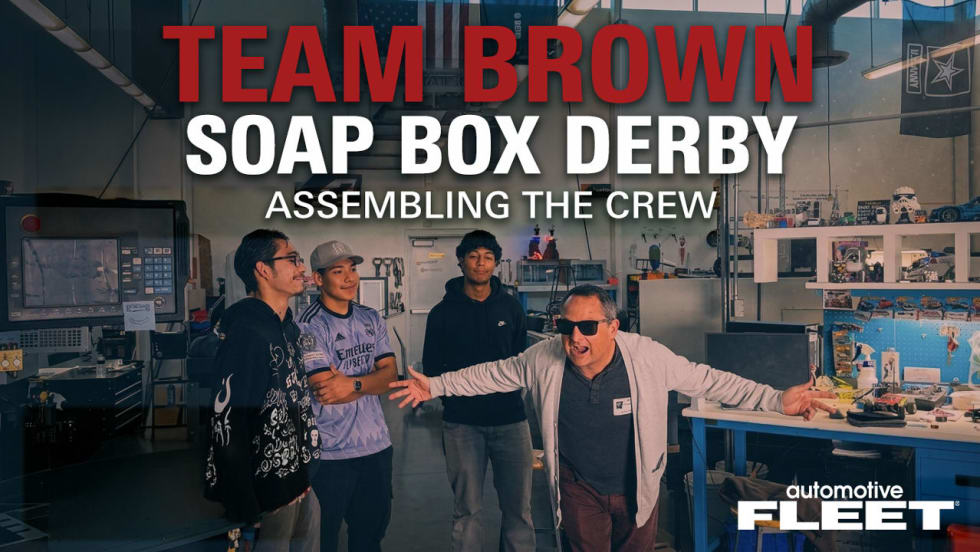
Soap Box Derby Challenge: Assembling the Crew
Meet Gabriel, Matthew, and Angel — the team helping bring this soap box derby build to life.
Read More →