




Fleets Implement New Policies to Lower Fuel Costs
Examined are fuel management best practices in companies across the U.S., including Otis Elevator, ServiceMaster, and Xerox. These companies are right-sizing vehicles, buying more fuel-efficient models, and focusing on reducing their carbon footprints.

As fleets continue to deal with rising fuel costs, companies are increasingly implementing policies and programs to get a handle on the bottom line.
Measures integrated into fleets include right-sizing vehicles, buying more fuel-efficient models, reducing idling time, implementing fuel card programs, and adopting GPS systems to minimize fraud and improve driver efficiency.
Otis Elevator Company recently implemented fuel management initiatives to mitigate the high cost of fuel.
“We’ve replaced about 25 percent of our high-mileage trucks with diesel vehicles, increasing mileage by 30 percent as compared to gasoline,” said Phil Schreiber, fleet manager, North America.
The fleet team was also able to keep the vehicles for four years versus two.
“Our formula suggested that our vehicles needed at least 25,000 business miles per year to even look at a diesel engine,” Schreiber said. This extended mileage limit is due to the high premium paid for diesel engines, which increases capitalization cost.
Eighty-two percent of the company’s 4,000 fleet vehicles are Fords (ranging from the four-door sedan up to 26,000-lb. GVW truck models). The remaining fleet makeup includes GM models (at 16 percent) and other assorted makes and models.
While greening its fleet is more difficult at Otis due to the dispersion of its vehicles throughout the country, cost-to-benefit ratios, and size of vehicles, the company is willing to monitor fuel availability infrastructure updates in the future.
ServiceMaster currently serves 10.5 million U.S. residential and commercial customers through a network of more than 5,500 company-owned locations and franchised licenses. With more than 18,000 corporate-managed vehicles, the company must keep its fleet on the road serving customers, while effectively managing its bottom line.
The company has implemented several best practices to control costs. And its fleet team is currently pilot-testing a way to eliminate unnecessary engine idling with onboard electric power and an electronic shutoff system, as well as testing hybrid vehicle applications to reduce emissions and fuel consumption.
Recently, the team, in conjunction with Wanner Engineering and the AutoTruck Group, redesigned two Terminix trucks and reduced the purchasing cost by more than 18 percent for the pest control truck and more than 60 percent for the termite truck.
“Reducing environmental impact is critical and strategic for any company and fleet, but in particular for residential customer services companies such as the ServiceMaster family of companies,” said Fleet Engineering Director Jim Steffen.
ServiceMaster has also realized substantial savings through rebates and various programs from its fuel management service provider, according to Tod Beers, director of energy.
ServiceMaster’s pickup, car, and trailer fleet records 2 million annual fuel transactions dispersed across 46 states. To limit purchase frequency, ServiceMaster’s salespeople are restricted to fuel purchases during their workweek.
“Before the fuel card program, our average salesperson burned 48-55 gallons of fuel per week; now they burn 30 gallons or less,” Beers said.
[PAGEBREAK]
Xerox Corp. is a $16 billion document management technology and services company. While providing a broad portfolio of color and black-and-white document processing systems and related supplies, it also offers document management consulting and outsourcing services.
The company’s U.S. fleet of 4,900 vehicles helps transport salespeople and service technicians. The service fleet drives mostly passenger vans. In an effort to minimize transportation costs and the fleet’s environmental footprint, Xerox’s fleet management has implemented aggressive cost-saving and environmental programs.
Tony Rossi, Xerox’s manager of programs and operational support, meets with senior management twice annually to discuss global greenhouse gas (GHG) concerns. The company looks at key metrics, including fuel consumption, percentage of deployed fuel-efficient vehicles, and comparisons of actual versus planned initiative implementation.
A large part of Xerox’s financial and “green” success has been efforts to reduce its environmental footprint. The company has already exceeded its 2012 GHG emission reduction target and is increasing its goal by more than 100 percent.
With an 18-percent reduction in GHG emissions since 2002, Xerox topped its 10-percent reduction target and is now boosting its goal to a 25-percent decrease by 2012.
Not only did the conservation efforts help the environment, they also helped Xerox save money. Energy consumption during the period declined by 21 percent, driven in part by a 30-percent reduction in gasoline and diesel fuel consumption.
Xerox’s GHG reduction program saved the company $18 million in 2006.
Rossi has sought ways to cut fuel usage of the company’s U.S. fleet since 2002, including:
Finding the right vehicle for each driver.
Buying fuel-efficient vehicles.
Tracking mileage.
Using GPS systems to send technicians to the closest client.
Increasing use of remote diagnostics.
Integrating more reliable products that require less service.
Educating drivers about maintaining vehicles, including tire pressure and oil change intervals.
“We have a company-wide effort that included driving fewer miles, sound energy management, new manufacturing technologies, and more efficient heating and cooling equipment,” Rossi said, adding these kinds of efforts are easy to implement and require little up-front investment, resulting in long-term savings.
More Fuel
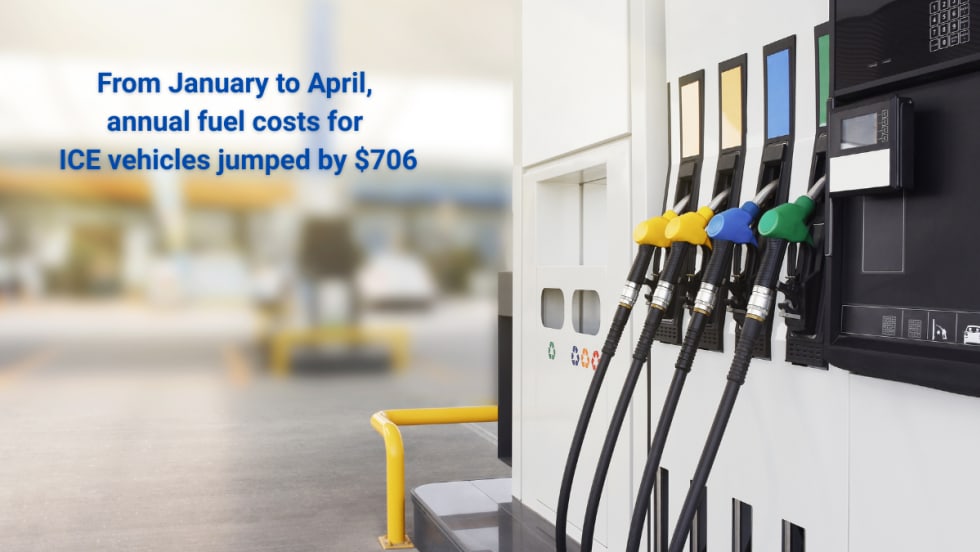
Study: How 2026's Gas Price Hikes Affect Different Vehicle Types
New data from iSeeCars reveals how rising fuel costs have affected different vehicle segments as gasoline prices climbed nearly 46% over the past four months.
Read More →
Are You Tracking Your Fleet's True Total Cost of Ownership?
Bobit Business Media surveyed 190 fleet professionals and found that while most fleets are tracking costs, fragmented systems and data gaps are keeping true TCO visibility out of reach. With rising pressure to control spend in an increasingly volatile environment, the gap between what fleets think they know and what the data actually shows is wider than you might expect. See how your peers are managing costs today and where the industry still has room to improve.
Read More →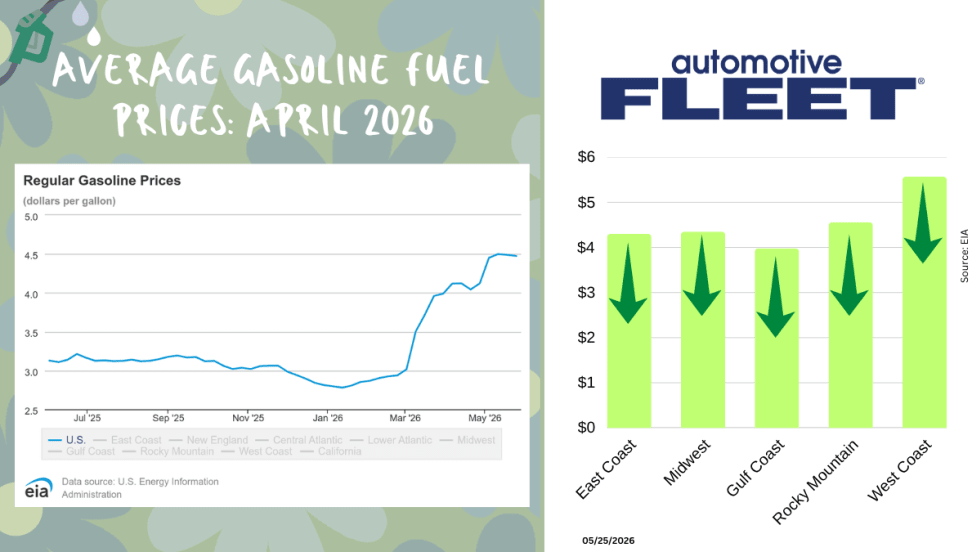
May Fuel Update: All Regions Experience Declines
Gas prices are finally easing in much of the country, but experts warn global tensions could quickly reverse the trend as the national average remains well above last month’s levels.
Read More →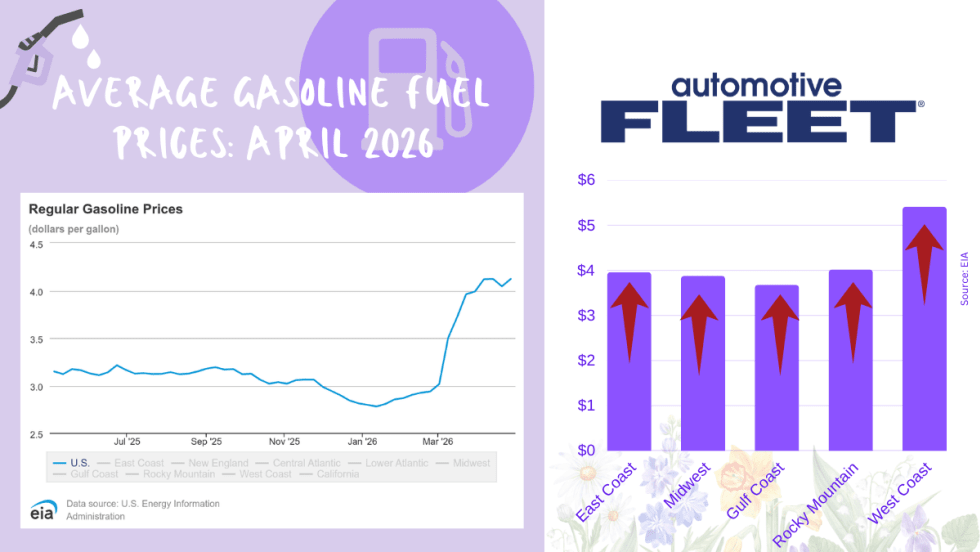
April Fuel Update: Prices Climb Above $4 as Spring Surge Accelerates
National average jumps to $4.04 per gallon, up sharply from last year, with West Coast prices topping $5 and further increases expected amid rising oil tensions.
Read More →
Tips from Fleet Managers on Saving Fuel Costs
Fleet leaders share practical strategies to reduce fuel spend through smarter policy, routing, and driver guidance.
Read More →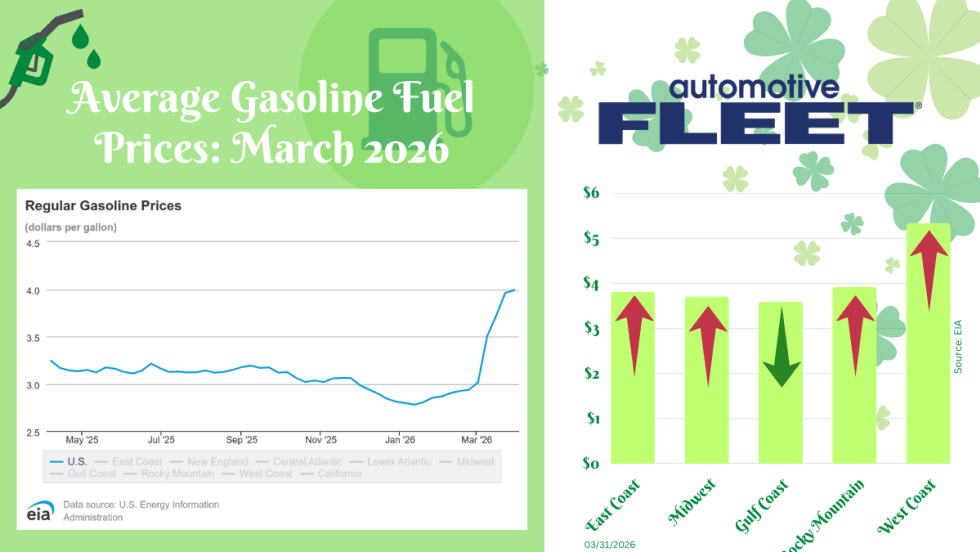
March Fuel Update: Prices Settle With a $4 Average
Fuel prices significantly slowed this week, but a $4 national average is still expected.
Read More →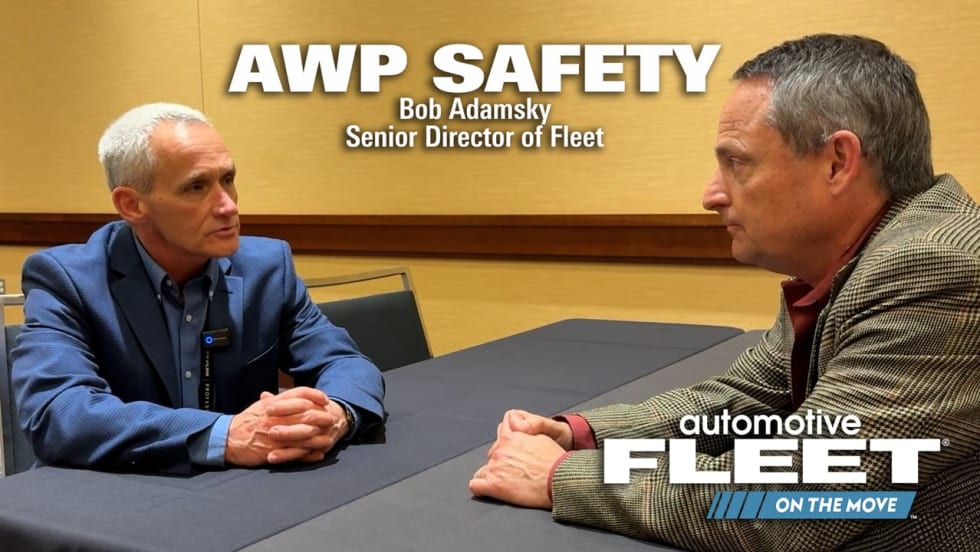
Bob Adamsky on Fuel Volatility: “Don’t Panic — Have a Plan”
With oil prices rising again, AWP Safety’s fleet manager shares how to respond to rising fuel costs and how the right strategy can turn fuel spikes into cost-saving opportunities.
Read More →
Oil Market Turbulence Is Complicating Fleet Cost Planning
Rapid swings in crude oil prices driven by the conflict in the Middle East could create longer-term cost pressures for fleets, affecting fuel prices, supply chains, and vehicle strategy, says NTEA’s Andrew Wrobel.
Read More →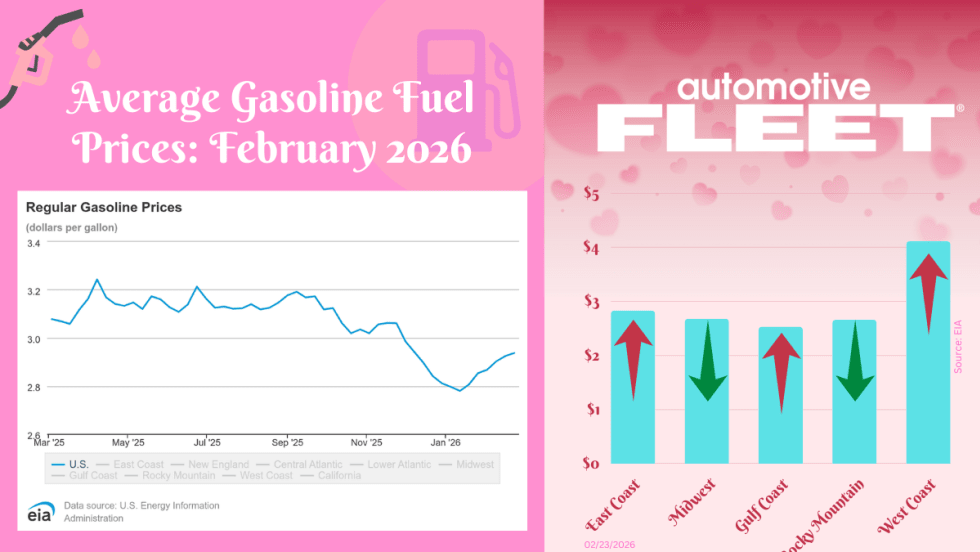
February Fuel Update: Prices Inch Higher for Third Week in a Row
The final February fuel update reveals prices continuing to inch higher for the third week in a row.
Read More →
The 2026 Fuel Economy Guide: Updated Cost and Efficiency Benchmarks for Fleets
Fleet managers can use the DOE’s 2026 Fuel Economy Guide to benchmark MPG across powertrain types using side-by-side vehicle ratings and compare new model-year options.
Read More →