




Uncertain Economy Raises Fleet Manager's Stress Levels
With pressure-filled jobs during good times, commercial fleet managers share how today’s economic turmoil has impacted their professional and personal lives.


Each day, the headlines report more bleak news. Companies bankrupt or closing their doors. Massive layoffs in nearly every industry. Stocks diving and soaring hundreds of points from day to day. In December, experts officially declared the U.S. economy is in recession.
A fleet manager’s job is filled with pressure in the best of times. According to fleet managers across the nation, the current economic turmoil and uncertainty has heightened already beleaguered stress levels. Just as the 2008 holiday season began, Automotive Fleet asked several representative commercial fleet managers how current unstable financial times are impacting their jobs, companies, and personal lives. All asked that their comments remain anonymous.
Fleet managers told of a full-court press on corporate cost-cutting, including downsizing, staff reductions, and changes in vehicle acquisition and replacement policies. Diligent oversight and control of fuel, maintenance, and other operating expenses have been heightened.
“All new-vehicle orders are on hold for the 2009 model-year. We will probably push out the replacement criteria,” reported the manager of a mid-sized fleet at an East Coast manufacturing company.
Similar cost-avoidance measures, including a significant hit to the new-vehicle budget, are taking place at a telecommunications industry company. The fleet manager remarked, “Our company is anticipating a difficult year, so budgets for capital purchases are being reviewed very closely and any purchase that does not directly support the business is being cut. For the fleet department, this means a reduction of 88-percent from 2008 levels for new-vehicle purchases.”
This fleet manager also noted, with a touch of whimsy, “We are also tasked with keeping expenses for vehicle maintenance flat from this year to next. I guess my magic wand will be getting a workout.”
The fleet manager for a Midwest manufacturer reported, “Vehicle replacement has been extended to keep vehicles in service approximately six months to one year longer. Fuel economy is still important, and in the U.S., four-cylinder vehicles are now being added to the fleet. In Europe, we are in the process of analyzing the benefits of limiting free choice and negotiating OEM discounts in our largest countries.”
A foresighted CEO of a large manufacturer “has been planning for hard times for more than two years and has mandated a reduction of indirect spend throughout the corporation,” said the company’s fleet manager. “We are always trying to discover ways to reduce costs in the fleet. We have installed telematics this quarter to assist in reducing costs and increasing productivity.”
The fleet manager for a healthcare products company noted the longer-term expense consequences of short-term cost-cutting measures.
“We have increased mileage for replacement, thereby also increasing our maintenance costs, while understanding we are affecting driver productivity and downtime,” said the fleet manager.
This same fleet manager reported the company is “extremely conservative in approach. Normally we have experimented and taken risks, but are now really watching our Ps and Qs.”
[PAGEBREAK]Downsizing Staff
The economic downturn has prompted one Midwest-headquartered manufacturer to cut sales staff and fleet vehicles by about 20 percent, said the company’s fleet manager. A beverage company has instituted a hiring freeze, resulting in open positions and excess cars, according to the company’s fleet manager, who noted, “This may affect our incentives with the manufacturer as we might not hit the new-car numbers.”
In response to the slowdown in the construction market, another Florida-based manufacturer is downsizing its large fleet by 5 percent.
The fleet manager for a pharmaceutical company reported, “My company, like many companies, is downsizing and looking at more efficient ways of doing the tasks. All transactional activities have been outsourced so the more value-added activities can be the focus. Over the past nine months, my staff has been reduced 40 percent.”
Travel for many fleet organizations has been restricted, if not prohibited altogether. New projects or programs have also been put on hold.
Overall, fleet managers reported heightened stress levels.
One commercial fleet veteran’s lament: “This year has been the most stressful I have ever dealt with in the last 18 years. Because we need to reduce costs, and fleet is the second-largest expense for any department, management, health and safety, and procurement ‘all know best’ and believe they can just walk in and ‘change the world.’ I have had to teach Fleet 101 to more people this year than I have in 18 years. So, my everyday work that has to be done isn’t getting done. My e-mails just keep piling up and my responsiveness isn’t where it should be.”
This fleet manager also spoke of “losing three weeks of vacation and working weekends and holidays, and I’m tense and impatient most of the time.”
The pressures of dealing with change have impacted another veteran fleet manager. “No matter how much you communicate changes, there are always folks that do not believe, understand, or are truly in a cave. I spend more time re-explaining what we are doing or not doing. Maybe they just need to talk and need a shoulder to complain on as everything else in their lives is also impacting them. Changes in the industry folks with whom we interact are beginning — retirements, job layoffs, and personnel movements.”
In their personal lives, fleet managers all related belt-tightening on the home front — staying home, eating out less, paying cash for purchases.
“We are very conscious of spending and will only buy if we have the cash. We stay closer to home and will keep spending down for the holiday” was one representative comment.
“I, like others, have lost a lot of value on paper; therefore, my spending has slowed,” said another fleet professional.
Like many other Americans, fleet managers contacted by AF also worry about retirement plans, viewing with increasing anxiety drastically impacted pension funds.
In addition, underneath the comments of many hovered the specter of losing their own jobs.
One fleet director spoke of re-examining personal decisions and putting plans “on the back burner as I do not want to financially impact my life at this time, knowing at any given moment, I could also be replaced.”
Said another, “Personally, the challenge is to maintain a positive balance between home and work life. A review of personal finances was critical to prepare for the possibility of any job changes.”
Facing the Challenges
Yet fleet people are sturdy, resolute professionals. Rolling with the punches of today’s economic chaos may leave some bruises, but fleet managers told of efforts to meet the unprecedented challenges they face.
One fleet manager reported “spend[ing] more time looking at different ways of handling the fleet, such as reimbursement, fuel hedging, etc., turning over every rock looking for new ways of working that will create value to my company.”
The current state of affairs “forces us to re-educate, relearn,” said another commercial fleet manager.
Another fleet veteran is seizing opportunities in these uncertain times. “We are, however, taking this opportunity to train and involve staff in other related areas to provide future career opportunities,” he said.
More Operations
How to Manage Conflict for Your Fleet Operations
Conflict management is becoming a core leadership skill. Here are five strategies fleet leaders should know.
Read More →
Turning Connected Vehicle Data Into Decisions That Matter
Fleet leaders have more data than ever, but turning that data into clear, actionable decisions remains a challenge. This white paper shows how leading organizations are using connected vehicle data to improve safety, reduce costs, and optimize fleet performance. Learn how to turn insight into action across your fleet.
Read More →
Cameras, Safety and Insurance: From Reactive Claims to Real-time Prevention
Commercial auto remains one of the most challenging and costly lines of coverage for fleet operators and insurers alike. Learn more about how to effectively address these issues from Onur Aksan, Enterprise Business Development Executive, Geotab.
Read More →

Are You Tracking Your Fleet's True Total Cost of Ownership?
Bobit Business Media surveyed 190 fleet professionals and found that while most fleets are tracking costs, fragmented systems and data gaps are keeping true TCO visibility out of reach. With rising pressure to control spend in an increasingly volatile environment, the gap between what fleets think they know and what the data actually shows is wider than you might expect. See how your peers are managing costs today and where the industry still has room to improve.
Read More →
Turn Fleet Data Into Smarter Decisions
Fleet leaders have access to more operational data than ever, but disconnected systems and unclear metrics often slow decision-making instead of improving it. This article outlines five practical steps fleets can take to transform fragmented data into actionable insights that improve planning, safety, utilization, and long-term performance.
Read More →
Hybrids: Electrification Without the Challenges
For fleet managers, fuel is one of the biggest line items in the budget — and it's one hybrids can shrink without changing how your people work. Download the eBook to see the numbers, understand the technology, and get a step-by-step guide to making the switch.
Read More →
How NOV Uses Telematics to Improve Fleet Safety Across 160 Locations
James Victory of NOV discusses how the company manages fleet safety, maintenance, and telematics across more than 150 locations supporting oilfield operations throughout the U.S.
Read More →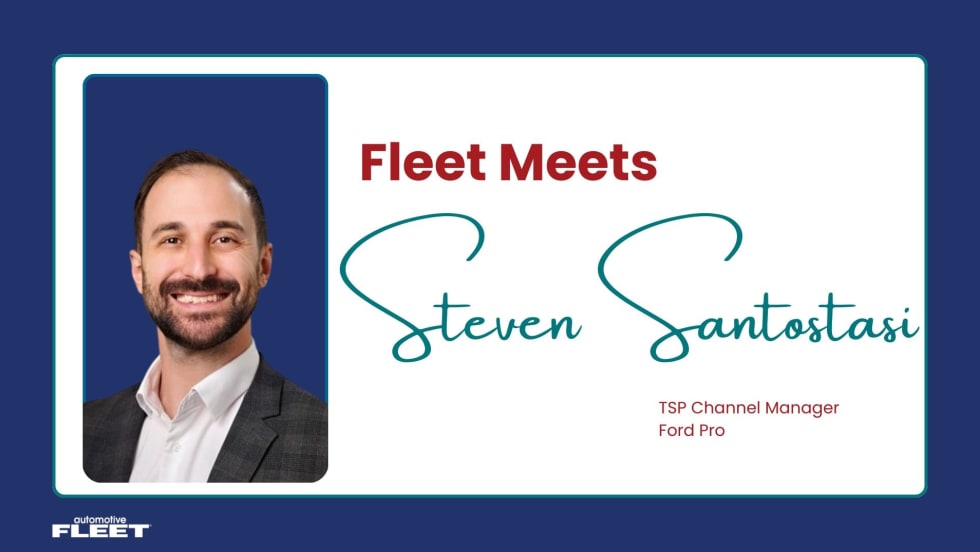
Fleet Meets: Steven Santostasi
This edition of the Fleet Meets series features Steven Santostasi, the current TSP channel manager for Ford Pro.
Read More →
Why Fleet Managers Are Replacing Departmental Vehicles with Shared Motor Pools
Departmentally assigned vehicles often create hidden costs through underutilization, poor visibility, and increased administrative burden. This white paper explores how shared motor pool strategies help fleets reduce costs, improve accountability, and optimize vehicle utilization.
Read More →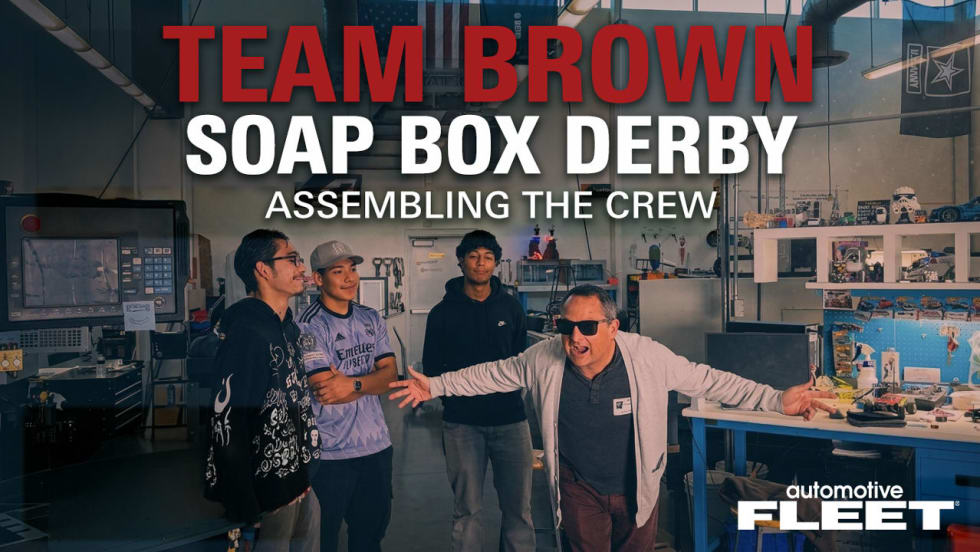
Soap Box Derby Challenge: Assembling the Crew
Meet Gabriel, Matthew, and Angel — the team helping bring this soap box derby build to life.
Read More →