




How Charles Bowen Reduced Georgia-Pacific's Fleet Costs
Charles Bowen, Georgia-Pacific's manager of automotive fleet services, manages 3,641 vehicles, of which, 95% are company-owned. His successful management of Georgia-Pacific's fleet since 1988 has saved the company $5 million.

Charles Bowen, Georgia-Pacific's manager of automotive fleet services, manages 3,641 vehicles, of which, 95% are company-owned. His successful management of Georgia-Pacific's fleet since 1988 has saved the company $5 million.
Charles Bowen, manager of automotive fleet services for Georgia-Pacific in Atlanta, GA, is the 1993 Professional Fleet Manager of the Year Award recipient.
Bowen was presented with the trophy at Automotive Fleet's annual awards brunch in Nashville, TN. Also Bowen's name will be inscribed on a plaque permanently displayed at Automotive Fleet's headquarters in Redondo Beach, CA. A $2,000 scholarship will be given in Bowen's name to an accredited university business school.
Bowen was selected this year's winner by a panel of fleet industry judges. His most recognized accomplishment was the introduction of a cost savings and efficiency plan that has saved Georgia-Pacific, a forest products company, a total of $5 million since 1988. His plan included renegotiating purchase agreements, securing volume incentive programs, changing accident damage repair procedures, extending vehicle mileage, adding more auctions to the remarketing network, and implementing additional cost-saving maintenance control procedures.
Good Relationships Cut Costs
Bowen worked in accounting and finance for five years before moving into the automobile business via sales. He was employed in the automobile dealership business for 16 years.
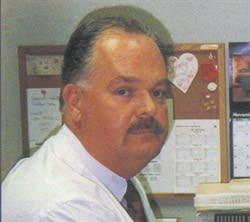
Charles Bowen, Georgia-Pacific's manager of automotive fleet services, manages 3,641 vehicles, of which, 95% are company-owned. His successful management of Georgia-Pacific's fleet since 1988 has saved the company $5 million.
In 1981, Bowen was offered an opportunity to begin a dealership fleet sales department and was fleet manager for four years before being promoted to general sales manager.
Bowen joined Georgia-Pacific in 1987 as manager of automotive fleet services. He feels that his past experiences and the relationships he has developed with dealers have allowed him to renegotiate better purchase agreements for Georgia-Pacific. His renegotiations have saved the company an average of $200,000 annually. "When I got to know our dealers better and got a feel for what they were trying to accomplish, I went back and renegotiated our contracts. We benefited on an average of $250 better per vehicle than what I had walked into," says Bowen. "I had a good sense of feel for what the dealers were willing to do. My prior experience was of tremendous value, because they knew that I was experienced in their business. All the little catch phrases and nuances of that business were not new to me."
Part of what Bowen did once he renegotiated the purchase agreements was to shorten the period of time the company was taking to pay for the vehicles. "We process payment at 20 days from invoice date. The minor trade-off in savings on our purchases justified paying them a little bit earlier than we had been accustomed to when I first came to Georgia-Pacific," says Bowen.
Another way the company saves money is through centralized operations. "When you buy anywhere from 100 to 300 vehicles a year of any given model, it gets the dealer's attention," says Bowen. "Most of what we order is from six different dealers, including Pontiac, Ford, Buick, Chevrolet, Dodge/Chrysler, and GMC. But, I never close my ears to any dealer that is interested in the business, because you never know what the future will bring. Reordering is done generally across the board, usually when our vehicles reach between 90,000 to 120,000 miles. It's not unheard of for cars to be sound operationally with over 100,000 miles and the vehicle is fully depreciated."
In 1991, Georgia-Pacific did a study on the possibility of running cars to 120,000 miles for one division that needed to reduce its capital expenditure for one year. Based on their findings, the decision was made to go ahead with the plan. The division defrayed an anticipated expense of $3,500,000 and incurred no adverse maintenance costs.
Remarketing to Employees
At the end of the vehicles' lifecycle, they are sold to the drivers or consigned to auctions. The vehicles are always available to employees first, who account for a little over 30 percent of sales. For those that aren't sold to employees, the company utilizes and auction network of 33 auctions, an increase from 19 auctions previously used. Increasing this method of remarketing has reduced sales expenses and increased sales revenue for a combined average annual savings of $140,000.
Bowen also finds it beneficial to keep a list of every vehicle that has been sold since he took over the department. "I have my own little scheme in terms of condition, the month and year it was sold, mileage, and the unit number. I can go to any point in time and look at what these cars have been selling for, so when I send one to auction, it allows me to give the auction an auction an attainable floor price. The vehicle is only worth so much. Setting unrealistic floor prices won't get you a sale. If it's 'slow sale,' you may run it one more time the following week, but sell it and go on to the next one," says Bowen.
There is, on average, forty-five days between the time that a vehicle is taken out of service and the time it is sold. During that time, a condition report is sent to the drop dealer asking them to write their own condition report and offer a courtesy bid. "The dealers who are giving us courtesy bids are generally hitting these cars anywhere from $1,000 to $1,500 less than we're getting through auction," says Bowen.
Driver Spending Monitored
Part of Georgia-Pacific's cost-saving maintenance strategy is that drivers must have purchase order approval prior to work being done for any repairs in excess of $35.
"The limit keeps tabs on the expenses and also channels calls to the maintenance supervisor, so that he can evaluate the work and see if some shop is trying to take advantage of us. You can impact the total cost of the company enormously by no having that sort of control," says Bowen.
Bowen and his team of six staff members wrote their own computer program to manage the fleet. One portion of that program produces an analytical cost report. One thing that the report does is generate the total operating costs and the total costs which include depreciation. Bowen and his staff get copies of everyone's expense report, which includes everything that was $35 and under; mostly gasoline, lube, and oil. "We capture gallons and fuel costs. We can tell whether the driver is buying the wrong fuel or using full-service pumps," says Bowen. "When the driver is using an incorrect method of fueling, that information appears on an individual cost sheet as a higher-than-normal fuel cost." A copy of the analytical cost report also goes out of every division or driver's manager that's responsible for vehicles within a division and location.
Generating the analytical cost report has proven to be beneficial to Georgia-Pacific's fleet operation. "It's been requested of me periodically to provide unique information relative to a specific division concerning their vehicles. Because of our ability to do this, the support of this company for our policies is tremendous. They see it working," says Bowen.
The company also has a maintenance manual which provides a list of national accounts vendors. The maintenance manual is very specific on how to get maintenance handled and whether or not to use a dealer in particular situations. The manual covers oil changes and filters, transmission servicing, tune-ups, reporting accident-related situations, and how to handle emergency repairs.
Drivers Choose Suitable Vehicles
While Bowen has cut costs, he has kept his drivers safe and happy. When ordering, he makes sure that all of the vehicles have V-6 engines, tilt, cruise, stereo with cassettes, electric rear defoggers, split front seats, power door locks, and airbags or anti-lock brakes or both.
Vehicles are selected by job needs. Each individual division has a different product it sells, so Bowen and his staff have put together a vehicle that will be best suited for hauling each division's product for display purposes. The drivers choose which of the vehicles on the selector lists will be best for them. "Expanded choices allow for a greater feeling of individuality, and happy drivers make good employees, who in turn are more productive," says Bowen.
The vehicles are also available for personal use, and because of this, there are responsibilities placed on the drivers, such as keeping the vehicle clean.
A year-end personal use questionnaire is generated by each individual division to track personal use mileage. "The involvement we have in personal use is to provide the value of vehicles that occur as a result of vehicles being reassigned or vehicles turning four years old," says Bowen.
Bowen's future cost-saving strategies include being concerned and in tune with alternative fuel situations that will impact his fleet. "The fleet business is becoming more complicated, so we've got o stay on top of things and make the right decisions," say Bowen.
More Operations
Here's When You Should Make an Exception to Fleet Policy
Fleet policies are designed to create consistency, but not every driver or situation fits neatly within standard rules.
Read More →
AI-Native or AI-Acquired: What Should Fleet Managers Look for in an AI Platform?
Six questions can help fleet managers look beyond AI marketing claims to evaluate integration, data access, and real-world operational performance.
Read More →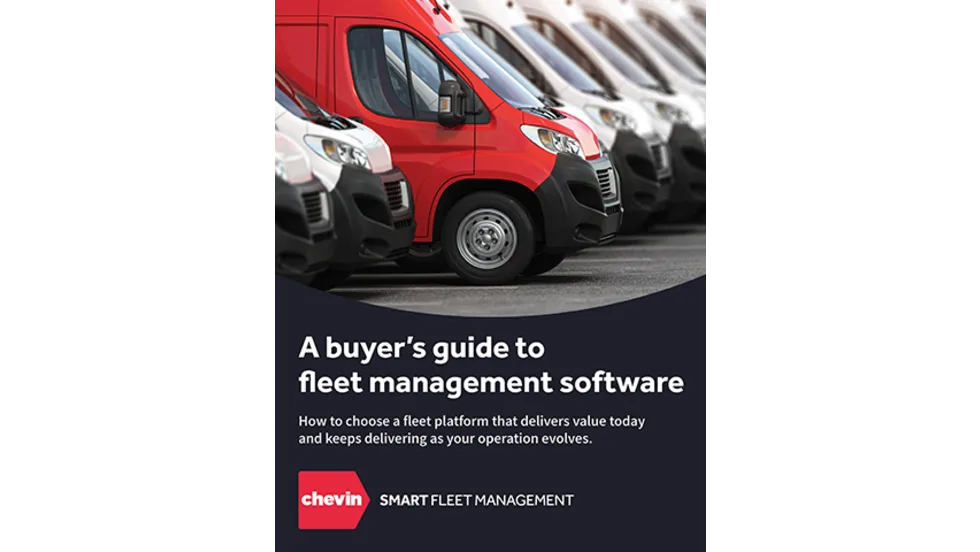
A buyer's guide to fleet management software in 2027
Buying fleet management software in 2027 means looking beyond features and price. As fleet operations, technology and expectations evolve, this guide explores what today’s fleet professionals should consider when choosing a system that can deliver value now and adapt to what comes next.
Read More →

What Will Shape the Next Era of Fleet Management?
EVs, AI, and autonomous vehicles are reshaping fleet management. Discover what’s ahead—and how fleet leaders can prepare for the next era.
Read More →
How Fleets Can Recruit and Train Veterans for Technician Roles
Here's how the technician shortage has affected uptime for fleets, and what to do about it.
Read More →
Avis Budget Group Deploys Neology Toll Management Technology Across Major Brands
Neology’s neoFleet platform will manage toll transactions and toll-authority operations for vehicles across Avis, Budget, Payless, Budget Truck and Zipcar.
Read More →
Fleet Personal-Use Charges Edge Higher in 2026
Nearly eight in 10 surveyed fleets allow personal use of company vehicles, while just over half of respondents report charging employees for the privilege.
Read More →
The Future of Fleet + What’s Changing Right Now | AF News Recap
Could developments overseas offer a preview of what’s coming for U.S. fleets? This week, we’re looking at the future of AI, autonomy, and electrification, plus Ford Pro’s new certified pre-owned program, smarter vehicle offboarding, and a new way for fleets to manage toll expenses.
Read More →
How to Handle Vehicle Offboarding
What do fleet managers need to do when a driver leaves?
Read More →
Fleet Manager’s Ultimate Playbook: Navigating the New Standard in OEM Connectivity
Rising operating costs, driver safety concerns, and unplanned downtime are putting unprecedented pressure on modern fleets. Discover how fleet managers use embedded OEM connectivity and real-time vehicle data to cut TCO, prevent downtime, and protect drivers without aftermarket telematics hardware.
Read More →