




Tesla Prices Model X Signature SUV at $132K
Tesla Motors's Model X Signature Series is priced at $132,000 and reservation holders are now being allowed to spec out the crossover, Bloomberg reports.
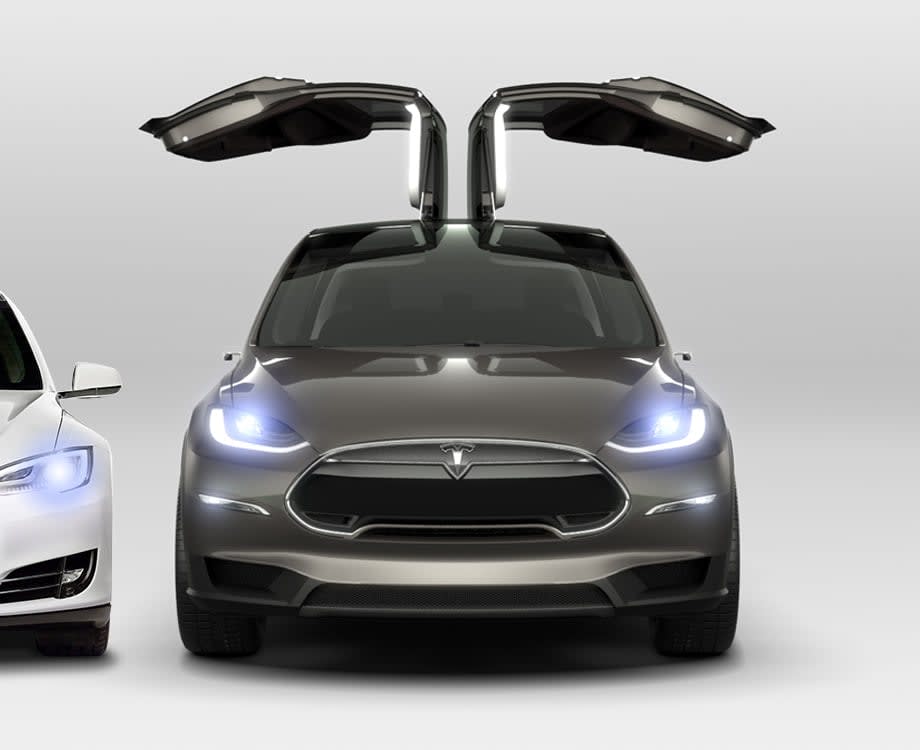
Photo of Model X courtesy of Tesla Motors.
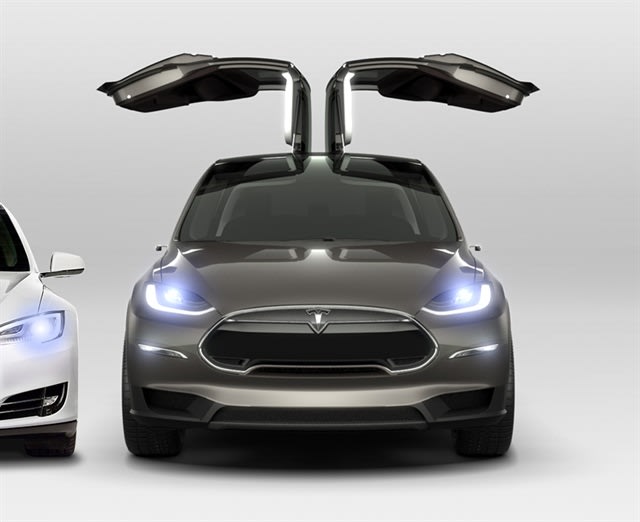
Photo of Model X courtesy of Tesla Motors.
Tesla Motors' Model X Signature Series is priced at $132,000 and reservation holders are now being allowed to spec out the crossover, Bloomberg reports.
Reservation holders can choose the paint color, their wheel size and can add Ludicrous mode to the top-of-the-line model of the all-electric sports utility vehicle.
The Model X Signature Series is the first trim level announced by Tesla, which will release information about the base model at a later date.
Standard on every Model X is a 90 kilowatt-hour battery and EPA estimated range of 240 miles per charge. The all-wheel-drive Model X comes with "falcon wing" rear doors with built-in sensors for opening in garages of any height, a rear hitch for bikes or skis, free long-distance travel on Tesla's expanding supercharger network, parking sensors and blind-spot warning, automatic emergency braking, and power-folding and heated side mirrors.
The Signature Series comes with autopilot features that include self-parking and lane steering. Other features include smart air suspension with GPS memory, satellite radio, ventilated leather seats with heating and cooling, three independently operable, adult-size second-row seats, and a flat-folding, two-adult third-row seat.
Additional features such as the Ludicrous Mode speed upgrade cost an extra $10,000. The subzero weather package costs $1,000 more, and the towing package costs $750 on top of the vehicle's $132,000 price tag.
The destination and regulatory fee is $1,200.
More Operations

Company Vehicle or Reimbursement? How Fleets Are Rethinking Assignments
As fleet costs and insurance pressures rise, fleet managers are taking a closer look at which employees need company-provided vehicles and when a reimbursement program may make more sense.

Fleetio, ASE Launch Scholarship Program for Automotive Technicians
The second annual program will award 15 scholarships totaling $35,000 to support ASE certification, testing fees, and equipment costs.

Reading the Global Signals: What AI and the Energy Transition Mean for Fleets Now
In this opening keynote of the 2026 Fleet Forward Conference, John Rossant, founder of CoMotion, How can fleet managers navigate a never-ending, changing industry landscape?

90% Use Telematics. Are Fleets Getting Safer? | AF News Recap
This week, we're breaking down which industries have the highest rates, how Jamie McKay manages 2,400 vehicles, what's happening with the 2027 fleet awards, and why software-defined vehicles could introduce new costs.

What's Best Handled by an FMC, and What's Better Done Directly?
Fleet managers continue to rely on FMCs for essential services but are taking a closer look at where working directly with suppliers can improve efficiency and responsiveness.

Fleet Meets: Erin Gilchrist
Meet Erin Gilchrist, the inaugural Mike Antich Spirit of Fleet Award winner, as she shares insights on leadership, mentorship, the power of industry connections, and why people remain at the heart of fleet's future.

How 2026 Fleet Visionary Jamie McKay Manages 2,400 Vehicles Across 37 States
How do you keep 2,400 vehicles running across 37 states? Fleet Visionary Award winner Jamie McKay shares how collaboration, flexibility, and a few simple strategies help her tackle fleet management challenges at Aptive Pest Control.

Managing Fleet Costs in an Era of Permanent Volatility
Fleet operating costs have risen more than 20% since 2020, raising a key question: When does extending a vehicle's service life stop making financial sense?

The Next Evolution of Fleet Management: Autonomous Operations
This opening keynote session at the Fleet Forward Conference highlights the future of autonomous driving for fleets.

How to Reduce the Total Cost of Risk From Catalytic Converter Theft
A stolen catalytic converter can cost fleets far more in downtime and lost productivity than in repairs. A total-cost-of-risk approach can help fleet managers quantify their exposure and prioritize theft prevention.