




Safety Tip: Averting Pothole Damage
Across the nation, it's pothole season. Here's advice from AAA on how drivers can prevent --- or at least limit --- pothole damage.
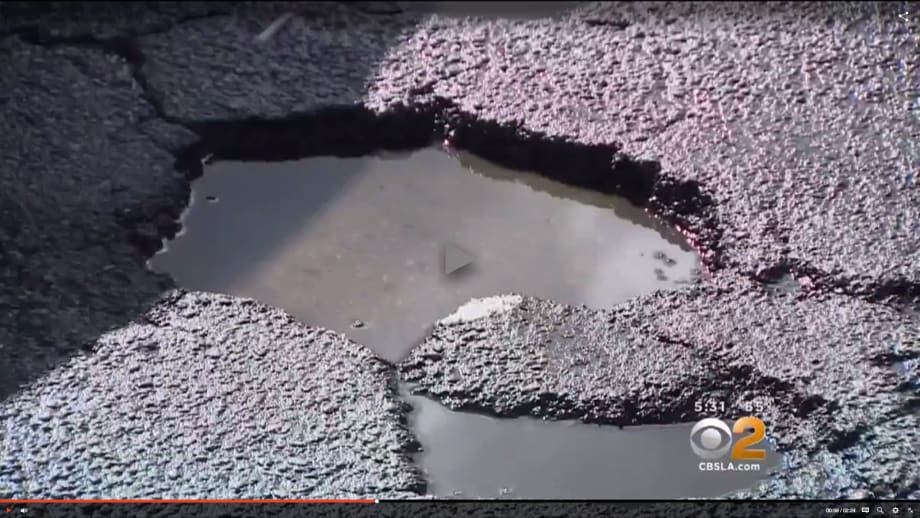
It’s a bumpy road out there — have you noticed? Across the nation, streets are riddled with potholes. And many drivers don’t realize just how much damage these irksome mini-craters can cause.
AAA recommends the following measures to help protect vehicles from pothole damage:
Inspect Tires — Make sure tires are properly inflated and have enough tread. An under-inflated or badly worn tire is more likely to suffer damage, or allow the wheel or suspension to be damaged, when hitting a pothole.
When checking tire pressures, ensure they are inflated to the manufacturer’s recommended levels, which can be found in the owner’s manual or on a sticker on the driver’s doorjamb. Don’t use the pressure levels stamped on the sidewall of the tire. To check the tread depth, insert a quarter into the tread groove with Washington’s head upside down. The tread should cover part of Washington’s head. If it doesn’t, then it’s time for new tires.
Inspect Suspension —Make certain struts, shock absorbers and other suspension parts are in good condition. Changes in vehicle handling, excessive vibration or uneven tire wear can indicate damaged or worn components. Have the suspension inspected by a certified technician if you suspect problems.
Look Ahead — Make a point of checking the road ahead for potholes. An alert driver may have time to avoid potholes, so it’s important to stay focused on the road and not any distractions inside or outside the vehicle. Before swerving to avoid a pothole, check surrounding traffic to ensure this won’t cause a collision or endanger nearby pedestrians or cyclists.
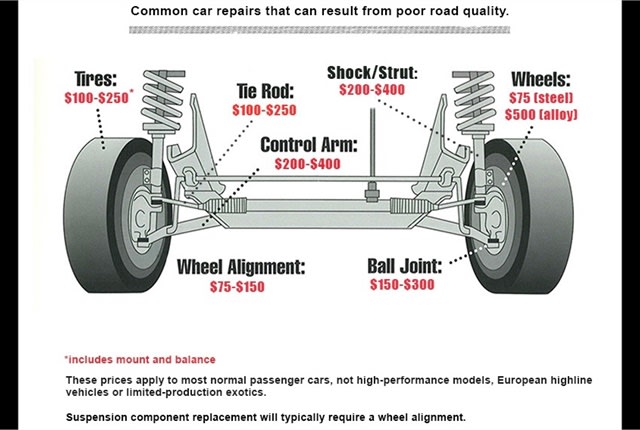
Price ranges based on 2014 prices. Graphic courtesy of AAA.
Slow Down —If you can’t avoid a pothole, reduce your speed safely and check the rearview mirror before braking abruptly. Hitting a pothole at higher speeds greatly increases the chance of damage to tires, wheels and suspension components.
Beware of Puddles —A puddle of water can disguise a deep pothole. Use care when driving through puddles and treat them as though they may be hiding potholes.
Check Alignment —Hitting a pothole can knock the wheels out of alignment and affect the steering. If a vehicle pulls to the left of right, have the wheel alignment checked by a qualified technician.
Recognize Noises/Vibrations — A hard pothole impact can dislodge wheel weights, damage a tire or wheel, and bend or even break suspension components. If you begin noticing any new or unusual noises or vibrations after hitting a pothole, the vehicle needs to go into the shop immediately for an inspection by a qualified technician.
More Safety
Which Fleet Types Have the Highest Severe Speeding Rates?
New research from SambaSafety finds significant differences in speeding rates across fleet industries, even as nearly 90% of surveyed fleets report using telematics.
Read More →
When a Cyberattack Hits Your Fleet: What Happens Next?
“You have two opportunities to test your plans: when you choose or when the threat actor chooses.” A cybersecurity expert reveals what fleet managers need to know before a cyberattack puts their operations at risk — and why the decisions made in the first moments can shape the entire recovery.
Read More →
Tips for Driving Safely on Halloween Night
This video features a reminder from the Connecticut Department of Transportation (DOT) and the Connecticut Police Chiefs Association, urging drivers to prioritize safety this Halloween.
Read More →
IIHS Crash Avoidance Tests Reveal Safety Gaps in Cargo Vans and Work Trucks
New IIHS crash avoidance ratings show uneven performance among cargo vans and heavy-duty pickups, with most struggling to avoid vehicle-to-vehicle collisions.
Read More →
What’s Next for Fleet? Safety, AI & Industry Recognition | AF News Recap
Could your company's culture be encouraging distracted driving? This week, we're exploring how workplace expectations affect driver safety, what AI, EVs, and autonomous vehicles could mean for the future of fleet management, and how fleet professionals can strengthen their award nominations.
Read More →
Does Your Fleet's Culture Encourage Distracted Driving?
What happens when the people responsible for enforcing safety rules are the ones setting the wrong example? The answer may reveal why some of the biggest risks to fleet drivers have little to do with what's written in the employee handbook.
Read More →
Fleet Manager’s Ultimate Playbook: Navigating the New Standard in OEM Connectivity
Rising operating costs, driver safety concerns, and unplanned downtime are putting unprecedented pressure on modern fleets. Discover how fleet managers use embedded OEM connectivity and real-time vehicle data to cut TCO, prevent downtime, and protect drivers without aftermarket telematics hardware.
Read More →
From Driver Well-Being to EV Charging | AF News Recap
Mental health belongs in the fleet safety conversation. This week, we’re looking at five ways fleets can support employee well-being before a crisis, plus Holman’s expansion in Mexico, new one-day Fleet Forward passes, and why EV charging demand is outpacing infrastructure growth.
Read More →
Nexar-Nauto Merger Aims to Give Fleets Better Safety Intelligence Through Larger Driving Dataset
Stefan Heck tells Automotive Fleet that combining more than 10 billion miles of driving history with Nexar's AI models will give fleets deeper insights into driver risk and roadway conditions than either company could provide independently.
Read More →
Don't Wait for a Crisis: 5 Ways to Build Mental Health Into Your Fleet Safety Program
For Suicide Prevention Month, fleet and safety leaders have an opportunity to put mental health where it belongs: at the center of workplace safety.
Read More →