




Related: Ram to Offer Verizon Connect-Powered Factory Telematics
Ram to Offer 1500 Tradesman for 2019
Fiat Chrysler will offer a 2019 Ram 1500 Tradesman model with its redesign of its top-selling pickup that's aimed at commercial fleets, small businesses, and contractors, the company announced at the Work Truck Show in Indianapolis.
by Staff
March 7, 2018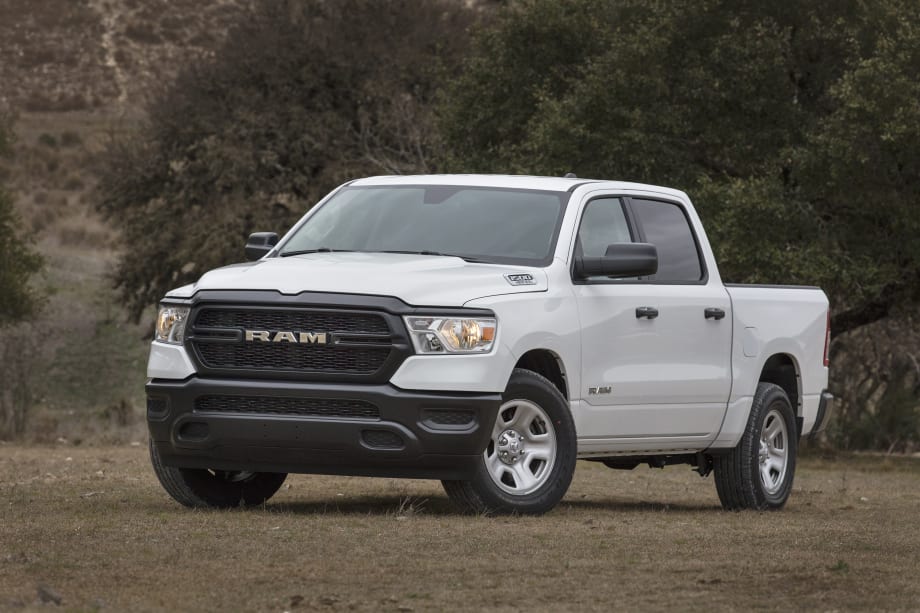
Photo of 2019 Ram 1500 Tradesman courtesy of FCA.
1 min to read
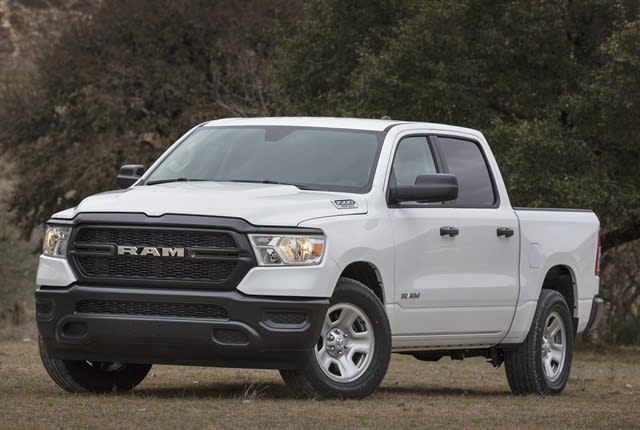
Photo of 2019 Ram 1500 Tradesman courtesy of FCA.
Fiat Chrysler will offer a 2019 Ram 1500 Tradesman model with its redesign of its top-selling pickup that's aimed at commercial fleets, small businesses, and contractors, the company announced at the Work Truck Show in Indianapolis.
Ram has been selling a 1500 Tradesman since it introduced the vocational half-ton pickup in 2011.
The 2019 Ram 1500 Tradesman is available in two cabs — Quad Cab and Crew Cab — and two bed lengths — 6 feet, 4 inches and 5 feet, 7 inches. Buyers will have access to the same engines available in the non-Tradesman model, including the 3.6-liter Pentastar V-6 with eTorque mild hybrid technology and 5.7-liter HEMI V-8. The V-8 is also available with eTorque. Rear-wheel drive is standard, while 4x4 is optional.
The Ram 1500 has reduced weight by 225 pounds for 2019. When properly equipped, it can tow up to 12,750 pounds and haul up to 2,300 pounds of payload.
The 1500 Tradesman will offer an array of options, including 3.21 or 3.92 rear axle ratios, anti-spin rear differential, rear electric-locking differential, off-road package with factory suspension lift, 180-amp alternator, folding trailer-tow mirrors, rubber floor mats, Mopar chrome side steps and bumper step, spray-in bedliner and trailer brake controller.
The 2019 Ram 1500 Tradesman retails for at least $33,340, including a $1,645 destination charge.
More Operations

Company Vehicle or Reimbursement? How Fleets Are Rethinking Assignments
As fleet costs and insurance pressures rise, fleet managers are taking a closer look at which employees need company-provided vehicles and when a reimbursement program may make more sense.

Fleetio, ASE Launch Scholarship Program for Automotive Technicians
The second annual program will award 15 scholarships totaling $35,000 to support ASE certification, testing fees, and equipment costs.

Reading the Global Signals: What AI and the Energy Transition Mean for Fleets Now
In this opening keynote of the 2026 Fleet Forward Conference, John Rossant, founder of CoMotion, How can fleet managers navigate a never-ending, changing industry landscape?

90% Use Telematics. Are Fleets Getting Safer? | AF News Recap
This week, we're breaking down which industries have the highest rates, how Jamie McKay manages 2,400 vehicles, what's happening with the 2027 fleet awards, and why software-defined vehicles could introduce new costs.

What's Best Handled by an FMC, and What's Better Done Directly?
Fleet managers continue to rely on FMCs for essential services but are taking a closer look at where working directly with suppliers can improve efficiency and responsiveness.

Fleet Meets: Erin Gilchrist
Meet Erin Gilchrist, the inaugural Mike Antich Spirit of Fleet Award winner, as she shares insights on leadership, mentorship, the power of industry connections, and why people remain at the heart of fleet's future.

How 2026 Fleet Visionary Jamie McKay Manages 2,400 Vehicles Across 37 States
How do you keep 2,400 vehicles running across 37 states? Fleet Visionary Award winner Jamie McKay shares how collaboration, flexibility, and a few simple strategies help her tackle fleet management challenges at Aptive Pest Control.

Managing Fleet Costs in an Era of Permanent Volatility
Fleet operating costs have risen more than 20% since 2020, raising a key question: When does extending a vehicle's service life stop making financial sense?

The Next Evolution of Fleet Management: Autonomous Operations
This opening keynote session at the Fleet Forward Conference highlights the future of autonomous driving for fleets.

How to Reduce the Total Cost of Risk From Catalytic Converter Theft
A stolen catalytic converter can cost fleets far more in downtime and lost productivity than in repairs. A total-cost-of-risk approach can help fleet managers quantify their exposure and prioritize theft prevention.