




Honda Odyssey Earns IIHS Top Safety Pick+ Award
The 2014 Odyssey is the first minivan IIHS has evaluated in the small overlap front test.
The 2014 Honda Odyssey minivan has drawn the Insurance Institute for Highway Safety’s top safety designation for the vehicle’s “good” performance in all five IIHS crash evaluations, including the challenging small overlap front test.
IIHS rates vehicles “good,” “acceptable,” “marginal” or “poor” based on performance in the moderate overlap front, small overlap front, side, rollover and rear crash evaluations.
The 2014 Odyssey is the first minivan IIHS has evaluated in the small overlap front test. Honda asked the institute to test the Odyssey to highlight structural changes the automaker made to improve occupant protection in a small overlap front crash. When IIHS conducts a test at a manufacturer's request, the automaker reimburses IIHS for the cost of the vehicle.
Honda introduced the upgraded Odyssey as a 2014 model. While there are no major styling changes, the new model has advanced high-strength steel in the front door frames, floor pan and front wheel wells for a more rigid occupant compartment. The side curtain airbags extend farther forward to offer comprehensive head protection in both a side crash and a small overlap front crash. Even with these modifications, the Odyssey's weight didn't change much because Honda engineers were able to reduce weight elsewhere to compensate for the strengthened structure.
"Safety is high on the list for parents when it comes to shopping for a family vehicle," IIHS President Adrian Lund said. "Consumers look for models with the highest safety ratings. Honda is ahead of many of its competitors in building state-of-the-art crashworthiness into its vehicles."
Honda and Acura brands have earned six Top Safety Pick + awards among 20 current models that IIHS has rated. They are the Honda Accord 2-door and 4-door, Civic 2-door and 4-door, Odyssey and Acura TL. Winners must earn “good” ratings for occupant protection in four of five evaluations and no less than “acceptable” in the fifth test.
IIHS added the small overlap test to its lineup of vehicle safety evaluations last year. It replicates what happens when the front corner of a vehicle strikes another vehicle or an object like a tree or a utility pole. In the test, 25% of a vehicle's front end on the driver side strikes a 5-foot-tall rigid barrier at 40 mph. A 50th percentile male Hybrid III dummy is belted in the driver seat.
In the Odyssey test, the driver's space was maintained reasonably well. Injury measures on the dummy indicated a low risk of injury in a crash of this severity, IIHS said. Because the structure helped keep the steering column stable, the front airbag stayed in front of the driver dummy during the crash to provide good protection. The side curtain airbag deployed and had sufficient forward coverage to protect the head from contact with the side structure and outside objects.
More Safety
What’s Next for Fleet? Safety, AI & Industry Recognition | AF News Recap
Could your company's culture be encouraging distracted driving? This week, we're exploring how workplace expectations affect driver safety, what AI, EVs, and autonomous vehicles could mean for the future of fleet management, and how fleet professionals can strengthen their award nominations.
Read More →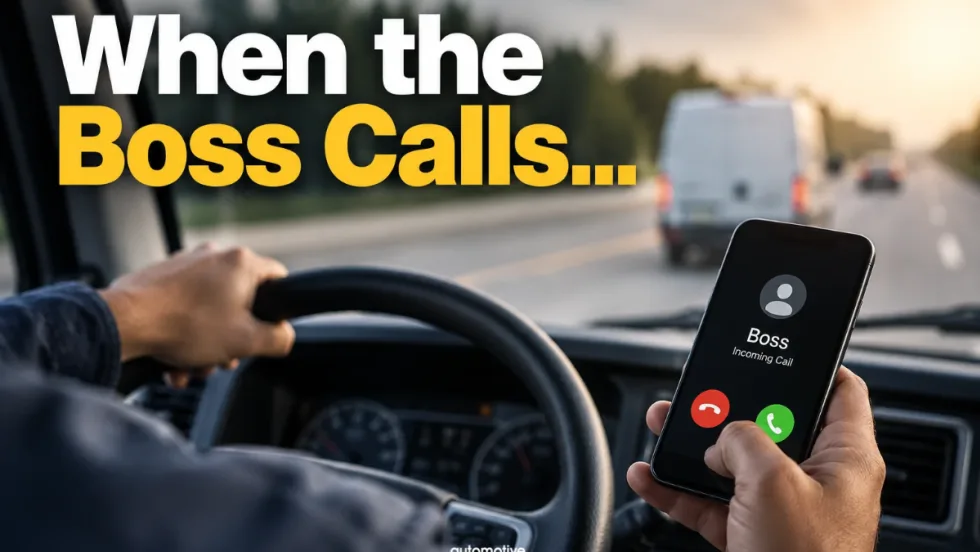
Does Your Fleet's Culture Encourage Distracted Driving?
What happens when the people responsible for enforcing safety rules are the ones setting the wrong example? The answer may reveal why some of the biggest risks to fleet drivers have little to do with what's written in the employee handbook.
Read More →
Fleet Manager’s Ultimate Playbook: Navigating the New Standard in OEM Connectivity
Rising operating costs, driver safety concerns, and unplanned downtime are putting unprecedented pressure on modern fleets. Discover how fleet managers use embedded OEM connectivity and real-time vehicle data to cut TCO, prevent downtime, and protect drivers without aftermarket telematics hardware.
Read More →
From Driver Well-Being to EV Charging | AF News Recap
Mental health belongs in the fleet safety conversation. This week, we’re looking at five ways fleets can support employee well-being before a crisis, plus Holman’s expansion in Mexico, new one-day Fleet Forward passes, and why EV charging demand is outpacing infrastructure growth.
Read More →
Nexar-Nauto Merger Aims to Give Fleets Better Safety Intelligence Through Larger Driving Dataset
Stefan Heck tells Automotive Fleet that combining more than 10 billion miles of driving history with Nexar's AI models will give fleets deeper insights into driver risk and roadway conditions than either company could provide independently.
Read More →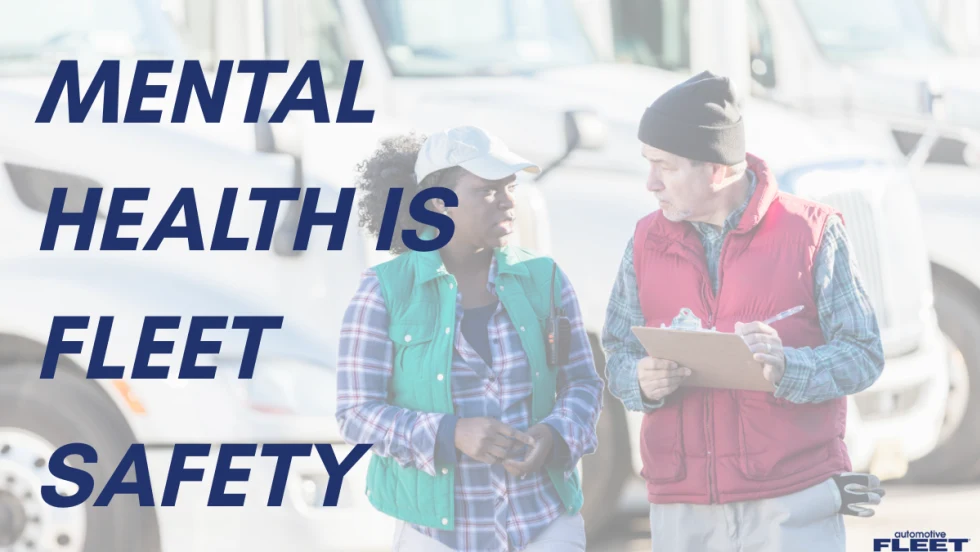
Don't Wait for a Crisis: 5 Ways to Build Mental Health Into Your Fleet Safety Program
For Suicide Prevention Month, fleet and safety leaders have an opportunity to put mental health where it belongs: at the center of workplace safety.
Read More →
How Camera Data Can Strengthen a Fleet’s Insurance Renewal
Insights from a commercial insurance carrier and a broker show how fleets can turn video telematic data, driver coaching, and improved claims results into a stronger case at insurance renewal.
Read More →
The Safest Fleets Aren’t the Ones with the Most Technology
You’ve made the telematics investment. Here’s how to capture the other half of its value and build the safest fleet on the road.
Read More →
Hidden in Plain Sight: Fleet Compliance Risks
Fleet compliance isn't just about having policies — it's about consistently enforcing them. This practical guide reveals six hidden compliance risks common in public sector and shared fleet operations and outlines proven strategies to improve visibility, accountability, and audit readiness
Read More →
NETS Sets 2026 Fleet Safety Benchmark Conference for Indianapolis
The Sept. 15–17 program will feature fleet benchmarking data, case studies, emerging technologies, and implementation strategies while running alongside the NSC Safety Congress & Expo.
Read More →