





Related: New Accounting Rules Require All Leases on Balance Sheets
Open-End Versus Closed-End Leasing
Choosing a leasing instrument during the procurement process is a vital aspect of fleet management that requires consideration of costs, utilization, and remarketing scenarios.
January 20, 2016
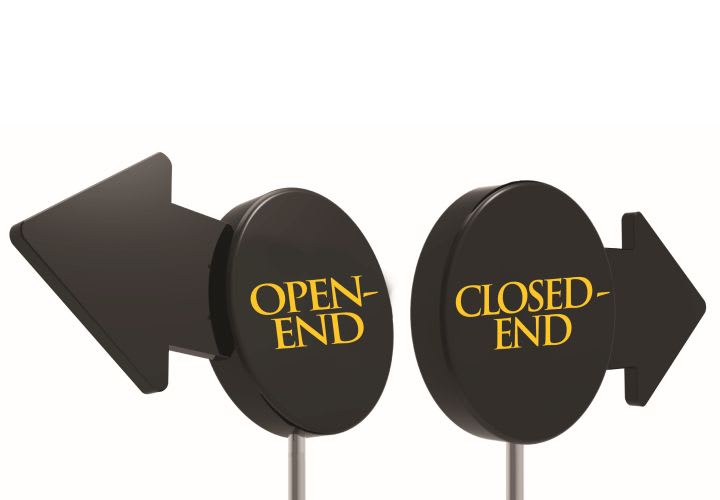
Photo courtesy of iStockPhoto.com.
11 min to read
Photo courtesy of iStockPhoto.com.
The fleet leasing industry is taking a cautiously optimistic approach to coming changes in accounting standards that have reignited discussions about the leasing instruments that have become essential tools for procurement of fleet vehicles.
The Financial Accounting Standards Board's (FASB) new lease accounting may not have a seismic impact on fleet management when they arrive in early 2016, but fleet managers will need to assess the impact of including lease obligations on corporate balance sheets and should initiate thoughtful, preemptive conversations with their finance departments.
In the commercial fleet industry, leasing has become the dominant way companies acquire their vehicles, a trend that stands in stark relief to the public fleet realm, where fleet managers often deploy replacement reserve funds to fund fleet purchases.
Companies choose to lease their vehicles as a way to reduce the amount of capital tied up in non-core assets, as well as to reduce sales tax by paying tax on a leased vehicle similar to rental instead of paying tax on the vehicle purchase amount.
Commercial leasing has evolved from the early days of closed-end offerings, where fleet managers now face two main choices, including open-ended and closed-ended leases that offer basic benefits. An open-ended lease is set up as a "cost plus" arrangement, while the closed-end lease offers a fixed price.
Fleets that opt for leasing over financing or outright cash purchases still mostly prefer an open-ended TRAC lease, which can also be known as an operating lease. TRAC, which stands for Terminal Rental Adjustment Clause, is a certification that tells the Internal Revenue Service that the lease conforms to its tax codes and isn't considered a daily rental agreement. Open-ended leases typically offer a fleet manager more flexibility in dealing with variable mileage and greater input into remarketing decisions.
"We have found that the TRAC lease meets the objectives of the widest audience," said Bruce Wright, strategic consulting manager with Element Fleet Management. "The TRAC lease traditionally offers the lowest total cost of ownership over the long run of the portfolio due to the customer experiencing the actual depreciation based on their asset utilization patterns."
Other fleets prefer closed-end operating leases that provide greater cost certainty for tighter monthly budgets, smaller fleets, or executive fleets that tie vehicles to compensation.
"Companies turn to closed-end leases when they're looking to get a fixed-cost solution for the provision of vehicles rather than taking the risk themselves and waiting until the vehicle is disposed to know what their ultimate cost was," said Joe Pelehach, vice president of Motorlease Corp.
A third lease type, known as an open calculation lease, has arrived from Europe. The lease isn't widely offered by U.S. fleet management companies, and it offers a middle ground on costs and remarketing decisions. It functions like a closed-end lease with greater transparency.
Choosing a lease should always be undertaken with a clear idea of how the vehicle will be used in the field. Other factors that must be considered include the company's financial needs, operational requirements, asset type and utilization. Executives with fleet management companies suggested that fleet managers should calculate the total cost of ownership of a vehicle before choosing a leasing instrument.
Let's take a closer look at leasing options available to commercial fleets. Read our sidebar about the benefits of using capital to purchase fleet vehicles outright. Financing fleet vehicles is yet another option that may lose steam as interest rates rise higher.
Open-Ended Leasing: Flexibility and Control
Open-end leases have become pervasive in fleet leasing because they offer fleet managers greater control of asset utilization and disposal. In an open-end lease, the lessee agrees to a minimum term that's usually at least 12 months and can terminate the agreement at any point after the end of the term. The lessor then sells the vehicle. If the proceeds of the sale are greater than what was calculated in the agreement, the lessee receives a reimbursement. If the vehicle is sold for less, the lessee must reimburse the lessor for the difference.
Open-end leases carry no mileage restrictions and as a result appeal to companies with unpredictable mileage. High-mileage vehicles will depreciate faster, which will force the lessee to bear the brunt of higher use in the used-vehicle market. The lessee also assumes responsibility for remarketing decisions, including the risk or reward involving resale value.
"In North America, most fleets exist to serve as work and business tools and are not provided in lieu of compensation," said Norman Din, vice president of strategic sales with Wheels, Inc. "Because they are work tools, mileage is typically both high and varied."
Fleet management companies usually offer different kinds of open-end leases depending on the accounting guidance from the corporation's finance department. A lease would be considered a capital lease versus an operating lease if one of four factors is met, said Bryan Wilson, ARI's controller.
"The difference between a capital and operating lease comes down to the accounting guidance that governs leases," Wilson said. "If at least one of the four criteria is true then the lease would be classified as a capital lease on the lessee’s account books."
A lease would be considered a capital lease if the ownership of the asset is shifted to the lessee, the lessee purchases the asset at below market price by exercising a "bargain purchase option," the lease term encompasses at least 75% of the useful life of the asset, or the present value of the minimum lease payments plus any lessee guarantee is at least 90 percent of the fair value of the asset at lease inception.
In the present leasing environment, a capital lease would be added to a company's balance sheet while an operating lease could be kept off the balance sheet, a situation that will likely change under the new accounting standards.
Open-end leases appeal to fleet managers with remarketing expertise who monitor the used-vehicle market and can sell vehicles during peaks in the value cycle.
Michael Bieger, senior director of global procurement for payroll servicer ADP, uses open-end leases for his fleet of mostly Ford Fusion Hybrid sedans for this reason. Bieger usually leases his 1,200 vehicles for about 36 months.
"The reason we don’t have hard and fast end points is because we need flexibility to respond to market conditions," Bieger said. "We can cycle the vehicles out early should it be a good business decision for ADP. If you have a closed-end lease that opportunity is not provided to you."
Fleet management companies specializing in open-end leases include ARI, Donlen, Element, EMKAY, LeasePlan, and Wheels, Inc.
Closed-Ended Leasing: Predictable Outcomes
Closed-end leases can resemble retail leases and appeal to fleets seeking a fixed monthly payment. With this lease, the term is set and monthly payments are based on the estimated residual value of the vehicle at the end of the term. The leasing company estimates this value, and sets restrictions on mileage and wear. The lessee can walk away from the deal at the end of the term with no additional costs if the vehicle didn't exceed the maximum mileage or wear-and-tear parameters. The lessor sells the vehicle and assumes responsibility for any profits or losses caused by fluctuations in market value.
"Closed-end leases have the benefit of a predictable monthly payment with no residual risk to the lessee at term end," said Craig Lehmann, Donlen's director of equipment leasing operations. "With the lessor assuming the residual risk, the potential drawback is there are usage provisions incorporated into the lease, which could lead to end-of-term charges for customers that did not accurately project usage at lease inception."
Closed-end leases can carry penalties for mileage overages or increased wear and tear, but the fleet management companies offering these products say they make adjustments to gain customer loyalty.
"The mere prospect of having an excess mileage charge or early termination fee causes some fleets to remove closed-end leases from consideration," said Pelehach. "The reality is that whether a lessee is in a closed-end lease or an open-end lease, they are going to have to deal with the economic realities of the use of that vehicle, whether it is terminating a lease earlier than anticipated or driving higher miles."
As one way to ease the impact of unpredictable mileage, Merchants Fleet Management allows larger fleets to pool mileage to help even out driving patterns.
"The economics of a closed-end lease payment usually make sense when driver mileage is predictable," said Tom Coffey, vice president of sales and marketing for Merchants.
Similarly, Motorlease offers a mile-per-mile credit that allows a fleet to apply the unused miles from one vehicle to the mileage overage of another vehicle. Mileage overages that result in penalties can be viewed as a way to account for unplanned depreciation, Pelehach added.
"Assuming that the leasing company is fair in their excess mileage charge, the additional cost that is incurred by an excess mileage charge is nothing more than capturing the additional depreciation that occurs as a result of the higher mileage," Pelehach added.
Closed-end leases can also make more sense in an environment of rising interest rates, because the rate is fixed with other costs at the beginning of the term, said Pelehach. However, fleet management companies who offer open-end leases said rates can be fixed on those products as well.
Closed-end leases provide more certainty to fleet managers who worry about the future of the used-car market, which has been strong in recent years. These leases fix the cost of depreciation, which typically makes up the highest cost in the TCO equation.
"The used market is beginning to move off of those historic all-time highs, and looking at historical data can be dangerous if trying to calculate future expectations," Pelehach said. "That's a huge problem with open-end leases and TCO. You don’t know what your TCO is until the vehicle is sold."
Closed-end leases can also find favor with multi-national fleets that manage vehicles in various countries to harmonize their lease accounting across the board.
"International accounting standards only recognize closed end leases as operating," said Brad Vliek, EMKAY's vice president of client services. "Because of this, U.S. syndicates with foreign parent companies typically choose closed-end leases for consistency with their parent company."
Lease accounting may drive a fleet's decision to steer away from a closed-end lease because the right to use an asset would be required for the entire lease term. Open-end leases average about six months of "right to use" with a minimum term of 12 months, said Wheels' Din.
Fleet management companies specializing in closed-end leases include LeasePlan, Merchants Fleet Management, and Motorlease.
Open Calculation Leases: A Hybrid Offering
LeasePlan has begun offering an open calculation lease that has been a popular offering in Europe because it functions similarly to a closed-end lease but with characteristics of an open-end. In Europe, fleets who opt for closed-end leases that don't list the components that make up the monthly payment.
The open calculation lease gives fleets the predictability of a set payment, but also offer more transparency about how the lessor arrived at that number. At the end of the term, the lease offers a risk-and-reward sharing scenario that usually involves the lessor paying the lessee half of the reward if the vehicle sells for more than the expected value. The lessor usually also agrees to shoulder the costs if the vehicle sells for less.
This type of lease also suits the European leasing market because vehicles are often sold in lots at auction rather than being sold individually. The lot allows a lessor to mix vehicles in various conditions to spread out risk and level the average selling price.
Closed-end lease terms tend to be longer and can range from 18 months to 36 months.
"Flexibility is important and that holds true when looking at leasing solutions," said Jon Toups, chief sales and marketing officer for LeasePlan USA. "At the end of the day, the lease has to meet the needs of the client's finance and accounting teams, so it's crucial to offer more than just one solution."
LeasePlan is the only fleet management company offering an open calculation lease in the U.S.
Purchasing Fleet Vehicles with Capital Outlays
Fleets often choose leasing over purchasing to avoid capital expenditures that may be better suited for other corporate goals. Companies willing to move forward with this outlay can reduce operating costs associated with hiring leasing service providers.
Sue Miller, the former fleet manager for McDonald's Corp., shifted the company from a self-funded leasing approach to a capital outlay approach in her 29 years with the company.
"When we analyzed the lease-versus-own approach, we realized we were adding a layer of expense and administration that wasn’t necessary by financing our own leasing of the vehicles," said Miller.
Miller turned to fleet management service providers for other services and used what's known as an "unbundled" approach. She purchased the vehicles through dealers and hired a remarketing company to help with disposal. She also implemented a vehicle trade-in program that saved the company up to $400,000 a year, depending on the quality of the new vehicle.
"The unbundled approach became our mode of business," Miller said. "We just wrote a check for the cars, and added them to our ledger. During my tenure, we were a cash-oriented company. Paying for the car outright was still a benefit. With the weighted cost of capital, we were still coming out ahead by owning the car with no monthly billing reconciliations or adjustments that come with leasing. We set up straight depreciation for the car and managed it very cleanly in that regard. We had no early termination penalties and weren't constrained about how the vehicle was utilized or taking a vehicle in or out of service. We were in full control of the asset."
Subscribe to Our Newsletter
More Leasing
Martin Kuhn on the Future of Mike Albert Fleet Solutions
The new president and CEO explains how Mike Albert Fleet Solutions plans to invest in technology, data, and people without losing the personal service fleet customers value.
Read More →
Mike Albert Fleet Solutions Names Marty Kuhn CEO, First from Outside the Family
Kuhn has a theory of what sets the company apart from larger FMCs: depth of partnership over breadth of volume.
Read More →
Union Leasing Rebrands as Moventum Fleet Management
The name Moventum reflects the company’s position at the intersection of movement and momentum, with the guiding principle "Keep Work Moving."
Read More →
How Does a Mid-Major FMC Compete? Ask BBL Fleet
This Pittsburgh-based FMC built a technology-first culture, sustained double-digit organic growth, and expanded its Midwest footprint through a recent acquisition. How did it happen?
Read More →
What’s Really Happening in Fleet Supply Right Now
Fleet supply has improved, but not everywhere. Merchants Fleet’s Charles Matthew explains where constraints still exist, what risks are emerging, and why fleets shouldn’t wait to place orders.
Read More →
These Edges Are Measured in Inches — Matt Dyer on Fleet’s New Normal
The Merchants Fleet CEO contends that fleets that drive the business win the inches. In 2026, every one of them counts.
Read More →
Who Gets a Company Car? (In 2026 and Beyond)
As costs rise and scrutiny increases, fleets are refining criteria that govern eligibility for company-owned vehicles.
Read More →
DriveItAway Holdings, Free2move Launch Operations In Nine Cities
The co-branded program with Stellantis’ mobility division scales up leasing and financing options nationwide with more cities to come online in 2026.
Read More →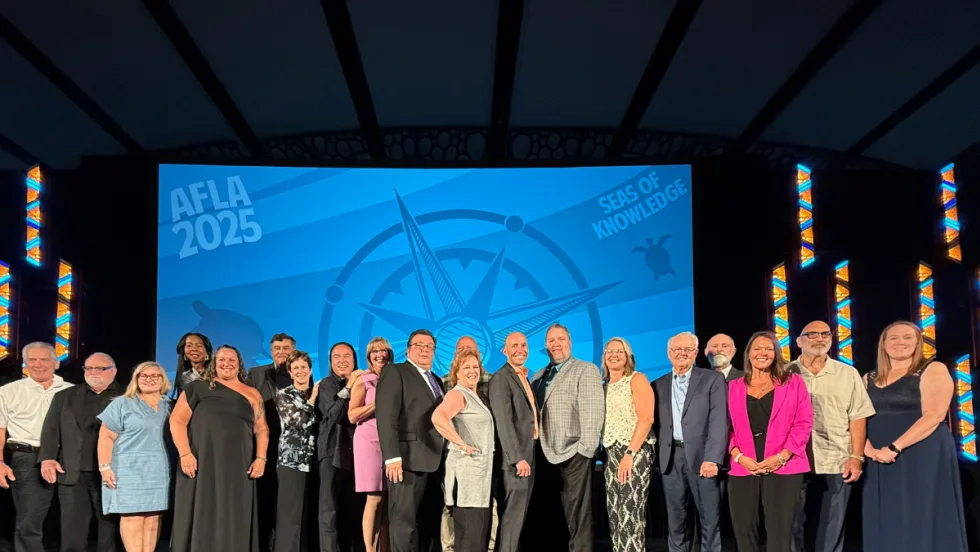
AFLA 2025 Conference in Pictures
Drawing over 640 attendees, the 2025 AFLA Annual Conference was held Sept. 14-17 at the JW Marriott Marco Island Beach Resort in Florida.
Read More →
DriveItAway, Free2move Partner to Expand Vehicle Access for Dealers
The arrangement enables franchise dealers to offer flexible lease-to-own programs with no credit checks, no down payments, and no long-term commitments.
Read More →