





Related: Telematics to the Rescue
Putting Telematics Into Practice
As fleets are learning, telematics solutions are providing the tools to help solve operational challenges facing fleets of all sizes and types.
April 20, 2016
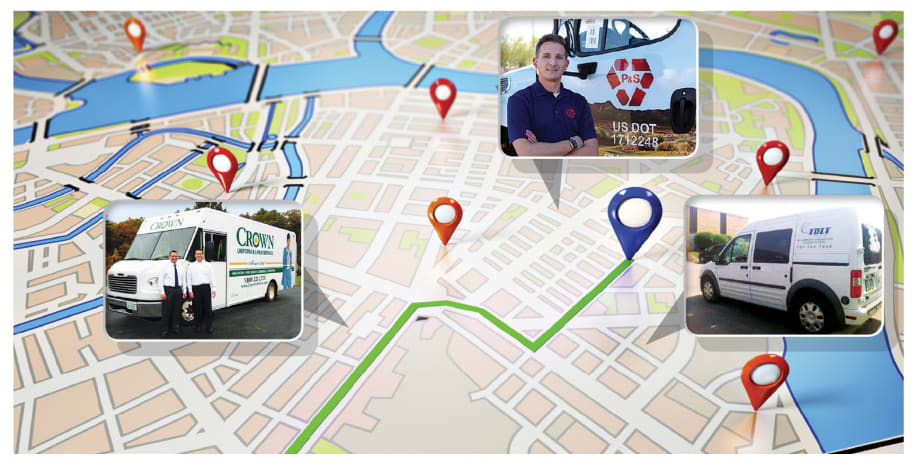
Photo illustration by Armie Bautista.
4 min to read
Photo illustration by Armie Bautista.
Just a short time ago, fleet management could aptly be described as more art than science, but, thanks to telematics, the pendulum is swinging more to the science side.
As the following case studies illustrate, telematics is giving fleets powerful tools to effectively solve some seemingly insurmountable problems.
Lowering Accident Rates
Safety is at the forefront of most fleet policies today and telematics is one of the tools fleet managers can use to increase the safety of their fleet.
One such fleet was Tolt Solutions, a South Carolina-based IT Services company, which operates a fleet of more than 450 light-duty service vans.
The company was looking for a solution that would help it lower its accident rate. To do this, it chose a telematics solution that would allow it to monitor trending data on driver behavior, including down to the exact day and time an individual driver was speeding or engaging in other unsafe activities.
By having this telematics tool, the company reported that it was able to reduce its accident rate by 21% within the first year, with the rate trending downward.
Cutting Idling
After depreciation, fuel is the biggest cost for fleets. With the advent of telematics, fleet managers got a better picture of just how much strain idling was putting on their fleets’ bottom lines.
For example, Crown Uniform service, which operates a fleet of Freightliner Step Vans, knew that it had to take steps to cut idling.
The problem: Each fleet vehicle made 30 to 40 stops per day, and, when factoring in unnecessary idling, the fuel costs were adding up. Many of the drivers left their engines running out of habit, and were idling as much as 70 minutes per day. One hour of idling, on average, wastes about a gallon of gasoline or diesel fuel. Using this equation, each driver was wasting, on average about six gallons of fuel per week due to unnecessary idling.
The company used its telematics solution to set an idling baseline, which was communicated to location managers — many of whom had no idea that the drivers were idling their vehicles so much — and then filtered the message down to the drivers.
The company set an acceptable baseline idling goal of 10 minutes per day, and monitored the drivers daily. If a driver idled more than the baseline 10 minutes per day, a report was generated and sent to the location manager who would speak to the driver and correct the actions immediately.
Within a few months Crown’s drivers reduced their idling from 70 minutes per day to 7 minutes, saving the company between $1,500 and $2,000 per month in fuel costs.
Routing More Efficiently
Routing is another way fleets may waste fuel, and that was something that Parks & Sons, a family-owned waste and recycling hauler in Sun City, Ariz., wanted to correct.
Prior to implementing telematics, the company relied on a voice/CB radio system to route vehicles, which wasn’t efficient. The company also experienced a period of growth that caused additional inefficiencies to be created due to the addition of new, overlapping routes that was difficult to reroute using its manual system.
The company wanted to improve route efficiency and take a deeper dive into data relating to the fleet’s maintenance profile — identifying wear and tear — and keeping the fleet up and running.
Parks & Sons solved the problem by adding a telematics solution with routing capabilities. This eliminated route inefficiencies, saving the company $150,000 in fuel costs in the first year, on top of improving driver and vehicle productivity.
The company also invested in a custom-built Parks & Sons application specifically aimed at monitoring fleet maintenance.
Gaining Overall Efficiency
Cleveland, Ohio-based Vans Express has realized overall improved efficiency for its mixed fleet of light-duty cargo vans and medium-duty vehicles.
The company has been using its current telematics system for the past three years and has shown the fleet where it can find additional efficiencies.
"The solution has shown us different areas within our business where we can operate more efficiently, effectively and securely – in particular, how drivers are running routes, and vehicle idling times, fuel usage, and miles per gallon,” said Craig Altern, operations and fleet manager for Vans Express Inc. “The technology pays for itself over and over again because we’ve lowered our operating, maintenance and insurance costs."
The business is operating at peak efficiency now because of its telematics solution, according to Alten.
"And most importantly, it’s creating safe, professional drivers and vehicles on the road,” he said.
Subscribe to Our Newsletter
More Telematics
GM Launches OnStar Fleet Intelligence Platform With AI Assistant
The new platform brings vehicle data, order tracking, connected services and fleet analytics into one system, with an AI assistant that can answer fleet questions using natural-language prompts.
Read More →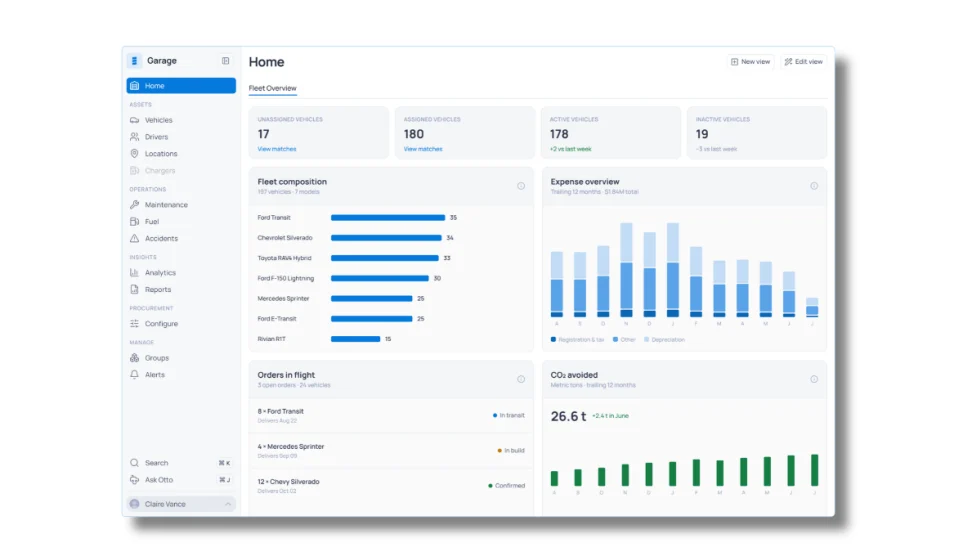
Inspiration Fleet Introduces Garage 2.0 Fleet Intelligence Platform
Fleet managers increasingly have access to data from vehicles, telematics, fuel, charging, and other systems, but those sources don't always communicate with one another. Inspiration Fleet's Garage 2.0 platform brings that information together while letting fleets keep working with different technology and service providers.
Read More →
Inside Inspiration Fleet’s New Platform for Connecting Fleet Data
Inspiration Fleet CTO Chris Getner explains how the new Garage 2.0 platform is designed to connect disparate fleet data and what that could mean for fleet managers in practice.
Read More →
Sponsored•October 1, 2026
Fleet Manager’s Ultimate Playbook: Navigating the New Standard in OEM Connectivity
Rising operating costs, driver safety concerns, and unplanned downtime are putting unprecedented pressure on modern fleets. Discover how fleet managers use embedded OEM connectivity and real-time vehicle data to cut TCO, prevent downtime, and protect drivers without aftermarket telematics hardware.
Read More →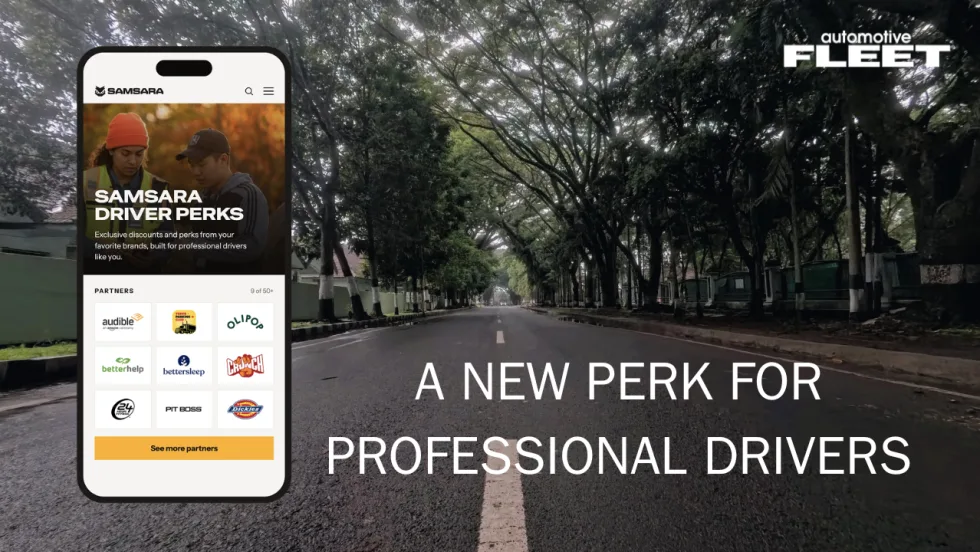
Samsara Driver Perks Adds New Benefit for Corporate Fleet Drivers
The rewards program gives eligible professional drivers access to discounts from more than 50 brands while giving fleets another way to support recruitment, retention, and the driver experience.
Read More →
Inside the Church of Jesus Christ of Latter-day Saints’ Two-Track Telematics Strategy
With 20,000 vehicles and two fundamentally different driver populations, the Church faced a fleet management problem that a single telematics program couldn't solve. How it responded offers a replicable framework for any fleet where one size doesn't fit every driver.
Read More →
How Conversational AI Can Make Fleet Tasks Easier for Drivers
While most generative AI tools help fleet managers interpret data at their desks, Connex2X is applying voice interaction to tasks behind the wheel.
Read More →
Why Fleets Are Creating Dedicated Fleet Analyst Positions
Are fleet analyst positions the new norm? Listen here to find out.
Read More →
Teletrac Navman Begins Next Chapter as Standalone Private Company
What's new with Teletrac Navman and its new owner?
Read More →
Why Fleets Are Creating Dedicated Fleet Analyst Positions
Telematics, AI, EVs, and connected technologies are generating more fleet data than traditional teams can effectively manage. Reed Jackson explains why dedicated fleet analytics roles are emerging to turn that information into better operational decisions.
Read More →