




How to Survive a Carjacking
Carjacking has become one of the most prevalent crimes in many parts of the world. Most carjackings occur for the sole purpose of taking the car; it is a crime without a political agenda.
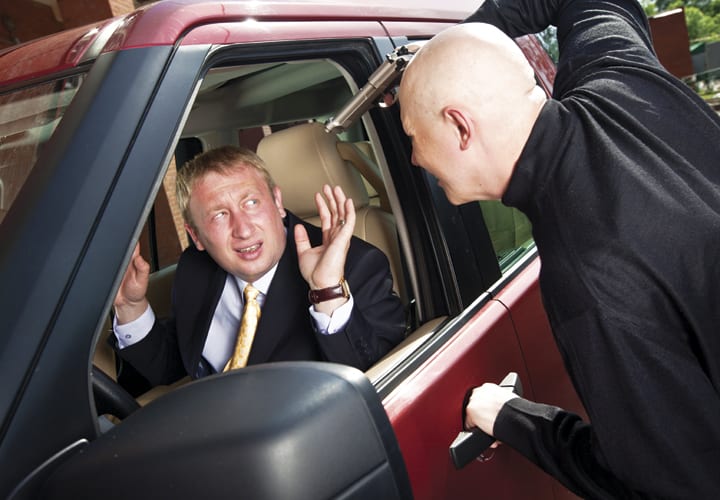
Photo courtesy of iStockPhoto.com.
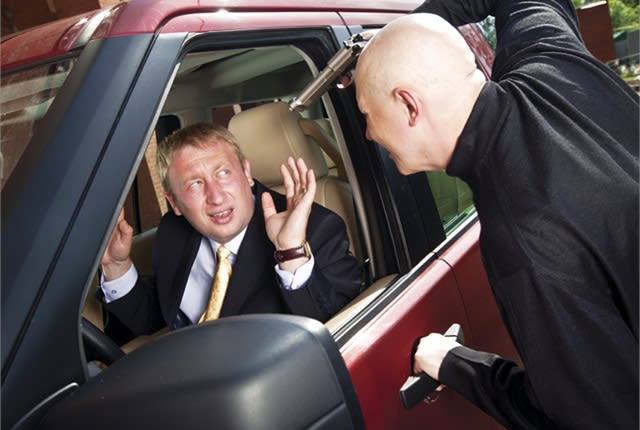
Photo courtesy of iStockPhoto.com.
Carjacking has become one of the most prevalent crimes in many parts of the world. Most carjackings occur for the sole purpose of taking the car; it is a crime without a political agenda.
You can protect yourself by becoming familiar with the methods, ruses, and locations commonly used by carjackers.
Police experts recommend that drivers should agree to all demands, and try to draw notice of the situation to passersby. If there is an opportunity to escape, do it, but remember to weigh the risk of escalating an already volatile event.
Practice Avoidance
The first step to avoid becoming a victim is to stay alert at all times and be aware of the surrounding environment. The most likely places for a carjacking are:
High crime areas
Lesser traveled roads (e.g., rural areas)
Intersections where vehicles must stop
Isolated areas in parking lots
Residential driveways and gate
Traffic jams or congested areas
Learn to avoid these areas and situations if possible. If not, take steps to prevent an attack.
In traffic, look around for possible avenues of escape. Drivers should keep some distance between their vehicle and the vehicle in front of them to enable the ability to easily maneuver out of a situation — about one-half of the vehicle's length. (Rule of thumb: The rear tires of the vehicle traveling directly in front should be visible.)
When stopped, use the rear- and side-view mirrors to stay aware of the surroundings. Also, keep doors locked and windows up. This increases safety and makes it more difficult for an attacker to surprise you.
Accidents are one ruse used by attackers to control a victim. The following are common scenarios leading up to a carjacking:
The Bump: The attacker bumps the victim's vehicle from behind. The victim gets out to assess the damage and exchange information. The victim's vehicle is taken.
Good Samaritan: The attacker(s) stage what appears to be an accident. They may simulate an injury. The victim stops to assist, and the vehicle is taken.
The Ruse: The vehicle behind the victim flashes its lights or the driver waves to get the victim's attention. The attacker tries to indicate that there is a problem with the victim's car. The victim pulls over, and the vehicle is taken.
The Trap: Carjackers use surveillance to follow the victim home. When the victim pulls into his or her driveway waiting for the gate or garage door to open, the attacker pulls up behind and blocks the victim's car.
The bottom line: Think before stopping to assist in an accident. It may be safer to call and report the location, number of cars involved, and any injuries observed.In all cases, keep your cell phone or radio with you and immediately alert someone regarding your situation.
In most carjacking situations, the attackers are interested only in the vehicle. Try to stay calm. Do not stare at the attacker as this may seem aggressive and cause them to harm you.
Also, while some people think that carrying a weapon or pepper spray may fend off attackers, police strongly advise drivers be properly trained to use them. However, they warn that these weapons could be turned against a driver.
Act After an Attack
Always carry a cell phone or radio on your person. If you are in a populated area, immediately go to a safe place before contacting someone to report the incident.
Immediately report the crime and clearly describe the event. What time of day did it occur? Where did it happen? How did it happen? Who was involved?
Describe the attacker(s). Without staring during the event, try to note height, weight, scars or other marks, hair and eye color, the presence of facial hair, build (slender, large), and complexion (dark, fair). Describe the attacker's vehicle. If possible, get the vehicle license number, color, make, and model, as well as any marks (scratches, dents, or damage) and personal decorations (stickers, colored wheels, etc.).
The golden rule for descriptions is to give only that information you absolutely remember. If you are not sure, don't guess.
Remember, in the end, avoidance is the best way to prevent an attack.
More Safety
IIHS Crash Avoidance Tests Reveal Safety Gaps in Cargo Vans and Work Trucks
New crash-avoidance ratings from the Insurance Institute for Highway Safety reveal inconsistent performance among commercial vehicles, with several popular cargo vans and heavy-duty pickups struggling to avoid collisions with other vehicles and pedestrians.
Read More →
What’s Next for Fleet? Safety, AI & Industry Recognition | AF News Recap
Could your company's culture be encouraging distracted driving? This week, we're exploring how workplace expectations affect driver safety, what AI, EVs, and autonomous vehicles could mean for the future of fleet management, and how fleet professionals can strengthen their award nominations.
Read More →
Does Your Fleet's Culture Encourage Distracted Driving?
What happens when the people responsible for enforcing safety rules are the ones setting the wrong example? The answer may reveal why some of the biggest risks to fleet drivers have little to do with what's written in the employee handbook.
Read More →
Fleet Manager’s Ultimate Playbook: Navigating the New Standard in OEM Connectivity
Rising operating costs, driver safety concerns, and unplanned downtime are putting unprecedented pressure on modern fleets. Discover how fleet managers use embedded OEM connectivity and real-time vehicle data to cut TCO, prevent downtime, and protect drivers without aftermarket telematics hardware.
Read More →
From Driver Well-Being to EV Charging | AF News Recap
Mental health belongs in the fleet safety conversation. This week, we’re looking at five ways fleets can support employee well-being before a crisis, plus Holman’s expansion in Mexico, new one-day Fleet Forward passes, and why EV charging demand is outpacing infrastructure growth.
Read More →
Nexar-Nauto Merger Aims to Give Fleets Better Safety Intelligence Through Larger Driving Dataset
Stefan Heck tells Automotive Fleet that combining more than 10 billion miles of driving history with Nexar's AI models will give fleets deeper insights into driver risk and roadway conditions than either company could provide independently.
Read More →
Don't Wait for a Crisis: 5 Ways to Build Mental Health Into Your Fleet Safety Program
For Suicide Prevention Month, fleet and safety leaders have an opportunity to put mental health where it belongs: at the center of workplace safety.
Read More →
How Camera Data Can Strengthen a Fleet’s Insurance Renewal
Insights from a commercial insurance carrier and a broker show how fleets can turn video telematic data, driver coaching, and improved claims results into a stronger case at insurance renewal.
Read More →
The Safest Fleets Aren’t the Ones with the Most Technology
You’ve made the telematics investment. Here’s how to capture the other half of its value and build the safest fleet on the road.
Read More →
Hidden in Plain Sight: Fleet Compliance Risks
Fleet compliance isn't just about having policies — it's about consistently enforcing them. This practical guide reveals six hidden compliance risks common in public sector and shared fleet operations and outlines proven strategies to improve visibility, accountability, and audit readiness
Read More →