




Vehicle Transportation: What's the Right Choice?
While there is no single best way to transport a fleet vehicle, there are criteria that fleet managers can use to determine the best method for an individual move.


Carrier services are less expensive than driveaway services, but can take longer to deliver a vehicle.
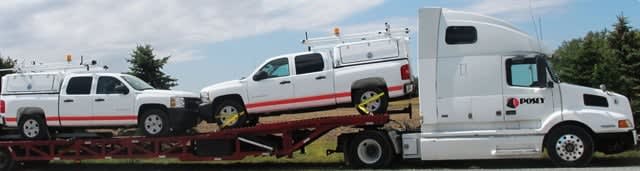
Carrier services are less expensive than driveaway services, but can take longer to deliver a vehicle.
Transporting a fleet vehicle can present a fleet manager with a dilemma if the vehicle is out of state: how to most efficiently move the vehicle to the fleet and get it into productive service.
Fortunately there’s a solution, a vehicle transportation service.
Carrier Versus Driveaway
Broadly, there are two options available for fleet vehicle transportation:
A carrier service involves transporting the vehicle with several others — usually between three and five — using a specialized trailer.
A driveaway service provides a professional driver to drive the vehicle to its destination.
According to Steve Gibson, SVP of sales & marketing for AmeriFleet Transportation, there are three factors to evaluate when deciding between using a driveaway or carrier service: (1) when the vehicle is needed, (2) how long it will take to get to its destination, and (3) the costs involved.
“A carrier is a little less expensive if you have the time,” noted Don Kreft, principal and chief marketing officer for Transport Solutions of America (TSOA). He added that it can take up to 24 additional days after a sale to receive a vehicle via a carrier, since the transporting trucks must be full before they’re dispatched.
Rochelle Hall, project manager for Posey Transport Group, said carrier move times typically range from three to 10 days.
Carrier services are a good option if several vehicles are going to the same location. Driveaway services are more immediate — albeit a bit more expensive — but offer a number of advantages over the less expensive carrier service, according to Lori Rasmussen, president of PARS.
“Carrier services will pick the vehicle up and deliver it as is,” said Rasmussen. “It may have service engine lights on, physical damage, windshield chips, expired plates, etc. A driveaway service will alert you of these items and fix them prior to delivery. This is critical for some companies. Shorter moves usually make more sense for a driveaway service. Most carriers will not move vehicles distances under 350 miles without a significant premium.”
Hall noted that a carrier service can be faster, easier, and cheaper than a driveaway service for a longer move.
She added that the repair services offered by driveaway companies are part of their fees. “And, we go through an inspection process with damage noted at pick up and delivery,” Hall said.
For Rodney Ruth, president/CEO of Auto Driveaway, the answer is less of one method over the other; it’s more of an issue of getting a vehicle to its destination. For instance, the company has experience moving alternative-fuel vehicles, such as natural gas and electric trucks and sedans. The lack of infrastructure often means moving the vehicles using a combination of methods. “A driver may drive the vehicle part of the way, then, when he gets to an area without the fueling infrastructure, switches it to a carrier for that stretch of the move,” he said.
Other options for moving fleet vehicles are flatbedding. But, according to Kreft, it is “prohibitively expensive.”
Another issue that may make a carrier service more attractive is that, unlike driveaway services, it doesn’t accumulate miles on an odometer.
For Gibson of AmeriFleet, who came from a fleet management background with ServiceMaster, mileage is a moot point. “From my research, mileage is not an issue. I came to the realization when I was in fleet management that extra mileage didn’t make a difference in the resale value of the vehicle,” he said. “You’re not focusing on the big picture if you’re just worried about mileage.”
Kreft of TSOA echoed the point, but with a caveat. “If the vehicle already has 25,000 miles, then it’s no big deal to add 700 miles to it. However, if it’s a brand-new car, then unnecessary mileage is a consideration,” he said.
Ruth of Auto Driveaway noted that the answer “depends on where that vehicle is in its lease cycle.”
He added that a short move of 300 to 400 miles wouldn’t impact the vehicle condition, but a cross-country move of 2,000 miles could add unnecessary wear-and-tear on the vehicle beyond mileage. “It’s no different than an employee putting those miles on the vehicle. Using a carrier can help alleviate that,” he said. The type of lease should also be a consideration, for instance a closed-end lease may have mileage restrictions, necessitating the use of a carrier service to transport the vehicle.
One point all the experts tended to agree on: no matter the other variables, time trumps mileage and cost.
“We want to get the vehicles in the hands of the clients so they can be productive,” Gibson commented.
To simplify moving a vehicle, fleets can turn to a broker — most often to secure a carrier service. The advantage of working with a broker is making sure a quality firm is moving the fleet asset. “A broker checks motor carrier (MC) numbers, carrier safety ratings, insurance updates and amounts, workers’ compensation documents, and has relationships with trusted carriers all over the nation,” said Hall of Posey Transport Group.
Why Not a Fleet Driver?
In today’s era of tight budgets, it could be tempting just to turn the job of moving a vehicle over to one of the fleet’s drivers to save money. Think again, said the experts.
“Can you afford to take that driver off the road?” Kreft of TSOA asked hypothetically. “And, if you have a union shop, the union most likely won’t allow it. Then, there’s the liability issue.”
Liability may be one of the biggest considerations, and this is where engaging an outside company — whether a driveaway or carrier service — makes more sense. They are typically liable for the vehicle while it is in their possession.
“Fleet management companies and the fleet’s company don’t want unnecessary headaches,” Kreft said. “So, the service company can take the liability.”
Ruth of Auto Driveaway was more to the point. “[Transport] is not what fleet drivers do,” he said.
However, there are always exceptions to the rule. “There are times when it does make sense to have an employee pick up the vehicle. Such as if they’re an hour away and can pick it up [safely],” said Gibson of AmeriFleet.
Service is The Business
Customer service is an important aspect of the vehicle transportation business, according to Gibson. “Clients are looking at high quality at the end — during delivery — maybe the vehicle is being delivered to a new employee and there’s a need to impress him or her,” he said.
Ruth focused on the hands-on aspect of the driveaway service. “With a driveaway service, it’s a one-vehicle, one-driver situation, so the driver has the ability to do more than a carrier driver,” he said.
These extras can, ultimately, help make the fleet driver more efficient. “Obtaining the state-required DMV services prior to delivery eliminates the need for the company’s new driver to spend time obtaining these documents. The driver is more productive and the cost is minimal,” Rasmussen of PARS said. Other services that may be provided in the driveaway model include detailing, DMV services (VIN inspection, smog certificate, weight slip) and repairs.
Finding the right driver is important to build customer confidence.
“Dependability, honesty, punctuality, and appearance are some of the key qualities we look for in our drivers,” Rasmussen said. “Our drivers provide the ‘moment of truth’ with our customers. They represent both our customer and our company when handling vehicle deliveries. It is critical that they are professional.”
In addition to detailed background checks, both AmeriFleet and Auto Driveaway send their clients an e-mail once the driver is dispatched that includes a photo and a dossier on the driver.
Emerging Trends
There is one thing for certain in the automotive transportation industry — business is picking up.
“We are starting to see a lot more movement of new vehicles, which is a resource challenge on the carrier side of the business,” said Gibson of Amerifleet.
TSOA’s Kreft said that he’s seeing many vehicles coming out of storage and is transporting a large number of upfitted medium-duty trucks. Hall said that Posey Transport Group is transporting more upfitted vehicles.
For both PARS and AmeriFleet, a big trend has nothing to do directly with moving vehicles. “The trend is to utilize more of our services to keep fleet drivers productive and on the job,” Rasmussen said.
Gibson added that AmeriFleet leadership is asking their customers a single question: “What else do you need us to do?” The answer has led, for instance, to being more involved with asset recovery when dealing with a terminated employee, including the recovery of laptops and pharmaceutical supplies.
Ruth added that providing real-time vehicle tracking and data acquisition for its leasing company customers is an emerging trend for Auto Driveaway. “We’re helping our customers come to the informed decision of what to do with the vehicle — should it be placed in the fleet, sent to auction, or placed somewhere else?” he said. “We’re the eyes and ears of the vehicle.”
More Operations
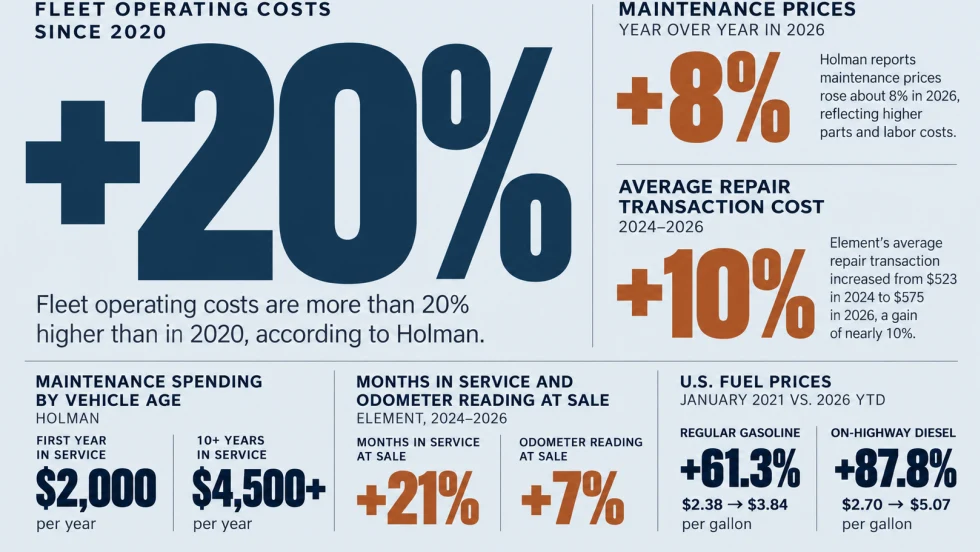
Managing Fleet Costs in an Era of Permanent Volatility
Fleet operating costs have risen more than 20% since 2020, raising a key question: When does extending a vehicle's service life stop making financial sense?
Read More →
The Next Evolution of Fleet Management: Autonomous Operations
This opening keynote session at the Fleet Forward Conference highlights the future of autonomous driving for fleets.
Read More →
How to Reduce the Total Cost of Risk From Catalytic Converter Theft
A stolen catalytic converter can cost fleets far more in downtime and lost productivity than in repairs. A total-cost-of-risk approach can help fleet managers quantify their exposure and prioritize theft prevention.
Read More →

Personal-Use Charges Rise as Vehicle Values Fall | AF News Recap
Personal-use charges are climbing, wholesale used-vehicle values are declining, and commercial fleet sales growth is slowing. This week, we're breaking down the latest fleet data, plus how Element Fleet Management is helping Waymo prepare for its first Canadian robotaxi market.
Read More →
Here's When You Should Make an Exception to Fleet Policy
Fleet policies are designed to create consistency, but not every driver or situation fits neatly within standard rules.
Read More →
AI-Native or AI-Acquired: What Should Fleet Managers Look for in an AI Platform?
Six questions can help fleet managers look beyond AI marketing claims to evaluate integration, data access, and real-world operational performance.
Read More →
A buyer's guide to fleet management software in 2027
Buying fleet management software in 2027 means looking beyond features and price. As fleet operations, technology and expectations evolve, this guide explores what today’s fleet professionals should consider when choosing a system that can deliver value now and adapt to what comes next.
Read More →
What Will Shape the Next Era of Fleet Management?
EVs, AI, and autonomous vehicles are reshaping fleet management. Discover what’s ahead—and how fleet leaders can prepare for the next era.
Read More →
How Fleets Can Recruit and Train Veterans for Technician Roles
Here's how the technician shortage has affected uptime for fleets, and what to do about it.
Read More →
Avis Budget Group Deploys Neology Toll Management Technology Across Major Brands
Neology’s neoFleet platform will manage toll transactions and toll-authority operations for vehicles across Avis, Budget, Payless, Budget Truck and Zipcar.
Read More →