




Study: Texting Bans Don't Reduce Crashes
ARLINGTON, VA - It may be illegal to text while driving in most U.S. states, but a new study by researchers at the Highway Loss Data Institute found no reductions in crashes after laws banning the practice took effect.
ARLINGTON, VA - A new study by researchers at the Highway Loss Data Institute (HLDI), an affiliate of the Insurance Institute for Highway Safety, found no reductions in crashes after laws took effect that ban texting by all drivers.
In fact, such bans are associated with a slight increase in the frequency of insurance claims filed under collision coverage for damage to vehicles in crashes. This finding is based on comparisons of claims in four states before and after texting bans, compared with patterns of claims in nearby states, HLDI said.
The new findings, released this week at the annual meeting of the Governors Highway Safety Association, are consistent with those of a previous HLDI study, which found that banning hand-held phone use while driving doesn't cut crashes.
HLDI researchers calculated rates of collision claims for vehicles up to nine years old during the months immediately before and after driver texting was banned in California (January 2009), Louisiana (July 2008), Minnesota (August 2008), and Washington (January 2008). Comparable data were collected in nearby states where texting laws weren't substantially changed during the time span of the study. This controlled for possible changes in collision claim rates unrelated to the bans -- changes in the number of miles driven due to the economy, seasonal changes in driving patterns, etc.
"Texting bans haven't reduced crashes at all. In a perverse twist, crashes increased in three of the four states we studied after bans were enacted. It's an indication that texting bans might even increase the risk of texting for drivers who continue to do so despite the laws," said Adrian Lund, president of both HLDI and the Insurance Institute for Highway Safety.
Month-to-month fluctuations in the rates of collision claims in HLDI's four study states with texting bans for all drivers didn't change much from before to after the bans were enacted. Nor did the patterns differ much from those in nearby states that didn't ban texting for all drivers during the study period. To the extent that the crash patterns did change in the study states, they went up, not down, after the bans took effect. Increases varied from 1 percent more crashes in Washington to about 9 percent more in Minnesota (the result in Washington isn't statistically significant), reported HLDI.
Young motorists are more likely than older people to text while driving. In all four of the study states, crashes increased among drivers younger than 25 after the all-driver bans took effect. In California, Louisiana, and Washington, the increases for young drivers were greater than for drivers 25 and older. The largest crash increase of all (12 percent) following enactment of a texting ban was among young drivers in California.
An IIHS study that relied on driver phone records found a four-fold increase in the risk of injury crashes associated with phoning. A study in Canada found a four-fold increase in the risk of crashes involving property damage. The crash risk associated with texting hasn't been quantified as precisely, but it may be comparable, if not greater, than the risk associated with phoning.
Noncompliance is a likely reason texting bans aren't reducing crashes, according to HLDI. Survey results indicate that many drivers, especially younger ones, shrug off these bans. Among 18-24 year-olds, the group most likely to text, 45 percent reported doing so anyway in states that bar all drivers from texting. This is just shy of the 48 percent of drivers who reported texting in states without bans. Many respondents who knew it was illegal to text said they didn't think police were strongly enforcing the bans.
However, Lund said the results don't explain why crashes increased after texting bans. "If drivers were disregarding the bans, then the crash patterns should have remained steady. So clearly drivers did respond to the bans somehow, and what they might have been doing was moving their phones down and out of sight when they texted, in recognition that what they were doing was illegal. This could exacerbate the risk of texting by taking drivers' eyes further from the road and for a longer time."
Using a driving simulator, researchers at the University of Glasgow found a sharp decrease in crash likelihood when participants switched from head-down to head-up displays. This suggests it might be more hazardous for a driver to text from a device that's hidden from view on the lap or vehicle seat.
Texting in general is on the increase. Wireless phone subscriptions numbered 286 million as of December 2009, up 47 percent from 194 million in June 2005. Text messaging is increasing, too. It went up by about 60 percent in one year alone, from 1 trillion messages in 2008 to 1.6 trillion in 2009, according to HLDI.
The District of Columbia was the first U.S. jurisdiction to ban all motorists from texting. This was in 2004, and since then 30 states have followed suit. Nearly half of these bans have been enacted in 2010.
More Safety

From Driver Well-Being to EV Charging | AF News Recap
Mental health belongs in the fleet safety conversation. This week, we’re looking at five ways fleets can support employee well-being before a crisis, plus Holman’s expansion in Mexico, new one-day Fleet Forward passes, and why EV charging demand is outpacing infrastructure growth.
Read More →
Nexar-Nauto Merger Aims to Give Fleets Better Safety Intelligence Through Larger Driving Dataset
Stefan Heck tells Automotive Fleet that combining more than 10 billion miles of driving history with Nexar's AI models will give fleets deeper insights into driver risk and roadway conditions than either company could provide independently.
Read More →
Don't Wait for a Crisis: 5 Ways to Build Mental Health Into Your Fleet Safety Program
For Suicide Prevention Month, fleet and safety leaders have an opportunity to put mental health where it belongs: at the center of workplace safety.
Read More →
How Camera Data Can Strengthen a Fleet’s Insurance Renewal
Insights from a commercial insurance carrier and a broker show how fleets can turn video telematic data, driver coaching, and improved claims results into a stronger case at insurance renewal.
Read More →
The Safest Fleets Aren’t the Ones with the Most Technology
You’ve made the telematics investment. Here’s how to capture the other half of its value and build the safest fleet on the road.
Read More →
Hidden in Plain Sight: Fleet Compliance Risks
Fleet compliance isn't just about having policies — it's about consistently enforcing them. This practical guide reveals six hidden compliance risks common in public sector and shared fleet operations and outlines proven strategies to improve visibility, accountability, and audit readiness
Read More →
NETS Sets 2026 Fleet Safety Benchmark Conference for Indianapolis
The Sept. 15–17 program will feature fleet benchmarking data, case studies, emerging technologies, and implementation strategies while running alongside the NSC Safety Congress & Expo.
Read More →
Off-the-Job Crashes Account for 43% of Employers’ $61.7 Billion Crash Burden
NETS quantifies costs dispersed across fleet, risk, HR, and other departments while providing new per-crash benchmarks for employers.
Read More →
Ram Recalls More Than 1.27 Million 1500 Pickups for Seat Belt Anchor Issue
The recall affects certain 2019-2026 Ram 1500 pickups that may have improperly attached second-row seat belt buckle anchors.
Read More →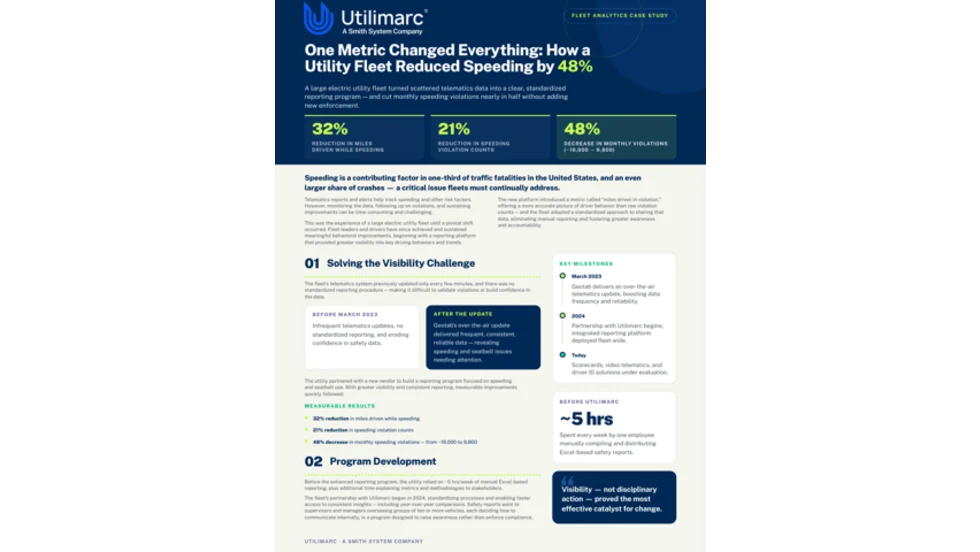
How Better Visibility Cut Speeding Violations by 48%
Fleet leaders don't need more data, they need clearer visibility into what the data is saying. This case study explores how one utility replaced speeding-event counts with a single metric — miles driven in violation — to strengthen safety and significantly reduce speeding violations.
Read More →