




Weichman Strives to Build Upon NAFA's Success
Through increased partnerships, NAFA is working to grow membership, expand its industry alliances, and continue to promote and elevate the fleet management profession.

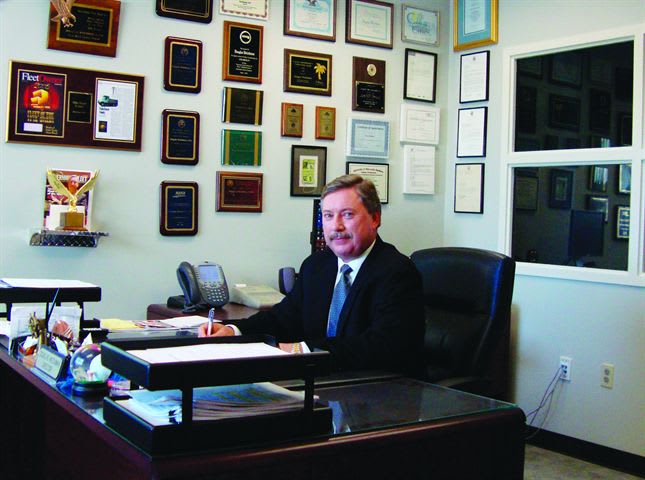
Doug Weichman, CAFM, director of fleet management for Palm Beach County, Fla., is currently senior vice president of the NAFA Fleet Management Association.
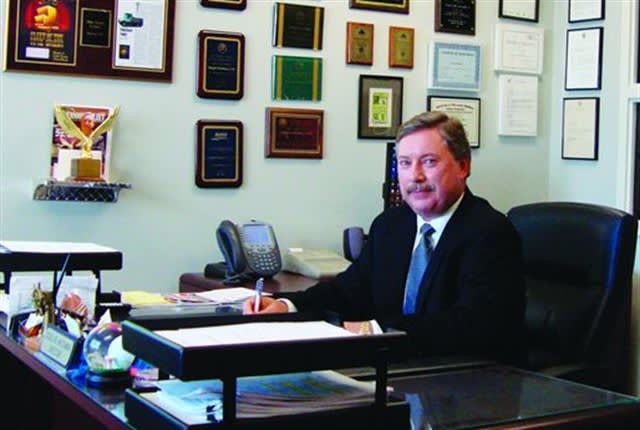
Doug Weichman, CAFM, director of fleet management for Palm Beach County, Fla., is currently senior vice president of the NAFA Fleet Management Association.
Doug Weichman, CAFM, director of fleet management for Palm Beach County, Fla., and NAFA Fleet Management Association (NAFA) senior vice president, recently discussed with Automotive Fleet his goals, challenges, and vision to unify and elevate the fleet management profession.
AF: As one of NAFA's leaders and presumptive next president, what initiatives will you implement to strengthen and build upon the organization's existing relationships with all sectors of the fleet management industry?
Weichman: First, although I am currently the senior vice president of the Association, I make no assumptions. If I am privileged to be nominated and elected next year, I will strive to follow in the footsteps of previous NAFA leaders.
To answer the question, I look at the success the certification program had with partnerships and building alliances. This can work with (and is working for) the Association, too. Our strategic plan outlines goals of becoming the indispensable resource at all levels for fleet management education - whether for the membership, industry partners, the government, or the media - and to be a powerful policy advocate to influence the fleet community's interests. Our certification partnerships with Rocky Mountain Fleet Management Association (RMFMA) and the Florida Association of Governmental Fleet Administrators (FLAGFA) have not only strengthened the program, but added "glue" to the profession. Now, fleet managers involved with other associations recognize the same elements and standards of excellence. The program acts to unify and elevate the profession.
The idea of partnership for NAFA has already begun at the chapter levels, too. Many chapters work together with regional associations to provide the best education on fleet management. The NAFA Sunshine State Chapter, partnering with FLAGFA to hold joint conferences for the past few years, is just one example. The Association itself has numerous partnership success stories, including the National Truck Equipment Association (NTEA), Network of Employers for Traffic Safety (NETS), National Institute for Automotive Service Excellence (ASE), and the International Automotive Remarketers Alliance (IARA).
I see the use of partnerships elevated to a high priority within NAFA's plan and to use workshops to help develop these strategies at Board of Governor meetings. Partnerships create "win-win-win" scenarios; so in the end, the result will be the elevation and respect of the profession within and outside our industry, as well as showing sincerity, openness, and cooperation when building these relationships.
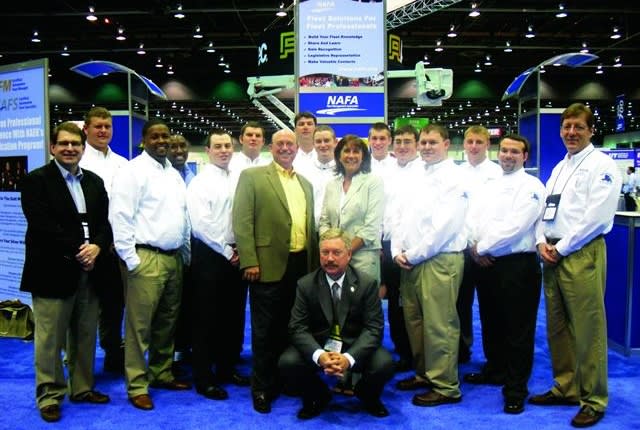
Weichman (crouching) poses with a group of Ferris State University (FSU) automotive students; Steve Pederson, VPSI; Christy Coyte, Johnson Controls (center); and FSU automotive professors, Mike Ropele (far left) and Gary Maike (far right), at the NAFA I&E in Detroit in April.
AF: What are your plans to "grow" NAFA membership?
Weichman: Many plans are in place. One includes growing membership by fostering the next generation of fleet managers. NAFA has long been the premier educational source for the fleet industry through our Certified Automotive Fleet Manager (CAFM) program, educational seminars, and annual Institute & Expo (I&E). We expanded our footprint last year with the creation of the Certified Automotive Fleet Specialist (CAFS) program, which opened the doors of fleet education to anyone who works within a fleet department.
Our membership numbers will grow as we educate the next generation of fleet managers through programs such as the CAFS and partnerships with the U.S. Department of Veterans Affairs (VA), Ferris State University, and fellow associations such as RMFMA and FLAGFA that endorse and offer the CAFM/CAFS programs to their members as well.
NAFA wants to help recruit new fleet managers into the profession and provide them the necessary skills required to be successful. We are actively expanding our student membership by creating new college student groups and encouraging them to attend local chapter meetings and NAFA events. We had 13 students from the Student Chapter of Ferris State University attend the I&E in Detroit this year thanks to a sponsorship by the NAFA Michigan Chapter. Our goal is to have NAFA chapters work closely with student chapters in their areas to help make the transition to fleet management careers easier for students.
AF: How will you maximize the advantages of being a NAFA Member and Affiliate during your presidency?
Weichman: The biggest thing we can do is to listen to our membership. We're doing this by creating new Advisory Boards to get input from a greater number of fleet managers throughout all of the various segments of the industry. NAFA is constantly changing and evolving, but the goal is to provide the highest value for every segment of fleet - this includes both Members and Affiliates. In fact, NAFA is currently working with the membership to evaluate the role of Affiliates to see if they can be more engaged in governing the Association.
Networking is one of the greatest advantages of NAFA membership, and we are actively pursuing opportunities to improve and offer new and varied methods for our members to network with each other. There is so much talent within NAFA; I personally would like to make it easier to establish these professional relationships. I think we need to look at all media avenues - maybe strengthen some conventional approaches and explore new technology or out-of-the-box avenues - to accomplish this.
In the end, the more resources we offer members, the better. We view our services as a tremendous return on investment for membership. Between fleet education, legislative strength in numbers, and networking opportunities, there is no better place for a fleet professional to be than in NAFA.
AF: What are your plans for the 2011 I&E in Charlotte, N.C.?
Weichman: I will continue to build on the changes and improvements implemented for the 2010 I&E in Detroit, which concentrated on being a better value and reducing cost for attendees without reducing content. This means continuing to allow the entire conference program to be developed and presented by industry experts who have their fingers on the pulse of the industry and know what issues need to be discussed.
It also means continuing to have major-draw, industry-related keynote speakers. This year, we invited the Detroit 3 to provide the keynote speakers. Next year, we will invite the next top fleet OEMs to speak. We will also look at ways to enhance networking opportunities, since that is such a valuable part of the I&E experience.
There was a lot of work and review of the I&E process this year, and we will take that same hard look at 2010 when it is over and do whatever we need to keep it fresh, relevant, and, as you said, the premier fleet event of the year.
More Operations
Company Vehicle or Reimbursement? How Fleets Are Rethinking Assignments
As fleet costs and insurance pressures rise, fleet managers are taking a closer look at which employees need company-provided vehicles and when a reimbursement program may make more sense.
Read More →
Fleetio, ASE Launch Scholarship Program for Automotive Technicians
The second annual program will award 15 scholarships totaling $35,000 to support ASE certification, testing fees, and equipment costs.
Read More →
Reading the Global Signals: What AI and the Energy Transition Mean for Fleets Now
In this opening keynote of the 2026 Fleet Forward Conference, John Rossant, founder of CoMotion, How can fleet managers navigate a never-ending, changing industry landscape?
Read More →
90% Use Telematics. Are Fleets Getting Safer? | AF News Recap
This week, we're breaking down which industries have the highest rates, how Jamie McKay manages 2,400 vehicles, what's happening with the 2027 fleet awards, and why software-defined vehicles could introduce new costs.
Read More →
What's Best Handled by an FMC, and What's Better Done Directly?
Fleet managers continue to rely on FMCs for essential services but are taking a closer look at where working directly with suppliers can improve efficiency and responsiveness.
Read More →
Fleet Meets: Erin Gilchrist
Meet Erin Gilchrist, the inaugural Mike Antich Spirit of Fleet Award winner, as she shares insights on leadership, mentorship, the power of industry connections, and why people remain at the heart of fleet's future.
Read More →
How 2026 Fleet Visionary Jamie McKay Manages 2,400 Vehicles Across 37 States
How do you keep 2,400 vehicles running across 37 states? Fleet Visionary Award winner Jamie McKay shares how collaboration, flexibility, and a few simple strategies help her tackle fleet management challenges at Aptive Pest Control.
Read More →
Managing Fleet Costs in an Era of Permanent Volatility
Fleet operating costs have risen more than 20% since 2020, raising a key question: When does extending a vehicle's service life stop making financial sense?
Read More →
The Next Evolution of Fleet Management: Autonomous Operations
This opening keynote session at the Fleet Forward Conference highlights the future of autonomous driving for fleets.
Read More →
How to Reduce the Total Cost of Risk From Catalytic Converter Theft
A stolen catalytic converter can cost fleets far more in downtime and lost productivity than in repairs. A total-cost-of-risk approach can help fleet managers quantify their exposure and prioritize theft prevention.
Read More →