




DWT Proven to Increase Accidents
While using cell phones in general greatly contributes to vehicle accidents, driving while texting (DWT) poses a higher risk than just talking on the phone while driving.

Between 4,000 and 8,000 crashes related to distracted driving occur daily in the U.S. - comprising as much as 50 percent of the 6 million U.S. crashes reported annually, according to the American Automobile Association (AAA).
Since business-related travel accounts for a certain percentage of U.S. road traffic, crashes related to driver distraction can present hefty corporate liability risks and costs. According to National Highway Traffic Safety Administration 2000 figures (the latest available), employers pay an estimated $24,536 in costs per crash occurring during on-the-job driving.
While driving distractions range from cell phone use to reading while driving, the results of a study by the Virginia Tech Transportation Institute (VTTI) released July 27 prompted government officials across the country to take action against driving while texting (DWT). Within one week of the study's release, which revealed truck and heavy-vehicle drivers who text message while driving are 23.2 times more likely to get into an accident, several states approved legislation outlawing the practice. Arkansas, Colorado, Illinois, Maryland, Missouri, New Hampshire, North Carolina, and Oregon are the latest states to jump on the anti-texting bandwagon this year.
By January 2010, the number of states banning driving while texting will total 17, along with the District of Columbia. Washington was the first state to enact a DWT ban in 2007. Currently, one in four Americans admit to texting while driving, based on a May survey by mobile voice application provider Vlingo.
Keep Your Eyes on the Road
While not condoning the practice, studies have shown that talking on a cell phone is less dangerous than text messaging - mainly because talking does not require looking at the cell phone. In contrast, when sending or reading a text message, drivers take their eyes off the road ahead to type out or view a response.
Similarly, VTTI's research revealed other instances of distracted driving in which drivers are not staring ahead, such as dialing a cell phone, also make truck and heavy-vehicle drivers 5.9 times more likely of becoming involved in a crash or near-crash as a non-distracted driver. Using an iPod - which also diverts individuals' attention from the road when selecting songs or playlists - causes drivers to leave their lanes 10 percent more often, according to a 2007 study by Clemson University.
Taking Action Against Texting
The U.S. Department of Transportation announced plans Aug. 4 to hold a summit in September addressing the dangers of text-messaging and other distractions behind the wheel. As of press time, senior transportation officials, elected officials, safety advocates, law enforcement representatives, and academics were scheduled to convene in Washington, D.C., to discuss ideas about how to combat distracted driving.
In addition, the U.S. Senate introduced a new bill July 29 that would force states to pass laws to prohibit messaging in vehicles or risk losing 25 percent of their annual federal highway funding. The new legislation would also set deadlines for DOT regulators to come up with minimum penalties for states to implement. States would have two years to enact their own laws.
Telecommunications company Verizon Wireless, which has supported statewide hands-free driving laws as early as 2000, said it backs the senate bill. Dave Williams, Verizon's New York region manager fleet operations, said he is in full agreement with the company's position to ban texting while driving, especially because of the associated maintenance expense.
"Obviously, a vehicle accident with another vehicle is a major concern, but what is not being considered are the near-misses that occur as well as hitting objects in the road [as a result of driving distraction]," Williams explained.
Potholes, striking the curb, striking objects in the street, going off the road, etc., all contribute to damage to front-end components, possibly affecting the vehicle alignment and causing premature tire wear and even damage to the tire itself.
"The more we can keep the driver focused on driving, the less it will cost to maintain the vehicle," said Williams.
Verizon Business was listed as one of the Top 10 Communication fleets in Automotive Fleet's 2009 Fact Book, based on size, with a reported 1,919 vehicles in its fleet operations.
Pharmaceutical firm AstraZeneca US prohibits all use of electronic devices while driving and holds sales reps driving company cars accountable through written testing on safety policies.
Industry experts advocate fleets create solid policies to reduce driver distractions and secure risk and HR departments' cooperation to address driver issues.
More Safety

Nexar-Nauto Merger Aims to Give Fleets Better Safety Intelligence Through Larger Driving Dataset
Stefan Heck tells Automotive Fleet that combining more than 10 billion miles of driving history with Nexar's AI models will give fleets deeper insights into driver risk and roadway conditions than either company could provide independently.
Read More →
Don't Wait for a Crisis: 5 Ways to Build Mental Health Into Your Fleet Safety Program
For Suicide Prevention Month, fleet and safety leaders have an opportunity to put mental health where it belongs: at the center of workplace safety.
Read More →
How Camera Data Can Strengthen a Fleet’s Insurance Renewal
Insights from a commercial insurance carrier and a broker show how fleets can turn video telematic data, driver coaching, and improved claims results into a stronger case at insurance renewal.
Read More →
The Safest Fleets Aren’t the Ones with the Most Technology
You’ve made the telematics investment. Here’s how to capture the other half of its value and build the safest fleet on the road.
Read More →
Hidden in Plain Sight: Fleet Compliance Risks
Fleet compliance isn't just about having policies — it's about consistently enforcing them. This practical guide reveals six hidden compliance risks common in public sector and shared fleet operations and outlines proven strategies to improve visibility, accountability, and audit readiness
Read More →
NETS Sets 2026 Fleet Safety Benchmark Conference for Indianapolis
The Sept. 15–17 program will feature fleet benchmarking data, case studies, emerging technologies, and implementation strategies while running alongside the NSC Safety Congress & Expo.
Read More →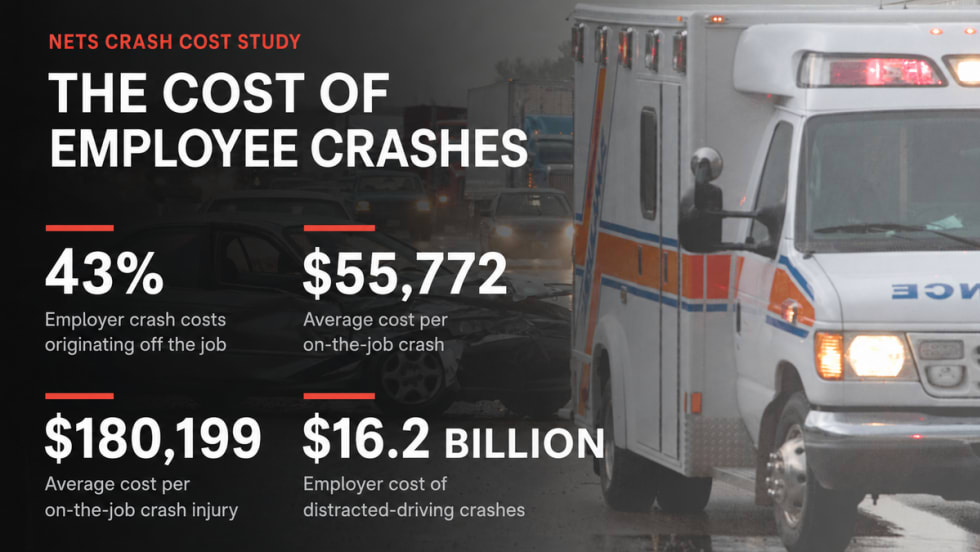
Off-the-Job Crashes Account for 43% of Employers’ $61.7 Billion Crash Burden
NETS quantifies costs dispersed across fleet, risk, HR, and other departments while providing new per-crash benchmarks for employers.
Read More →
Ram Recalls More Than 1.27 Million 1500 Pickups for Seat Belt Anchor Issue
The recall affects certain 2019-2026 Ram 1500 pickups that may have improperly attached second-row seat belt buckle anchors.
Read More →
How Better Visibility Cut Speeding Violations by 48%
Fleet leaders don't need more data, they need clearer visibility into what the data is saying. This case study explores how one utility replaced speeding-event counts with a single metric — miles driven in violation — to strengthen safety and significantly reduce speeding violations.
Read More →
Operation Safe Driver Week: Why the Industry's Oldest Safety Campaign Still Matters to Fleets
A look at how a 2007 enforcement initiative became one of the most consequential weeks on the fleet safety calendar, and what it means for your drivers in 2026.
Read More →