




GM Unveils All-New 2014-MY Chevrolet Impala in New York
NEW YORK - GM said it plans to offer three models of the 2014 Impala, the LS, LT and LTZ. The automaker is building the Impala at GM’s Detroit-Hamtramck, Mich., and Oshawa, Ontario facilities and plans to announce pricing at a later date.
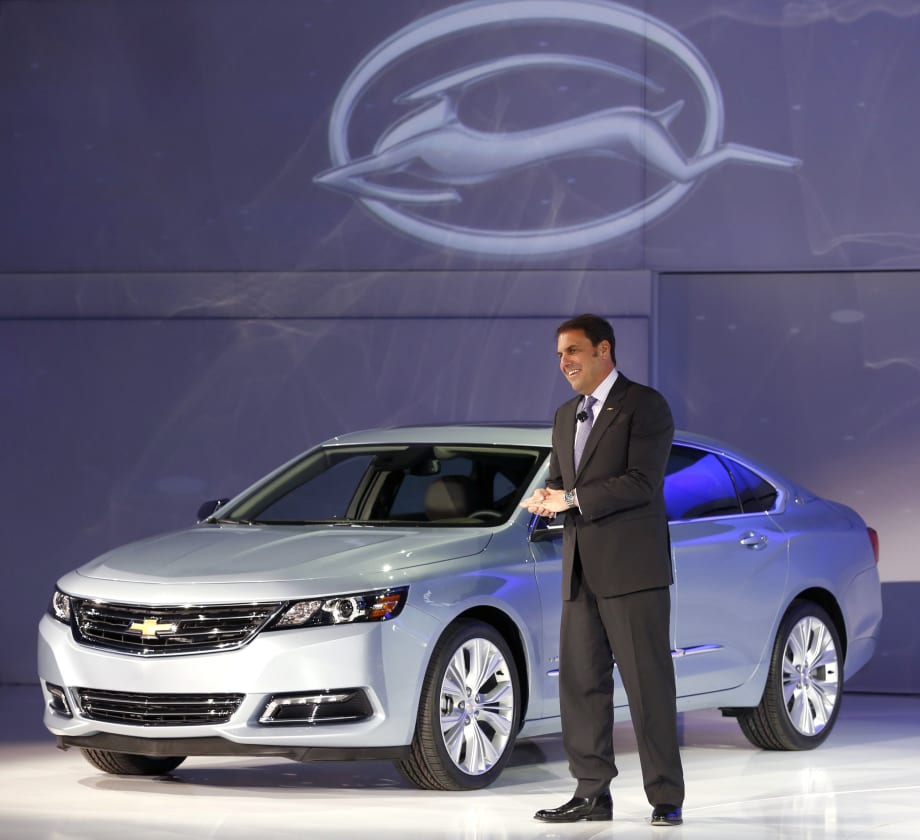
GM's Mark Reuss at the Impala unveiling.
GM's Mark Reuss at the Impala unveiling.
NEW YORK – General Motors brought the next generation of its Chevrolet Impala, the 2014 model-year edition, to the New York International Auto Show. The automaker said this all-new model will go on sale in early 2013, and that it “completes the transformation of its North American passenger car lineup.”
GM said it plans to offer three models of the 2014 Impala, the LS, LT and LTZ. The automaker is building the Impala at GM’s Detroit-Hamtramck, Mich., and Oshawa, Ontario facilities and plans to announce pricing at a later date.
You can view a photo gallery with more images of the 2014-MY Impala here.
Before we get into the details, here’s an overview of the key features in the all-new Impala.
An all-new exterior design
Three engine options: a V-6, a new four-cylinder engine, and a four-cylinder engine paired with GM’s eAssist technology
An all-new interior
Chevrolet’s MyLink, which includes Bluetooth, audio streaming, and an available navigation system
Many safety features, including 10 standard airbags, OnStar, and a range of new driver assistance-based safety technologies
Now, to the specifics:
Performance
The all-new Impala’s three powertrain choices feature direct injection and include an Ecotec 2.5L four-cylinder engine capable of producing 195 hp, an Ecotec 2.4L engine with eAssist capable of producing 182 hp (GM said it expects this engine to get 35 mpg), and a 3.6L V-6 that can produce 303 hp. Each engine is matched with a six-speed transmission. GM hasn’t yet announced fuel economy numbers for the 2.4L with eAssist or the V-6.
GM said the 2014 Impala uses a MacPherson-strut front suspension and four-link rear suspension, along with an isolated front cradle and hydraulic ride bushing. Also, all the new Impala models feature an electric variable-assist steering system, which the automaker said helps reduce fuel use by using energy only when the driver turns the steering wheel.
Exterior
GM’s Chevrolet brand said the Impala’s design features a “wind-swept profile that suggests motion,” and that it tailored the available wheels to the body to provide the right stance. Up front, low-profile projector-beam headlamps (or HID headlamps and LED daytime running lamps on the LTZ model) “sweep around the corners.” A power dome hood is designed to emphasize performance, and the rear fenders acknowledge previous Impala designs, according to the automaker.
Interior
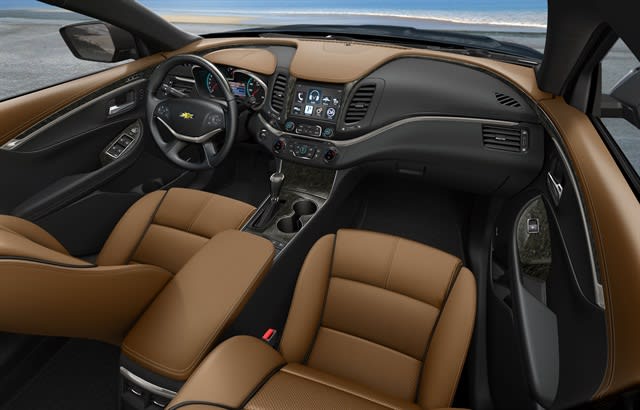
Inside, the 2014-MY Impala features Chevrolet’s dual-cockpit interior design. The instrument panel comes with an instrument cluster that features a 4.2-inch color display. The display lets users reconfigure the information displayed in the driver information center area. The 8-inch touchscreen, with concealed storage behind it, is paired with the available Chevrolet MyLink infotainment system. MyLink provides Bluetooth hands-free phone operation, audio streaming, and available navigation.
Chevrolet focused on creating a quiet cabin environment. The seats feature high-quality fabric, Ultrasuede and perforated leather and are bolstered for added comfort, according to GM. Occupants can fold the rear-seat head restraints to improve visibility when driving without passengers in the back seat.
Safety
The 2014-MY Impala features 10 airbags as standard. One new feature, a first in a Chevrolet vehicle, is full-speed-range adaptive cruise control, which uses radar to sense traffic in front of the vehicle and adjust its speed, including stopping and accelerating again. Another new first for a Chevrolet vehicle is collision mitigation braking, which uses radar to detect a potential crash, alerts the driver if one is about to occur, and brakes if the driver can’t react in time or doesn’t react. Other features include camera-based forward collision alert and lane-departure warning systems; a sensor-based side blind zone alert system; and rear cross traffic alert (which uses the radar sensors of the blind zone alert). The 2014-MY Impala also offers OnStar.
More Operations

How to Manage Conflict for Your Fleet Operations
Conflict management is becoming a core leadership skill. Here are five strategies fleet leaders should know.
Read More →
Turning Connected Vehicle Data Into Decisions That Matter
Fleet leaders have more data than ever, but turning that data into clear, actionable decisions remains a challenge. This white paper shows how leading organizations are using connected vehicle data to improve safety, reduce costs, and optimize fleet performance. Learn how to turn insight into action across your fleet.
Read More →
Cameras, Safety and Insurance: From Reactive Claims to Real-time Prevention
Commercial auto remains one of the most challenging and costly lines of coverage for fleet operators and insurers alike. Learn more about how to effectively address these issues from Onur Aksan, Enterprise Business Development Executive, Geotab.
Read More →

Are You Tracking Your Fleet's True Total Cost of Ownership?
Bobit Business Media surveyed 190 fleet professionals and found that while most fleets are tracking costs, fragmented systems and data gaps are keeping true TCO visibility out of reach. With rising pressure to control spend in an increasingly volatile environment, the gap between what fleets think they know and what the data actually shows is wider than you might expect. See how your peers are managing costs today and where the industry still has room to improve.
Read More →
Turn Fleet Data Into Smarter Decisions
Fleet leaders have access to more operational data than ever, but disconnected systems and unclear metrics often slow decision-making instead of improving it. This article outlines five practical steps fleets can take to transform fragmented data into actionable insights that improve planning, safety, utilization, and long-term performance.
Read More →
Hybrids: Electrification Without the Challenges
For fleet managers, fuel is one of the biggest line items in the budget — and it's one hybrids can shrink without changing how your people work. Download the eBook to see the numbers, understand the technology, and get a step-by-step guide to making the switch.
Read More →
How NOV Uses Telematics to Improve Fleet Safety Across 160 Locations
James Victory of NOV discusses how the company manages fleet safety, maintenance, and telematics across more than 150 locations supporting oilfield operations throughout the U.S.
Read More →
Fleet Meets: Steven Santostasi
This edition of the Fleet Meets series features Steven Santostasi, the current TSP channel manager for Ford Pro.
Read More →
Why Fleet Managers Are Replacing Departmental Vehicles with Shared Motor Pools
Departmentally assigned vehicles often create hidden costs through underutilization, poor visibility, and increased administrative burden. This white paper explores how shared motor pool strategies help fleets reduce costs, improve accountability, and optimize vehicle utilization.
Read More →
Soap Box Derby Challenge: Assembling the Crew
Meet Gabriel, Matthew, and Angel — the team helping bring this soap box derby build to life.
Read More →