




Ford Fusion Charms Fleets a Third Time
The Ford Fusion continues to be a favorite for fleets going into 2013. Taking the title of “Fleet Car of the Year”once again, this year marks the vehicle’s third consecutive win.

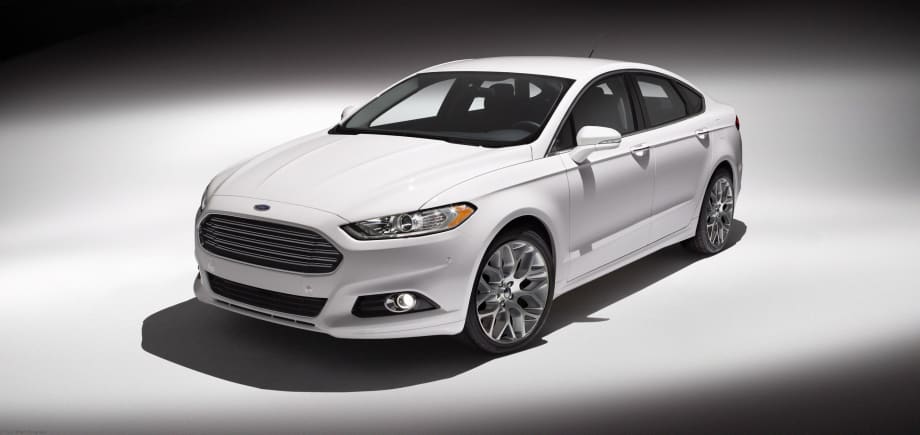
The new Fusion helps broaden the selection of fuel-efficient powertrains in the mid-size car segment with hybrid and plug-in hybrid alternatives, two EcoBoost four-cylinder engines, and a normally aspirated four-cylinder engine.
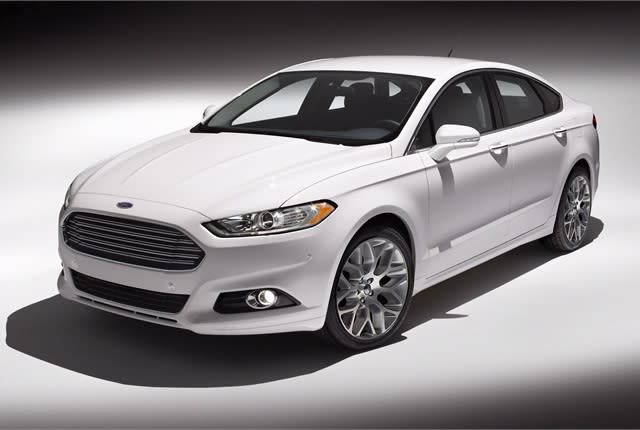
The new Fusion helps broaden the selection of fuel-efficient powertrains in the mid-size car segment with hybrid and plug-in hybrid alternatives, two EcoBoost four-cylinder engines, and a normally aspirated four-cylinder engine.
Boasting the highest number of car registrations among commercial fleets in both 2011 and 2012, it’s no surprise the industry has declared the Ford Fusion as the “Fleet Car of the Year” for the third straight year.
The Fusion racked up the most online votes out of the batch of 43 total cars selected for the annual Automotive Fleet and Business Fleet award.
“Ford is really proud to win ‘Fleet Car of the Year’ three years in a row,” said John Ruppert, general manager, Ford Commercial Sales. “The Fusion continues to deliver in the areas most important to fleets: size, fuel efficiency, safety, and technology — and it provides outstanding resale value.”
Ford is continuing the momentum with the 2013-MY Fusion and Fusion Hybrid, maximizing even more fuel economy in a slim and stylish package.
Focused on Fuel Efficiency
“Fuel is a significant expense for fleets, so we continue to do our part to ensure the Fusion delivers the best fuel economy possible,” Ruppert said.
With available gasoline, hybrid, and plug-in hybrid powertrains designed to give Ford customers “the power of choice,” the new Fusion appears to be a no-brainer for fleets.
Ford debuted its all-new 2013-MY Fusion at the North American International Auto Show in Detroit in January. The new Fusion helps broaden the selection of fuel-efficient powertrains in the mid-size car segment with hybrid and plug-in hybrid alternatives, two EcoBoost four-cylinder engines, a normally aspirated four-cylinder engine, an automatic start-stop system to shut off the engine at stationary idle, front-wheel and all-wheel drive applications, a choice between automatic and manually shifted 6-speed transmissions, and three models (S, SE, and Titanium).
Fuel economy numbers certified by the U.S. Environmental Protection Agency are as follows:
● Fusion Hybrid: 47 mpg city/47 mpg highway/47 mpg combined. The Fusion Hybrid also features an all-new 2.0L Atkinson-cycle four-cylinder gasoline engine, downsized from the previous 2.5L unit, according to Ford.
● 1.6L EcoBoost: 25 mpg city/37 mpg highway/29 mpg combined. The next-generation Fusion 1.6L is Ford’s first automatic transmission offered with a start-stop system. It shuts off engine power smoothly when the car is stopped and seamlessly restarts as the driver releases the brake
pedal, helping Fusion reduce fuel consumption and emissions by approximately 3.5 percent versus the previous model.
● 2.0L EcoBoost: 22 mpg city/33 mpg highway/26 mpg combined. Paired with a paddle-shift 6-speed SelectShift automatic transmission, available 19-inch wheels and tires, and all-wheel drive with the ability to send additional torque to the rear, the 2.0L EcoBoost is the Fusion performance option.
● 2.5L: 22 mpg city/34 mpg highway/26 mpg combined.
Fuel efficiency is further enhanced by the Fusion’s sleek new silhouette — a detour from typical mid-size sedan powertrain/cabin/trunk designs that reduce aerodynamic drag by 10 percent compared with the previous model, according to Ford. Acoustic underbody shields and weight-saving sound-absorption material also help minimize road and powertrain noise.
In addition, Ford said the Fusion’s electric power-assisted steering (EPAS) can increase fuel efficiency up to 4 percent when compared to traditional hydraulic power steering systems.
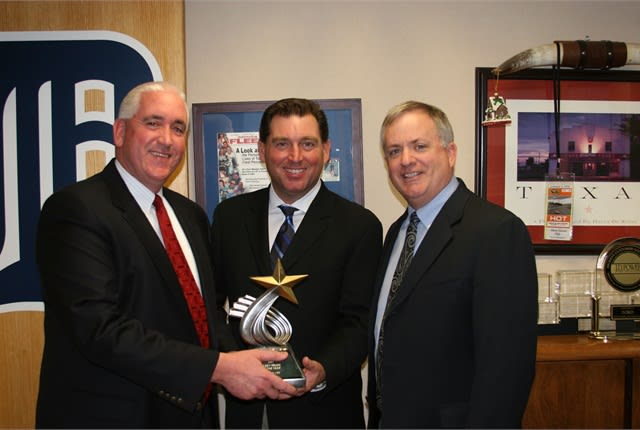
John Ruppert (left), general manager of Ford commercial sales, and Kevin Koswick (right), director of Ford’s North American Fleet, Lease and Remarketing Operations, accept the 2012 Fleet Car of the Year award from Bob Brown, Great Lakes sales manager for Automotive Fleet.
Safety Still a Priority
The all-new 2013 Fusion was recently named a Top Safety Pick by the Insurance Institute for Highway Safety (IIHS) for 2012.
“The new Fusion is another example of Ford’s commitment to the highest standards of safety and we are proud that IIHS has recognized these efforts,” said Steve Kenner, global director of the Automotive Safety Office.
The Personal Safety System is equipped with new safety belt technologies and frontal impact air bags. In addition, the Fusion offers several driver assistance and convenience technologies based on sensors, cameras, and radar that enable the car to “see” and respond.
Specific technologies include:
● Lane Keeping System: Three elements help a driver maintain proper lane position. Using a small, forward-facing camera behind the inside rearview mirror, the system “looks” down the road, monitoring lane lines to determine that the car is on course. The system will alert a driver if drowsiness or erratic lane-keeping is detected. The second element warns a driver with a steering wheel vibration if the Fusion drifts too close to lane markings. Finally, the lane-keeping aid will apply pressure on the steering to help bring the car back into proper lane position.
● Adaptive Cruise Control: Using forward-looking radar, this system “looks” down the road when activated, slowing the Fusion when slower traffic is detected ahead. Adaptive cruise control enables collision warning with brake support to help slow the car if the potential of a crash is detected.
● Active Park Assist: Employing sensors, this technology can identify a suitable parallel parking space, calculate the trajectory, and steer the car to properly position it within the spot. Drivers only need to operate the accelerator and brake pedals.
● Blind Spot Information System (BLIS) with Cross-Traffic Alert: Sensors in both rear quarter-panels of the Fusion are able to detect traffic in a driver’s blind spot, providing both audible and visual warnings if traffic — unseen by the driver — is detected. BLIS technology enables cross-traffic alert, warning the driver of oncoming traffic when backing out of a parking space with obstructed views, such as between two large vans.
● SYNC and MyFord Touch: The all-new Fusion offers the latest iteration of Ford’s SYNC communications and entertainment system, which enables voice-activated communication through a driver’s mobile phone and interaction with the car’s audio system. Also available is the latest version of MyFord Touch, which allows a driver to interact with vehicle systems through voice control, a touchscreen tap, or a conventional button.
According to Ford, both SYNC and MyFord Touch — powered by SYNC — help reduce the potential for driver distraction through voice-controlled functionality.
A $1,000 fleet incentive is available for the 2013 Fusion, as well as a $500 incentive for the 2013 Fusion Hybrid.
More Operations

How to Manage Conflict for Your Fleet Operations
Conflict management is becoming a core leadership skill. Here are five strategies fleet leaders should know.
Read More →
Turning Connected Vehicle Data Into Decisions That Matter
Fleet leaders have more data than ever, but turning that data into clear, actionable decisions remains a challenge. This white paper shows how leading organizations are using connected vehicle data to improve safety, reduce costs, and optimize fleet performance. Learn how to turn insight into action across your fleet.
Read More →
Cameras, Safety and Insurance: From Reactive Claims to Real-time Prevention
Commercial auto remains one of the most challenging and costly lines of coverage for fleet operators and insurers alike. Learn more about how to effectively address these issues from Onur Aksan, Enterprise Business Development Executive, Geotab.
Read More →

Are You Tracking Your Fleet's True Total Cost of Ownership?
Bobit Business Media surveyed 190 fleet professionals and found that while most fleets are tracking costs, fragmented systems and data gaps are keeping true TCO visibility out of reach. With rising pressure to control spend in an increasingly volatile environment, the gap between what fleets think they know and what the data actually shows is wider than you might expect. See how your peers are managing costs today and where the industry still has room to improve.
Read More →
Turn Fleet Data Into Smarter Decisions
Fleet leaders have access to more operational data than ever, but disconnected systems and unclear metrics often slow decision-making instead of improving it. This article outlines five practical steps fleets can take to transform fragmented data into actionable insights that improve planning, safety, utilization, and long-term performance.
Read More →
Hybrids: Electrification Without the Challenges
For fleet managers, fuel is one of the biggest line items in the budget — and it's one hybrids can shrink without changing how your people work. Download the eBook to see the numbers, understand the technology, and get a step-by-step guide to making the switch.
Read More →
How NOV Uses Telematics to Improve Fleet Safety Across 160 Locations
James Victory of NOV discusses how the company manages fleet safety, maintenance, and telematics across more than 150 locations supporting oilfield operations throughout the U.S.
Read More →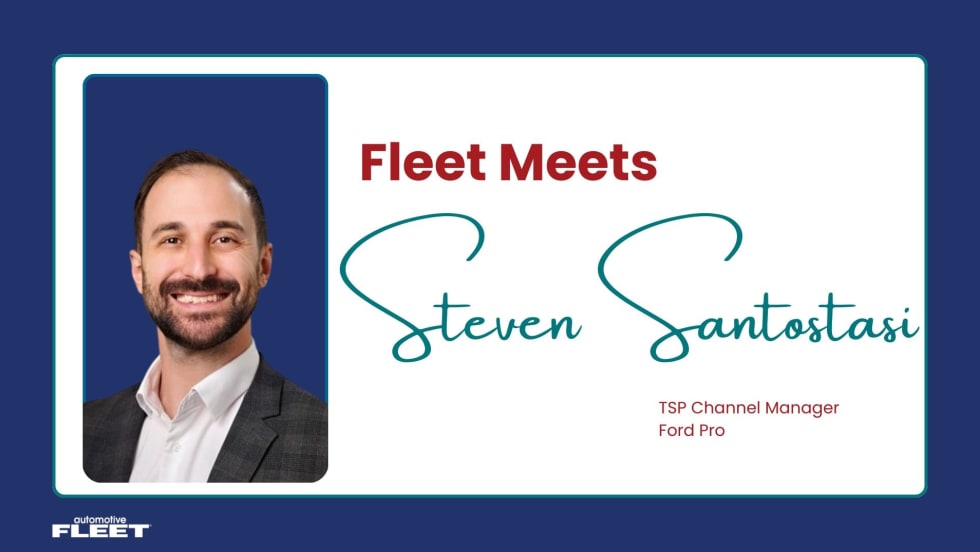
Fleet Meets: Steven Santostasi
This edition of the Fleet Meets series features Steven Santostasi, the current TSP channel manager for Ford Pro.
Read More →
Why Fleet Managers Are Replacing Departmental Vehicles with Shared Motor Pools
Departmentally assigned vehicles often create hidden costs through underutilization, poor visibility, and increased administrative burden. This white paper explores how shared motor pool strategies help fleets reduce costs, improve accountability, and optimize vehicle utilization.
Read More →
Soap Box Derby Challenge: Assembling the Crew
Meet Gabriel, Matthew, and Angel — the team helping bring this soap box derby build to life.
Read More →