




Ford Automates Transit Durability Testing
Ford engineers have developed a robotic test driving program – now in use at the company’s Michigan Proving Grounds in Romeo, Mich. The pilot program has been used most recently for durability testing of Ford’s all-new full-size Transit van.
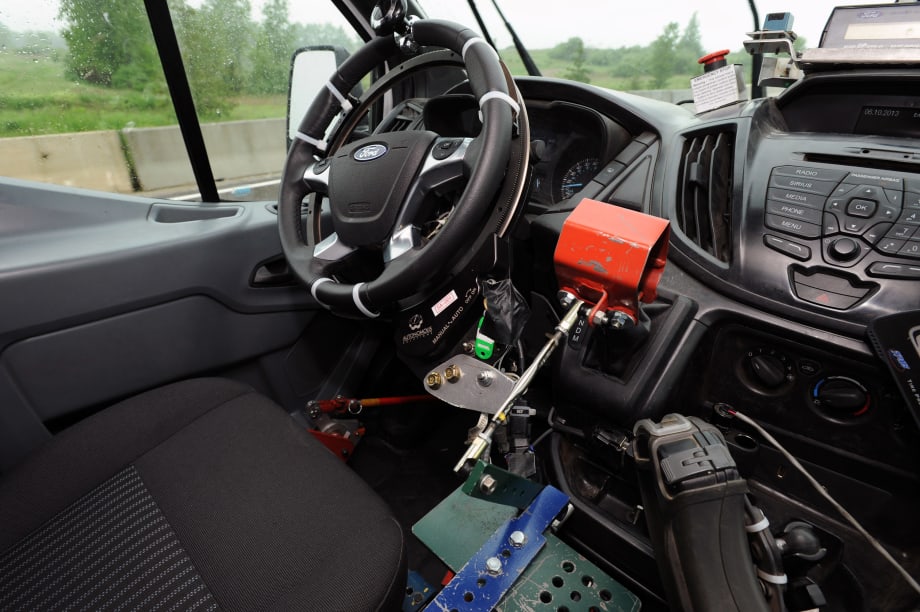
Ford engineers have developed a robotic vehicle testing system, which is being used to accelerate vehicle testing.
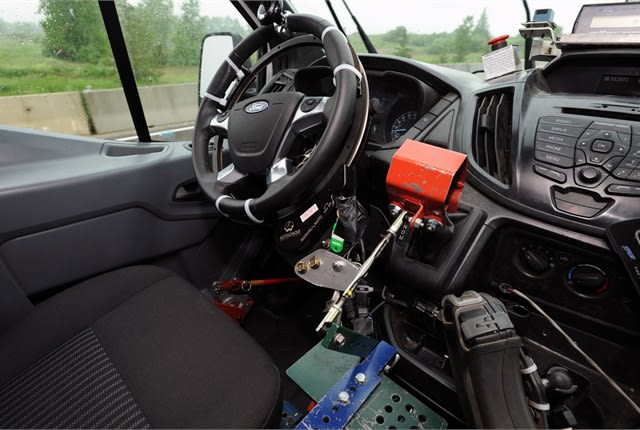
Ford engineers have developed a robotic vehicle testing system, which is being used to accelerate vehicle testing.
Ford engineers have developed a robotic test driving program – now in use at the company’s Michigan Proving Grounds in Romeo, Mich. The pilot program has been used most recently for durability testing of Ford’s all-new full-size Transit van, which launches in 2014.
(Click here to see an example of robotic testing.)
“Some of the tests we do on our commercial trucks for North America are so strenuous that we limit the exposure time for human drivers,” said Dave Payne, manager, vehicle development operations. “The challenge is completing testing to meet vehicle development time lines while keeping our drivers comfortable. Robotic testing allows us to do both. We accelerate durability testing while simultaneously increasing the productivity of our other programs by redeploying drivers to those areas, such as noise level and vehicle dynamics testing.”
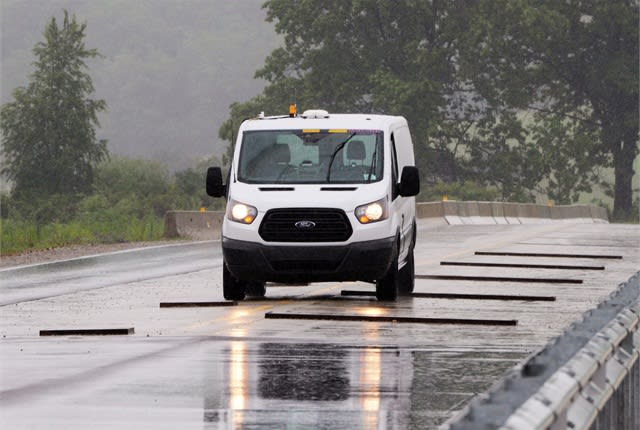
The 2014 Transit is the first vehicle Ford Engineers are testing using the company's robotic vehicle testing system.
The durability technology includes a robotic control module installed in the test vehicle that controls vehicle steering, acceleration and braking. The module is set to follow a preprogrammed course, and the vehicle’s position is tracked via cameras in a central control room and GPS accurate to plus/minus one inch. If the vehicle strays from its programmed course, engineers have the ability to stop the vehicle, course correct as necessary, and restart the test. Onboard sensors can command a full stop if a pedestrian or another vehicle strays into the path.
The robotically driven vehicles are expected to repeatedly perform tests on torturous surfaces, and can compress 10 years of daily driving abuse into courses just a few hundred yards long, with surfaces that include broken concrete, cobblestones, metal grates, rough gravel, mud pits and oversized speed bumps, according to the automaker.
All North American Ford trucks must pass this battery of durability tests before they’re certified for customer use. Until now, testing speeds and repetitions for specific scenarios were limited due to restrictions placed on human drivers, who were allowed to drive certain rigorous courses only once a day, according to Ford. The use of robots now accelerates this testing, allowing an unlimited number of repeats until Ford engineers are satisfied with the results. Robots also allow Ford to develop even more challenging durability tests to build tougher trucks.
Ford engineers worked with Utah-based Autonomous Solutions Inc. to design and manufacture the software and components that enable autonomous, robotic operation of the test vehicle.
More Safety

Nominations Open for 2026 Fleet Safety Award
Nominations have officially opened for the 2026 Fleet Safety Award Winner.
Read More →
Turning Connected Vehicle Data Into Decisions That Matter
Fleet leaders have more data than ever, but turning that data into clear, actionable decisions remains a challenge. This white paper shows how leading organizations are using connected vehicle data to improve safety, reduce costs, and optimize fleet performance. Learn how to turn insight into action across your fleet.
Read More →
Cameras, Safety and Insurance: From Reactive Claims to Real-time Prevention
Commercial auto remains one of the most challenging and costly lines of coverage for fleet operators and insurers alike. Learn more about how to effectively address these issues from Onur Aksan, Enterprise Business Development Executive, Geotab.
Read More →
NAFA Fleet Safety Symposium to Collocate With 2026 Fleet Forward Conference
The daylong certificate program will precede the Fleet Forward Conference at the Gaylord National Harbor in Maryland.
Read More →
The Distractions You Can’t Turn Off: What Drivers Face Outside the Vehicle
Fleet drivers face constant visual, cognitive, and environmental interruptions the moment they hit the road. From roadside chaos to mental fatigue and digital overload, today’s biggest driving risks often come from outside the vehicle itself.
Read More →
FLASH Weather AI Launches First Deep-Learning Hail Prediction Model With High-Resolution Forecasting
FLASH Weather AI has launched a first-of-its-kind hail prediction model capable of forecasting hail size and arrival time at 1-kilometer resolution up to 55 minutes ahead, giving fleets and insurers critical time to prepare for severe storms.
Read More →
How Coca-Cola United Protects Its Fleet from Growing Legal Risk
As litigation risk rises, vehicles are increasingly targeted. This Coca-Cola bottler shares how it’s reducing exposure through driver training, technology, and a proactive risk management approach.
Read More →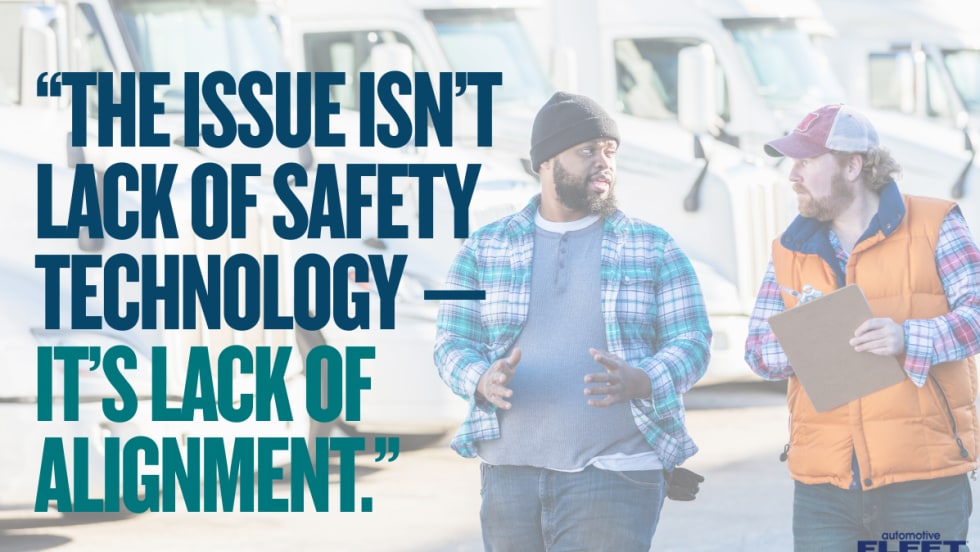
How to Speak the Same Language on Fleet Safety
Drivers, supervisors, and data often speak different safety “languages.” Getting on the same page will drive better results.
Read More →
Fleet Cybersecurity 101: What You Need from Your Technology Vendors
From identity management to third-party certifications, the right technology partner should make security easier to manage. Here are the three building blocks that fleet managers need to stay in control as connected systems scale.
Read More →
Reducing Risk by Eliminating Phone Use Behind the Wheel
Distracted driving remains one of the most persistent risks in fleet operations. New approaches focus on removing mobile device use entirely while adding real-time safety support.
Read More →