




The Early Days of Maintenance Management
Improved vehicle system quality and electronic diagnostic capabilities, such as OBD-II, have made managing vehicle maintenance an easier task for fleet managers versus several decades ago.

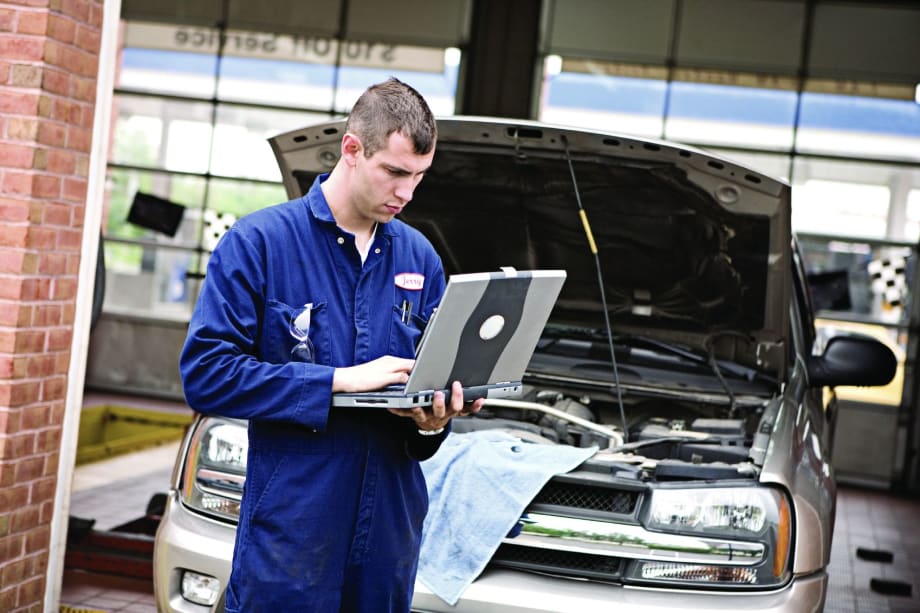
OBD-II has helped significantly improve maintenance processes. The system provides access to data from the engine control unit and offers a valuable source of information when troubleshooting problems inside a vehicle.
OBD-II has helped significantly improve maintenance processes. The system provides access to data from the engine control unit and offers a valuable source of information when troubleshooting problems inside a vehicle.
Goodyear, Firestone, and Sears are all relatively well-known stores today, but it was around the 1960s-1970s when they started making a name for themselves in the fleet industry. It was during this time that these national account chains — along with such others as BFGoodrich, Maaco, and Lee Myles — started partnering with fleet management companies (FMCs) to provide consolidated billing, product codes, and nationwide pricing.
“This was a big deal for fleet managers,” said Eric Strom, maintenance and safety product manager for GE Capital Fleet Services and a 34-year industry veteran. “It gave them confidence, knowing that the national account network was made up of well-recognized chain stores with consistent billing and pricing.”
It was also a big deal for the FMCs, which often didn’t have enough garages around the country to service all their nationwide customers.
“Having the ability to find the best pricing per service among national account providers across the country enabled us to help our fleet customers make better decisions [about maintenance],” said Jeff Fender, VP of sales and marketing for Fleet Response.
In addition to establishing relationships with these chains, FMCs also formed relationships with glass and rental car companies, which served as an added program.
These partnerships also helped streamline processes. “We would receive one invoice for services performed across the country. So, you may have thousands of transactions in one month, but you’re working off one invoice. That’s a win from both an FMC and a service provider standpoint,” said Fender of Fleet Response.
According to Strom, it also created a lot of efficiencies from a payment, billing, and processing standpoint.
Going Online
Technology has been one of the main game-changers for maintenance management. In the early 1980s, FMCs started developing online maintenance reporting tools.
“Being able to quickly get their data at their desktop was really the beginning of a self-serve model for fleet managers. Up until that point, FMCs would get all the billing. Everything was paper-based, so there would be boxes and boxes of paper,” said Strom of GE.
Robert Santor, director of commercial sales for Sears Holdings Corp. and an 18-year employee, recalled the early days of working with FMCs.
“It was very cumbersome; pricing was inconsistent, billing was paper-based,” he said. “Some of the first technologies we invested in were the ability to have national account pricing and electronic billing for our fleets.”
Implementing electronic work order authorizations was another big step for the industry over the past decade. “With most FMCs, the service writer has to call the FMC for authorization. It’s a lengthy process, there’s time spent on the phone, there’s room for error, time wasted on double entry of tickets, all sorts of things,” Santor noted. Going electronic has improved Sears’ customer service and reduced chargebacks and time spent on disputed invoices.
Improving Systems
Improvements in vehicle system quality since the 1990s also played a significant role in vehicle maintenance.
“Outside of normal PM, major mechanical repairs don’t tend to happen nearly as often as they used to 15 or 20 years ago,” said Fender of Fleet Response.
Strom of GE agreed, noting the impact of technology such as repair facility diagnostic tools and vehicle diagnostic trouble codes in the early to mid-1990s. “The new tools made it easier and faster for shops to pinpoint problems,” he said. “From a fleet manager standpoint, the administrative job became easier with fewer complaints about drivability issues.”
One challenge, however, with the advancement of vehicle systems is the shortage of drivability mechanics, who perform the more difficult repairs and reduce comebacks.
According to Santor, Sears is heavily recruiting and training existing technicians to achieve ASE master certification. “Vehicles these days require a higher-skilled technician, so we’re adding technicians and adding skills to our technicians,” he said.
More Maintenance

Turning Connected Vehicle Data Into Decisions That Matter
Fleet leaders have more data than ever, but turning that data into clear, actionable decisions remains a challenge. This white paper shows how leading organizations are using connected vehicle data to improve safety, reduce costs, and optimize fleet performance. Learn how to turn insight into action across your fleet.
Read More →
Are You Tracking Your Fleet's True Total Cost of Ownership?
Bobit Business Media surveyed 190 fleet professionals and found that while most fleets are tracking costs, fragmented systems and data gaps are keeping true TCO visibility out of reach. With rising pressure to control spend in an increasingly volatile environment, the gap between what fleets think they know and what the data actually shows is wider than you might expect. See how your peers are managing costs today and where the industry still has room to improve.
Read More →
From Marine Corps Motor Pool to Managing 460 Fleet Vehicles
Cesar Ayala of O’Connell Landscape Maintenance shares how he transitioned from the Marine Corps to managing a 460-vehicle fleet—and the real-world challenges of maintenance, compliance, and driver management in California.
Read More →
If Repair Delays Are the New Normal, How Should Fleets Respond?
The repair crisis gets blamed on technician shortages and parts delays. But a big part of the problem is what's happening before the vehicle even reaches the shop, and that's within your control.
Read More →
Safety by Design: Power and Protection in the Freightliner 114SD Plus
Fleet managers are under pressure to reduce accidents, control costs, and improve operational efficiency. See how advanced vehicle safety technologies are helping fleets operate smarter and safer.
Read More →
Bosch to Acquire AI Predictive Maintenance Startup Uptake Technologies
The deal brings Uptake's fleet diagnostics platform into Bosch's ecosystem, combining predictive analytics with Bosch's telematics infrastructure to help fleets reduce downtime and anticipate component failures.
Read More →
It’s here: The 2026 Fleet Technology Trends Report
What does AI mean for fleets? Get the answer — and learn other top tech trends.
Read More →
AI Emerging As Must-Have Fleet Technology
Within the next six to 12 months, artificial intelligence programs designed specifically for smaller operations will become more affordable, intuitive, and integrated.
Read More →
Labor, Parts, and Price: What’s Powering Fleet Maintenance Costs in 2025
Five quarters of data on the six most common maintenance activities reveal how cost composition and labor intensity influence fleet service trends.
Read More →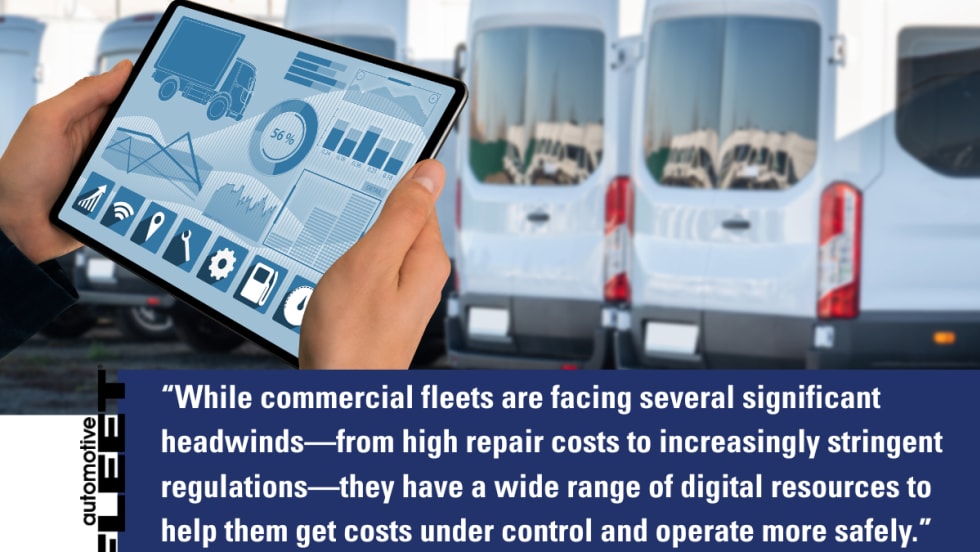
How Fleet Managers Are Finding New Ways to Control Maintenance Costs & Downtime
By standardizing repair workflows and building trusted vendor networks, fleets are cutting costs and keeping vehicles on the road.
Read More →