




Maximize Fuel Efficiency as a Sustainability Goal
Sustainability initiatives will continue to play an important, albeit complex, role in corporate fleets of today and tomorrow. There are a number of excellent alternative-fuel solutions currently available in the market and there are a growing number of fleets that have successfully implemented these solutions. But what can fleets do, whose spirit is green, but whose fiscal reality and operating requirements present road blocks to implementing corporate sustainabililty goals?

Sustainability initiatives will continue to play an important, albeit complex, role in corporate fleets of today and tomorrow. There are a number of excellent alternative-fuel solutions currently available in the market and there are a growing number of fleets that have successfully implemented these solutions.
But, there are also many other fleet managers who are challenged to meet sustainability initiatives due to higher vehicle acquisition costs, range limitation issues, and an inadequate national refueling infrastructure. Despite this, these fleets still want to be environmentally responsible and have opted instead to select the most fuel-efficient gasoline- or diesel-powered vehicles to meet their sustainability initiatives. Also, as vehicle replacement cycles return to traditional parameters, commercial fleets are replacing older, higher-emissions vehicles with new, more fuel-efficient models. For these fleets, maximizing fuel efficiency seems to be the only financially feasible sustainability solution, especially when faced with intractable funding constraints.
Operating in a tight fiscal environment, the cost of doing business prompts many companies not to buy vehicles that are more expensive than needed. While companies continue to seek grants to acquire AFVs, these funds are insufficient to meet the full vehicle replacement requirements of a larger fleet. Consequently, for many fleets, improving the fleet’s overall fuel efficiency is the most practical strategy to meet corporate sustainability goals. Improving the overall average fuel economy for the entire fleet is an attainable sustainability goal as manufacturers are continually improving mpg, for all classes of vehicles, especially under the current pressures of upcoming, more stringent CAFE requirements.
In addition, fuel-economy improvements can be accomplished using existing vehicle assets. In 2006, Staples adopted the use of engine governors to cap the top speed of all of its fleet assets to 60 mph, which has had a dramatic impact on reducing fuel consumption and subsequent CO2 emissions. Another strategy to maximize the fuel efficiency of existing fleet assets is to implement a telematics solution. For example, many fleets are looking at upgraded telematics systems to provide more refined information relative to vehicle performance to squeeze additional mpg improvements. However, not everything needs to involve a high-tech solution. The easiest, most cost-effective (and most neglected) way to boost fuel economy is to ensure tires are properly inflated. Similarly, if fuel efficiency is constrained by equipment requirements, the “last mile” to achieving corporate sustainability objectives is modifying driver behavior. This represents another great opportunity for fleet managers to dramatically green their fleets.
One of the most successful “green” fleets is FedEx, which uses a multipronged approach to reduce its carbon footprint. FedEx has made significant progress toward its fuel-efficiency goal as a result of a number of sustainability initiatives: By the end of its 2013 fiscal year, FedEx Express, a unit of FedEx Corp., will have increased the size of its advanced alternative-energy vehicle fleet to include a total of 360 hybrid-electric vehicles and 200 all-electric vehicles. However, an important component of FedEx’s strategy is to increase the fleet‘s overall fuel efficiency. FedEx Express has seen the biggest impact on overall fuel efficiency from its strategy of matching the right vehicle to each route.
By pursuing these strategies, FedEx Express has been able to improve the fuel efficiency of its vehicle fleet at a faster rate than expected. As a result, FedEx is ratcheting up the pressure to achieve even greater fuel economy improvements. In 2008, FedEx Corp. set a commitment to improve the overall fuel efficiency of the FedEx Express global vehicle fleet 20 percent by 2020, as compared with its 2005 performance. Less than five years later, FedEx Express has surpassed this goal with a more than 22-percent cumulative improvement in fuel economy for its vehicles. Additionally, FedEx announced a revised, more aggressive goal. It has set a new target of 30-percent improvement in fuel efficiency for its global fleet by 2020, representing a 50-percent increase over the original goal. FedEx Express expects to save approximately 20 million gallons of fuel this year through these efforts to increase vehicle fuel efficiency.
Part of a Global Initiative
Fleet sustainability initiatives are often driven by broader corporate initiatives. For example, Novo Nordisk has a “Triple Bottom Line” philosophy, which includes an emphasis on doing what is environmentally right. As this applies to company vehicles, it requires the fleet to balance the drivers’ wants and needs with its desire to be environmentally friendly — not always an easy task.
This corporate philosophy is also shared by other multinationals, such as Konecranes, which has strong sustainability program that measures its carbon footprint on a global basis. In terms of the corporate fleet, the company’s focus is to maximize the fuel efficiency of its vehicles to reduce greenhouse gas (GHG) emissions.
In the final analysis, there’s a direct correlation between a fleet’s reduced fuel consumption and the fleet’s reduced greenhouse gas emissions. Companies may want to eliminate the burning of all GHG-emitting fossil fuels in all fleet-related activities, but when practicality and economics doesn’t allow it, maximizing overall average fuel efficiency is a good alternative.
Let me know what you think.
More Blog Posts

Fleets Want Trust Restored with Suppliers
During this period of ongoing supply constraints, the trust that fleet managers had with OEMs, upfitters, and dealers has been strained. Fleet managers say they have had too many experiences over the past three years coping with erroneous information, adjusting to multiple price increases, and feeling betrayed by inadequate transparency from suppliers.
Read More →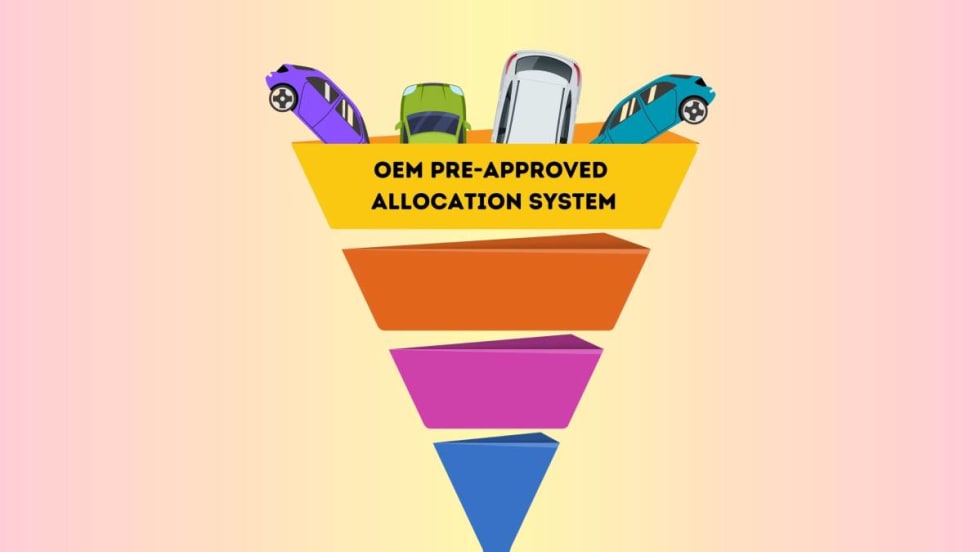
Scheduled Replacement Cycles Are Becoming a Distant Memory
The ongoing difficulty in sourcing replacement vehicles is forcing companies to extend the service lives of vehicles that are unable to be replaced, which, inevitably, increases unscheduled maintenance expenses.
Read More →
Fleet Simplification is the Antidote to Asset Variability
Fleet simplification identifies asset functions to uncover commonality among the equipment and assets. Simplification increases operational efficiency as end-users become accustomed to the controls, displays, and operation of less diverse units.
Read More →
The Dangers of Static Fleet Policies
A fleet policy is a living document, flexible enough to adapt to evolving business priorities, developing industry trends, and changing industry best practices and standards.
Read More →
Short-Term vs. Long-Term Cost Reductions
Corporate procurement staff are often driven by short-term, immediate cost reductions. However, a longer perspective to soft cost savings is critical because fixating on short-term results will hurt a company in the long run.
Read More →
Uptick in Unscheduled Maintenance Increasing Vehicle Downtime
Fleet data analysis can identify recurring downtime issues. It’s important to determine the root causes of downtime so procedures can be developed to minimize such problems.
Read More →
Eliminate Needless Curb Weight to Maximize ICE & EV Efficiencies
Vehicle weight relates directly to fuel economy. In today’s era of electrification, there is also a direct correlation between vehicle weight and battery range.
Read More →
Tech Dependence Risks Dumbing Down Fleet Manager Expertise
The line between creative thinking and problem solving and doing what the data indicates is thin. To lead in fleet management, you need to balance understanding the fundamentals and embracing what smart technology offers.
Read More →
Leverage the Synergy of Safe Driving to Achieve Sustainability and Cost Goals
Safe driving, emission reductions, and cost containment can all be achieved at the same time.
Read More →
The Playbook for Fleet Manager Success
There are many paths to success — most of them involve being flexible, open-minded, and willing to learn.
Read More →