




Safety Board Studies '08 Motorcoach Crash
WASHINGTON, D.C. --- The National Transportation Safety Board on Oct. 27 determined that the probable cause of a fatal motorcoach accident in Sherman, Texas, was the failure of the right steer axle tire. The crash killed 17 people.
WASHINGTON, D.C. --- The National Transportation Safety Board on Oct. 27 determined that the probable cause of a fatal motorcoach accident in Sherman, Texas, was the failure of the right steer axle tire.
This tire failure was due to an extended period of low-pressure operation, which resulted in sidewall, belting and body ply separation within the tire. This led to loss of vehicle control.
Contributing to the severity of the accident was the failure of the bridge railing to redirect the motorcoach and prevent it from departing the bridge, the NTSB said. "The lack of an adequate occupant protection system contributed to the severity of the passenger injuries," the board added.
The accident occurred on Aug. 8, 2008, when a 2002 56-passenger motorcoach with a driver and 55 passengers on board departed Houston en route to a festival in Carthage, Mo. About four-and-a-half hours into the trip while traveling northbound in the right lane of U.S. Highway 75, the right steer axle tire failed as the motorcoach approached the Post Oak Creek bridge at a speed of about 68 mph. The bus went through the bridge railing and off the bridge. It fell about eight feet and slid approximately 24 feet on its right side before coming to rest. As a result of the accident, 17 passengers died. In addition, the driver received serious injuries and 38 passengers received minor-to-serious injuries.
Major safety issues identified by NTSB's accident investigation include the following:
The tire failure and the need for tire pressure monitoring systems on vehicles over 10,000 pounds.
The failure of the bridge railing and the need for criteria for the selection of appropriate bridge railing designs.
The lack of oversight of the federal commercial vehicle inspections that are delegated to the states.
The lack of motorcoach occupant protection systems.
The deficiencies in federal safety oversight of new entrant motor carriers.
As a result of its investigation of this accident, the NTSB made eight new recommendations to three federal agencies: the Federal Highway Administration (FHWA), the Federal Motor Carrier Safety Administration (FMCSA) and the National Highway Traffic Safety Administration (NHTSA).
Two recommendations were made to the American Association of State Highway and Transportation Officials (AASHTO) in the area of bridge railing design. Another recommendation was made to the American Association of Motor Vehicle Administrators (AAMVA) regarding tire-pressure monitoring procedures. Yet another recommendation was made to the motorcoach manufacturer, Motor Coach Industries Inc., calling for revised vehicle maintenance manuals.
[PAGEBREAK]
Here are NTSB's new recommendations:
To the Federal Highway Administration --
Establish, in conjunction with the American Association of State Highway and Transportation Officials, performance and selection guidelines for bridge owners to use to develop objective warrants for high-performance Test Level Four, Five, and Six bridge railings applicable to new construction and rehabilitation projects where railing replacement is determined to be appropriate.
To the Federal Motor Carrier Safety Administration --
Establish a regulatory requirement within 49 Code of Federal Regulations 382.405 that provides the National Transportation Safety Board, in the exercise of its statutory authority, access to all positive drug and alcohol test results and refusal determinations that are conducted under the U.S. Department of Transportation testing requirements.
Require that tire pressure be checked with a tire pressure gauge during pre-trip inspections, vehicle inspections, and roadside inspections of motor vehicles.
Require those states that allow private garages to conduct Federal Motor Carrier Safety Administration inspections of commercial motor vehicles to have a quality assurance and oversight program that evaluates the effectiveness and thoroughness of those inspections.
Develop an evaluation component to determine the effectiveness of your New Applicant Screening Program.
To the National Highway Traffic Safety Administration --
Require all new motor vehicles weighing over 10,000 pounds to be equipped with direct tire pressure monitoring systems to inform drivers of the actual tire pressures on their vehicles.
Develop performance standards for newly manufactured motorcoaches to require that overhead luggage racks remain anchored during an accident sequence.
Develop performance standards for newly manufactured motorcoaches that prevent head and neck injuries from overhead luggage racks.
To the American Association of State Highway and Transportation Officials --
Work with the Federal Highway Administration to establish performance and selection guidelines for bridge owners to use to develop objective warrants for high-performance Test Level Four, Five, and Six bridge railings applicable to new construction and rehabilitation projects where railing replacement is determined to be appropriate, and include the guidelines in the Load and Resistance Factor Design (LRFD) Bridge Design Specifications.
Revise section 13 of the Load and Resistance Factor Design (LRFD) Bridge Design Specifications to state that bridge owners shall develop objective warrants for the selection and use of high-performance Test Level Four, Five, and Six bridge railings applicable to new construction and rehabilitation projects where railing replacement is determined to be appropriate.
To the American Association of Motor Vehicle Administrators --
Revise the model Commercial Driver's License Manual to stipulate that tire pressure be checked with a tire pressure gauge during pre-trip inspections, vehicle inspections, and roadside inspections of motor vehicles.
To Motor Coach Industries Inc. --
Correct any inaccurate tire pressure and gross axle weight rating information in the maintenance manuals of your J4500 motorcoaches and make electronic versions of the revised manuals readily available on your website; in addition, review the maintenance manuals of your other motorcoaches for similar errors and make appropriate corrections.
[PAGEBREAK]
Also, as a result of its investigation, the National Transportation Safety Board reiterated the following safety recommendations:
To the Federal Motor Carrier Safety Administration --
1. Develop a system that records all positive drug and alcohol test results and refusal determinations that are conducted under the U.S. Department of Transportation testing requirements, require prospective employers to query the system before making a hiring decision, and require certifying authorities to query the system before making a certification decision.
To the National Highway Traffic Safety Administration --
1. In two years, develop performance standards for motorcoach occupant protection systems that account for frontal impact collisions, side impact collisions, rear impact collisions, and rollovers.
2. Once pertinent standards have been developed for motorcoach occupant protection systems, require newly manufactured motorcoaches to have an occupant crash protection system that meets the newly developed performance standards and retains passengers, including those in child safety restraint systems, within the seating compartment throughout the accident sequence for all accident scenarios.
3. In two years, develop performance standards for motorcoach roof strength that provide maximum survival space for all seating positions and that take into account current typical motorcoach window dimensions.
4. Once performance standards have been developed for motorcoach roof strength, require newly manufactured motorcoaches to meet those standards.
More Safety

Nominations Open for 2026 Fleet Safety Award
Nominations have officially opened for the 2026 Fleet Safety Award Winner.
Read More →
Turning Connected Vehicle Data Into Decisions That Matter
Fleet leaders have more data than ever, but turning that data into clear, actionable decisions remains a challenge. This white paper shows how leading organizations are using connected vehicle data to improve safety, reduce costs, and optimize fleet performance. Learn how to turn insight into action across your fleet.
Read More →
Cameras, Safety and Insurance: From Reactive Claims to Real-time Prevention
Commercial auto remains one of the most challenging and costly lines of coverage for fleet operators and insurers alike. Learn more about how to effectively address these issues from Onur Aksan, Enterprise Business Development Executive, Geotab.
Read More →
NAFA Fleet Safety Symposium to Collocate With 2026 Fleet Forward Conference
The daylong certificate program will precede the Fleet Forward Conference at the Gaylord National Harbor in Maryland.
Read More →
The Distractions You Can’t Turn Off: What Drivers Face Outside the Vehicle
Fleet drivers face constant visual, cognitive, and environmental interruptions the moment they hit the road. From roadside chaos to mental fatigue and digital overload, today’s biggest driving risks often come from outside the vehicle itself.
Read More →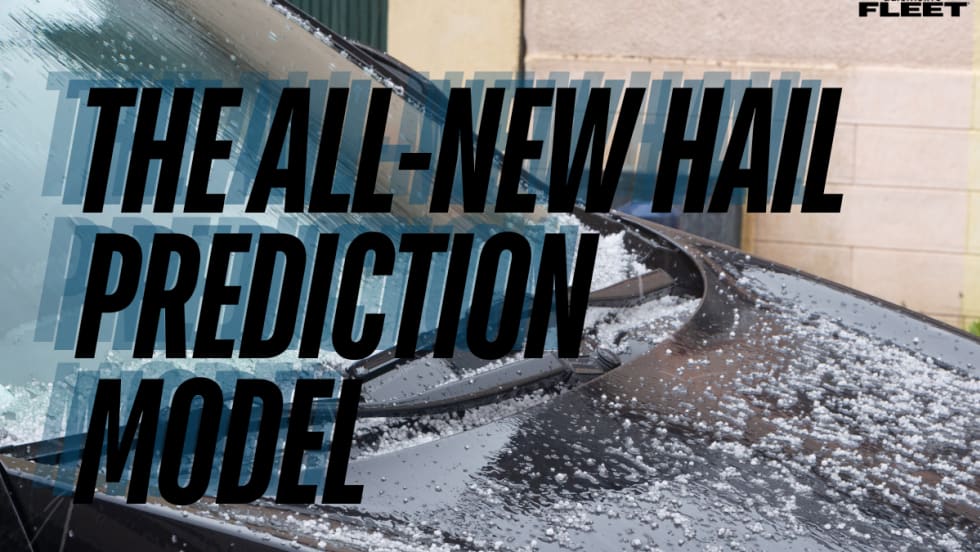
FLASH Weather AI Launches First Deep-Learning Hail Prediction Model With High-Resolution Forecasting
FLASH Weather AI has launched a first-of-its-kind hail prediction model capable of forecasting hail size and arrival time at 1-kilometer resolution up to 55 minutes ahead, giving fleets and insurers critical time to prepare for severe storms.
Read More →
How Coca-Cola United Protects Its Fleet from Growing Legal Risk
As litigation risk rises, vehicles are increasingly targeted. This Coca-Cola bottler shares how it’s reducing exposure through driver training, technology, and a proactive risk management approach.
Read More →
How to Speak the Same Language on Fleet Safety
Drivers, supervisors, and data often speak different safety “languages.” Getting on the same page will drive better results.
Read More →
Fleet Cybersecurity 101: What You Need from Your Technology Vendors
From identity management to third-party certifications, the right technology partner should make security easier to manage. Here are the three building blocks that fleet managers need to stay in control as connected systems scale.
Read More →
Reducing Risk by Eliminating Phone Use Behind the Wheel
Distracted driving remains one of the most persistent risks in fleet operations. New approaches focus on removing mobile device use entirely while adding real-time safety support.
Read More →