




Audi Intelligent Interaction - Restraint Systems
HERNDON, VA - Audi is using innovative thinking to further advance development in this field. The engineers in Ingolstadt have focused particular attention on safety belts, airbags, and seats/headrests.
HERNDON, VA - Audi is using innovative thinking to further advance development in this field. The engineers in Ingolstadt have focused particular attention on safety belts, airbags and seats/headrests. These components interact intelligently in model lines such as the A4, A5, and Q5 to provide maximum protection for the occupants during an accident.
In today's traffic conditions, rear impact is a frequent type of accident, especially in urban areas. This type of crash typically occurs at collision speeds of 9 to 31 mph, for instance at traffic lights. In such impacts, the seatback is accelerated to between 4 to 15 mph in barely a tenth of a second. If the head is violently flung backwards instead of being supported in line with the thorax, the victim frequently suffers a whiplash injury, which often requires protracted and costly therapy. Insurance companies estimate the annual cost in Germany to exceed EUR 500 million.
The seats and headrests are specifically designed for a rear impact. The shape of the seatback frame, a resilient back pad and an energy-absorbing foam layer allow the back to sink slightly into the seatback, so that the head can be intercepted a moment earlier by the sturdy headrest just behind it. In severe rear impacts, the seatbelt tensioners in the A4, A5 and Q5 are released to optimize the positions of the occupants.
Audi uses its integral headrest system in most of its models. The brand has already received the top rating of "Good" in independent tests, including by the prestigious International Insurance Whiplash Prevention Group (IIWPG), which specializes in whiplash prevention. In Germany, the ADAC and leading trade magazines have reached similar conclusions, as has the US Insurance Institute for Highway Safety (IIHS).
Among severe traffic accidentsthe frontal impact remains the most common type of crash, with a share of 50 percent. Fortunately this type of accident is no longer the most dangerous, since deformation zones, safety steering, columns, seatbelts and airbags have greatly reduced its peril. But Audi isn't settling for the existing solutions and has developed an adaptive restraint system for the A4, A5 and Q5 model series. It provides the best possible protection for different sized occupants; in smaller, lighter persons especially it significantly reduces the severity of injuries. Audi engineers have attuned the subsystems to each other in an innovative, high-precision network. In this work they have also benefited from the results of in-house crash research by the AARU (Audi Accident Research Unit, see Audi Technology ABC).
The rails of the front seatsare equipped with sensors that detect whether the seat is in the forward or rearward position. Their data flow into the calculations of the restraint control system. Since the computer knows the approximate position of the occupant in relation to the airbag, it can ensure optimal use of the available forward displacement region - the distance in which the upper body is decelerated by the belt and the airbag - which significantly reduces the effect of the impact on the occupants.
The operation of the adaptive airbags in the current Audi model series is based on a new, graduated strategy. The airbags - with a volume of 64 liters (2.26 cubic feet) on the left side and 120 liters (4.24 cubic feet) on the right - unfold differently than in the conventional two-step systems: they always deploy fully at first to ensure prompt deceleration of the occupants. However, if the impact is less than severe, or when a (usually less than average-size) passenger sits close to the airbag, a lower restraint force suffices. In these cases, a portion of the air volume is expelled through special valves: the airbag softens and intercepts the head and thorax more gently. In a severe crash, on the other hand, or with large occupants farther back in their seat, these valves remain closed longer, and the airbag exerts its maximum restraining effect.
The belt force limiters too react flexibly. In this subsystem, two small torsion bars are interconnected by gears. For smaller and lighter persons, the torsion bars are disengaged promptly. This provides more slack in the seatbelt, enabling the upper body to sink deeply into the airbag, which reduces the force on the thorax. In more violent crashes, the torsion bars are disengaged later or not at all, increasing the belt's restraining force.
The IIHS has recently awarded no less than four Audi models the "Top Safety Pick" rating again for the second time in a row for their high level of occupant safety. And in the Euro NCAP test the Audi A4 earned the highest rating of five stars.
More Safety

Nominations Open for 2026 Fleet Safety Award
Nominations have officially opened for the 2026 Fleet Safety Award Winner.
Read More →
Turning Connected Vehicle Data Into Decisions That Matter
Fleet leaders have more data than ever, but turning that data into clear, actionable decisions remains a challenge. This white paper shows how leading organizations are using connected vehicle data to improve safety, reduce costs, and optimize fleet performance. Learn how to turn insight into action across your fleet.
Read More →
Cameras, Safety and Insurance: From Reactive Claims to Real-time Prevention
Commercial auto remains one of the most challenging and costly lines of coverage for fleet operators and insurers alike. Learn more about how to effectively address these issues from Onur Aksan, Enterprise Business Development Executive, Geotab.
Read More →

NAFA Fleet Safety Symposium to Collocate With 2026 Fleet Forward Conference
The daylong certificate program will precede the Fleet Forward Conference at the Gaylord National Harbor in Maryland.
Read More →
The Distractions You Can’t Turn Off: What Drivers Face Outside the Vehicle
Fleet drivers face constant visual, cognitive, and environmental interruptions the moment they hit the road. From roadside chaos to mental fatigue and digital overload, today’s biggest driving risks often come from outside the vehicle itself.
Read More →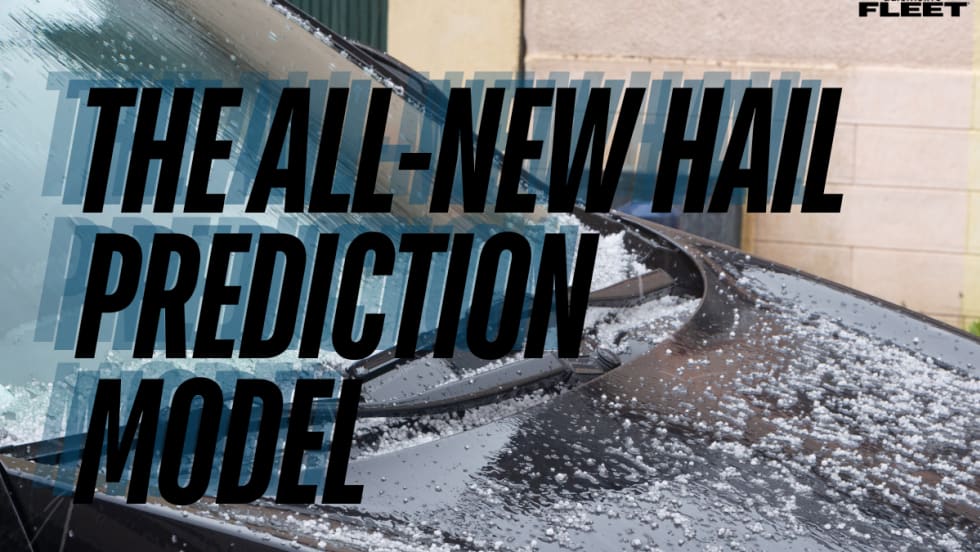
FLASH Weather AI Launches First Deep-Learning Hail Prediction Model With High-Resolution Forecasting
FLASH Weather AI has launched a first-of-its-kind hail prediction model capable of forecasting hail size and arrival time at 1-kilometer resolution up to 55 minutes ahead, giving fleets and insurers critical time to prepare for severe storms.
Read More →
How Coca-Cola United Protects Its Fleet from Growing Legal Risk
As litigation risk rises, vehicles are increasingly targeted. This Coca-Cola bottler shares how it’s reducing exposure through driver training, technology, and a proactive risk management approach.
Read More →
How to Speak the Same Language on Fleet Safety
Drivers, supervisors, and data often speak different safety “languages.” Getting on the same page will drive better results.
Read More →
Fleet Cybersecurity 101: What You Need from Your Technology Vendors
From identity management to third-party certifications, the right technology partner should make security easier to manage. Here are the three building blocks that fleet managers need to stay in control as connected systems scale.
Read More →
Reducing Risk by Eliminating Phone Use Behind the Wheel
Distracted driving remains one of the most persistent risks in fleet operations. New approaches focus on removing mobile device use entirely while adding real-time safety support.
Read More →