




Driving Efficiently: New Technologies from Audi
HERNDON, VA - Audi is consistently pressing forward to improve fuel economy and CO2 emissions. Starting in the second quarter of 2009, the modular efficiency platform will benefit from additional new technologies.
HERNDON, VA - Audi is consistently pressing forward to improve fuel economy and CO2 emissions. Starting in the second quarter of 2009, the modular efficiency platform will benefit from additional new technologies: The on-board computer with the efficiency program and the start-stop system will raise the efficiency and convenience of the Audi models to a new level. By 2012 the fuel consumption of the Audi model range should drop by 20 percent.
Audi's modular efficiency platform combines reduced consumption with great driveability and outstanding sportiness. And now Audi is bringing two additional efficiency technologies up to the starting line: the start-stop system and the on-board computer with efficiency program. These complement the energy recovery system, which already belongs to the standard specification of many Audi models and feeds energy back into the vehicle's electrical system during deceleration phases.
The start-stop system realizes its efficiency potential especially in urban traffic, significantly reducing consumption while relieving the driver: The system shuts down the engine once the car has come to a stop, the gear lever stands at idle and the driver releases the clutch pedal. Operating the clutch then starts up the engine again. The start-stop system is extremely quiet, convenient to operate, and fast: The engine returns to idle speed while the driver is shifting gears.
Audi combines the start-stop system with efficient battery technology and sophisticated energy management, to maintain functioning even at low temperatures. The system is inactive during the warm-up phase of the engine, so that the engine oil becomes warmer and the exhaust gas cleaning systems reach their operating temperature faster. The driver can also switch off the start-stop system at any time by pressing a button.
In the standardized driving cycle the start-stop system lowers fuel consumption by about 0.2 liters per 100 km, and therefore reduces CO2 emissions by around 5 g/km. The new system is being used for the first time in the Audi A3 1.4 TFSI with manual transmission and in the Audi A4 and A5 with two-liter engines and manual gearshift. Numerous other models will follow this year.
The second newcomer in the modular efficiency platform is the on-board computer with the efficiency program, an addition to the Audi Driver Information System. All consumption-related data appear in the center display, with recommendations for efficient driving - after all, up to 30 percent of fuel consumption depends on the individual driving style. The efficiency program continuously analyzes the energy consumption in the vehicle and gives the driver up-to-date tips for saving fuel, depending on the driving situation and driving style.
The newly designed gearshift indicator signals to the driver when to shift, for optimal fuel economy: A large and color-coded display indicates whether the right gear is engaged, or whether shifting would be practical for the sake of efficiency. Comfort features like air conditioning and seat heating also increase fuel consumption. A specially developed display in the efficiency program identifies the systems requiring extra energy and indicates their share in fuel consumption.
The energy recovery system already uses deceleration phases to convert kinetic energy into electrical energy. When the car accelerates again, the battery directs the temporarily stored energy back into the vehicle, to relieve the alternator and thereby save fuel. The energy recovery system is already standard equipment on the Audi A3 1.4 TFSI with manual transmission, the Audi A4, A5 Coupé and A5 Cabriolet with two-liter engine and manual transmission, the A6 and the Audi Q5 and Q7.
From innovative powertrain technologies to highly efficient air conditioning, the goal of the modular efficiency platform is to improve the entire vehicle's energy management. And Audi's efficiency technologies are systematically geared to the driver's needs.
The modular efficiency platform focuses on the further development of powertrain and transmission technologies, and the recovery and storage of mechanical, thermal and electrical energy. Audi also employs a host of measures to minimize driving resistance and optimize aerodynamics. These benefits are made tangible for the driver by a range of innovative assistance systems, with the standard specification of many current Audi models already featuring numerous efficiency technologies such as the Audi valvelift system, high-efficiency transmission and tires with optimized rolling resistance.
By 2012 Audi plans to lower the fuel consumption of its model range by 20 percent compared with the 2007 level. The brand will then have further enhanced its sporty and progressive profile, for efficiency and sportiness are inextricably linked at Audi.
More Operations

How to Manage Conflict for Your Fleet Operations
Conflict management is becoming a core leadership skill. Here are five strategies fleet leaders should know.
Read More →
Turning Connected Vehicle Data Into Decisions That Matter
Fleet leaders have more data than ever, but turning that data into clear, actionable decisions remains a challenge. This white paper shows how leading organizations are using connected vehicle data to improve safety, reduce costs, and optimize fleet performance. Learn how to turn insight into action across your fleet.
Read More →
Cameras, Safety and Insurance: From Reactive Claims to Real-time Prevention
Commercial auto remains one of the most challenging and costly lines of coverage for fleet operators and insurers alike. Learn more about how to effectively address these issues from Onur Aksan, Enterprise Business Development Executive, Geotab.
Read More →

Are You Tracking Your Fleet's True Total Cost of Ownership?
Bobit Business Media surveyed 190 fleet professionals and found that while most fleets are tracking costs, fragmented systems and data gaps are keeping true TCO visibility out of reach. With rising pressure to control spend in an increasingly volatile environment, the gap between what fleets think they know and what the data actually shows is wider than you might expect. See how your peers are managing costs today and where the industry still has room to improve.
Read More →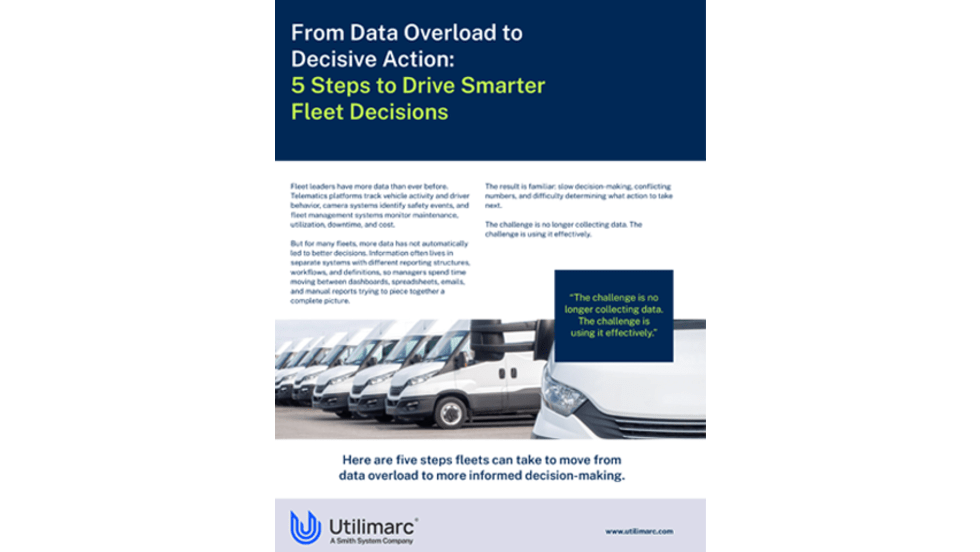
Turn Fleet Data Into Smarter Decisions
Fleet leaders have access to more operational data than ever, but disconnected systems and unclear metrics often slow decision-making instead of improving it. This article outlines five practical steps fleets can take to transform fragmented data into actionable insights that improve planning, safety, utilization, and long-term performance.
Read More →
Hybrids: Electrification Without the Challenges
For fleet managers, fuel is one of the biggest line items in the budget — and it's one hybrids can shrink without changing how your people work. Download the eBook to see the numbers, understand the technology, and get a step-by-step guide to making the switch.
Read More →
How NOV Uses Telematics to Improve Fleet Safety Across 160 Locations
James Victory of NOV discusses how the company manages fleet safety, maintenance, and telematics across more than 150 locations supporting oilfield operations throughout the U.S.
Read More →
Fleet Meets: Steven Santostasi
This edition of the Fleet Meets series features Steven Santostasi, the current TSP channel manager for Ford Pro.
Read More →
Why Fleet Managers Are Replacing Departmental Vehicles with Shared Motor Pools
Departmentally assigned vehicles often create hidden costs through underutilization, poor visibility, and increased administrative burden. This white paper explores how shared motor pool strategies help fleets reduce costs, improve accountability, and optimize vehicle utilization.
Read More →
Soap Box Derby Challenge: Assembling the Crew
Meet Gabriel, Matthew, and Angel — the team helping bring this soap box derby build to life.
Read More →