




CA Air Resources Board Unveils Emissions Plan
SACRAMENTO, CA --- The California Air Resources Board released its Climate Change Draft Scoping Plan last week, charting a course to reduce California's greenhouse gas emissions by 30 percent over the next 12 years.
SACRAMENTO, CA --- The California Air Resources Board released its Climate Change Draft Scoping Plan last week, charting a course to reduce California's greenhouse gas emissions by 30 percent over the next 12 years.
"Our economy and our society face no greater threat than global warming," said Mary Nichols, chairman of the Air Resources Board. "This draft plan is the roadmap to move us quickly to a cleaner, more sustainable future, energy independence and a healthier environment. This plan fulfills the governor's determination to act now, and it is based on the conviction that Californians will rise to the challenge and develop creative solutions to improve our environment and grow our economy."
Development of the scoping plan is a central requirement of AB 32, the Global Warming Solutions Act of 2006 (Nuñez, Pavley), which calls on California to reduce its greenhouse gas emissions to 1990 levels by 2020. Gov. Schwarzenegger signed the bill into law in September 2006. Release of the draft plan will be followed by further evaluation and economic modeling, and workshops are planned throughout the state to present the details to the general public.
Central to the draft plan is a cap-and-trade program covering 85 percent of the state's emissions. This program will be developed in conjunction with the Western Climate Initiative (www.westernclimateinitiative.org/), comprised of seven states and three Canadian provinces, to create a regional carbon market.
The draft plan also proposes that utilities produce a third of their energy from renewable sources such as wind, solar and geothermal, and proposes to expand and strengthen existing energy efficiency programs and building and appliance standards.
The draft plan calls for full implementation of the California Clean Car law (the Pavley standards) to provide a wide range of less polluting and more efficient cars and trucks to consumers. It also calls for development and implementation of the Low Carbon Fuel Standard, which will require oil companies to make cleaner domestically produced fuels.
Several additional initiatives and measures play important roles in reaching the required reductions under AB 32. These include:
-- full deployment of the governor's Million Solar Roofs initiative (www.gosolarcalifornia.ca.gov/);
-- a high-speed rail;
-- water-related energy efficiency measures; and
-- a range of regulations to reduce emissions from trucks and from ships docked in California ports.
ARB is inviting public comment on the draft plan. Once the final draft is prepared, it will go to the board for consideration in November. After adoption of the plan, all of its measures will be vetted and analyzed, with full public input, over the next two years as they move through the regulatory process.
The draft plan recommends targeted fees to fund the state's long-term commitment to AB 32 administration. The draft plan can be viewed at: www.arb.ca.gov.
More Green Fleet

Turning Connected Vehicle Data Into Decisions That Matter
Fleet leaders have more data than ever, but turning that data into clear, actionable decisions remains a challenge. This white paper shows how leading organizations are using connected vehicle data to improve safety, reduce costs, and optimize fleet performance. Learn how to turn insight into action across your fleet.
Read More →
Are You Tracking Your Fleet's True Total Cost of Ownership?
Bobit Business Media surveyed 190 fleet professionals and found that while most fleets are tracking costs, fragmented systems and data gaps are keeping true TCO visibility out of reach. With rising pressure to control spend in an increasingly volatile environment, the gap between what fleets think they know and what the data actually shows is wider than you might expect. See how your peers are managing costs today and where the industry still has room to improve.
Read More →
Hybrids: Electrification Without the Challenges
For fleet managers, fuel is one of the biggest line items in the budget — and it's one hybrids can shrink without changing how your people work. Download the eBook to see the numbers, understand the technology, and get a step-by-step guide to making the switch.
Read More →
Startup ZMD Motors Developing Electric Conversion for Ram 5500 Work Trucks
Detroit-based company says it has begun early development of a system to convert internal combustion Ram 5500 chassis-cab trucks to electric power.
Read More →
U.S. EV Adoption Is Climbing, but Commercial and Passenger Markets Diverge
New industry group data revealed that light-duty electric vehicle sales are hitting record market share and volumes, while commercial EV volume dipped. What’s driving the fluctuations?
Read More →
How To Upfit Electric Work Trucks and Vans
The biggest challenge lies in balancing additional equipment and accessories with EV battery capacity and range.
Read More →
How Fleets Can Adjust Approaches To EV Adoption
With the expiration of federal incentives, EV success now hinges less on government policy and more on discounts, battery tech progress, increased range, and broader infrastructure.
Read More →
Despite World Troubles, Forward Thinking Guides Fleets
Fleet operators shared their challenges during an annual conference that embraced the latest advances across all aspects of running private- and public-sector vehicles.
Read More →
GM Energy Details Partnerships and Targets for Public Charging Build-Out
EVgo, Pilot, ChargePoint and IONNA named; goal is 35k GM-invested DC stalls by 2030, with customer-experience upgrades at sites.
Read More →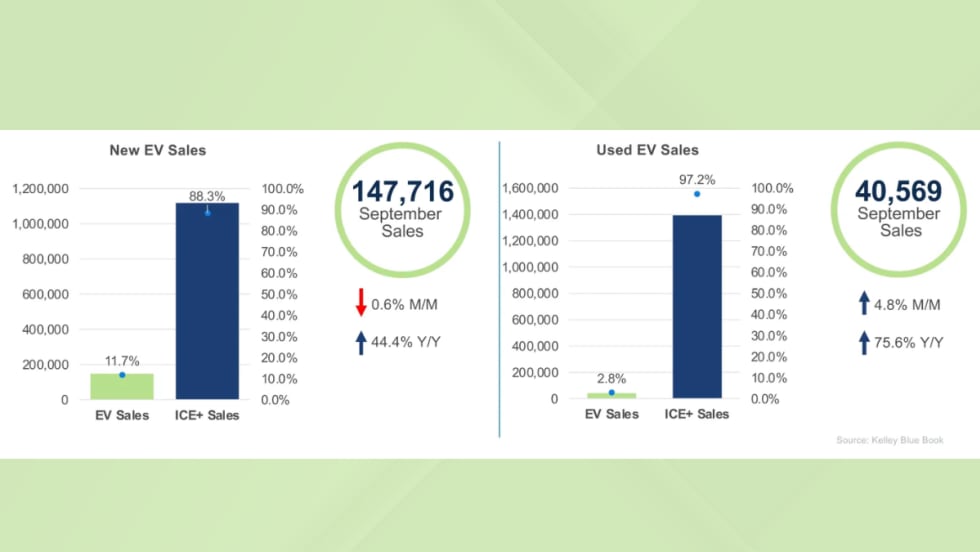
Q3 Electric Vehicles Sales Hit Record High
EV buyers took advantage of the final federal tax credit days, while average prices edged up for new EVs and continued to decline for used models.
Read More →