




Trucking Group Urges Congressional Action to Lower Fuel Costs
ARLINGTON, Va. --- American Trucking Associations State Vice President Mike Card last week called on Congress to support the trucking industry's efforts to reduce fuel consumption and address the escalating cost of fuel.
ARLINGTON, Va. --- American Trucking Associations State Vice President Mike Card last week called on Congress to support the trucking industry's efforts to reduce fuel consumption and address the escalating cost of fuel.
Card, who is also president of Combined Transport, testified before the Subcommittee on Highways and Transit of the House Transportation and Infrastructure Committee. He said the dramatic increase in the price of diesel, combined with a downturn in the economy and softening demand for freight transportation, has many trucking companies struggling to survive.
Card asked Congress to create incentives to speed the introduction of auxiliary power units to reduce main engine idling, establish a 65 mile per hour national speed limit and support the Environmental Protection Agency’s SmartWay program.
"Our industry can't simply absorb this rapid increase in fuel costs," Card said. "We must pass some of these costs through to our customers, which ultimately translate into higher prices on the store shelves."
Card, whose Oregon-based family-owned trucking company operates more than 400 trucks, expects to spend more than $21.7 million on diesel fuel this year, a 26 percent increase from 2007. The trucking industry overall is on pace to spend $141.5 billion on fuel in 2008, $29 billion more than a year earlier.
Because trucking is a highly competitive industry with very low profit margins, many trucking companies are reporting that higher fuel prices are greatly suppressing profits. In the 2008 first quarter, 935 trucking companies with at least five trucks failed. This represents the largest number of trucking-related failures since the 2001 third quarter.
Subcommittee Chairman Peter DeFazio (D-Ore.) testified at the hearing that while every American driver is impacted by the dramatic gas price increases, the rise in fuel costs has had a particularly significant impact on the trucking industry.
"Each time the price of fuel increases by 5 cents per gallon, a trucker's annual costs increase by $1,000," DeFazio said. "When the average trucker feels the pinch of gas prices, the increased cost of transporting goods to market significantly affects the price of many consumer goods."
Similarly, Congressman James Oberstar (D-Minn.) submitted a prepared statement that said because the price of gasoline and diesel are at an all-time high, they are increasing the cost of everything delivered by truck.
"Consumers, who are having to pay $3.61 per gallon at the pump, are hit again with escalating costs for food and other basic consumer goods, in part due to the rising costs of getting these goods to market," Oberstar said.
ATA said it believes that balancing the need for an efficient petroleum market with the desire to limit petroleum speculation could help burst the bubble that has formed in the petroleum markets.
ATA is urging the federal government to help bring down the price of diesel fuel and to alleviate trucking companies’ hardships by doing the following:
-- Allow environmentally responsible exploration of oil-rich areas in the United States that are now off-limits
-- Allow environmentally responsible development of crude resources in oil shale and tar sands in Colorado, Utah and Wyoming
-- Set a national maximum speed limit of 65 mph
-- Require speed limiters set for 68 mph or lower on all new trucks
-- Work with the 50 state attorneys general to combat any fuel price gouging that might occur
-- Continue to fund EPA's SmartWay Transport Partnership Program, which encourages fuel-saving strategies
-- Require states to grant a weight exemption for auxiliary power units
-- Streamline EPA's regulatory framework for reviewing and processing applications for additional refinery operations
-- Suspend the collection of the 12 percent federal excise tax on motor carriers' purchase of auxiliary power units, which cut the consumption of fuels in idling truck engines
-- Establish a national diesel fuel standard
-- Eliminate "splash and dash" --- a tax benefit for imported biodiesel that is subsequently exported and
-- Stop filling and instead release oil from the Strategic Petroleum Reserve.
The American Trucking Associations is the largest national trade association for the trucking industry. Through a federation of other trucking groups, industry-related conferences, and its 50 affiliated state trucking associations, ATA represents more than 37,000 members covering every type of motor carrier in the United States.
More Fuel
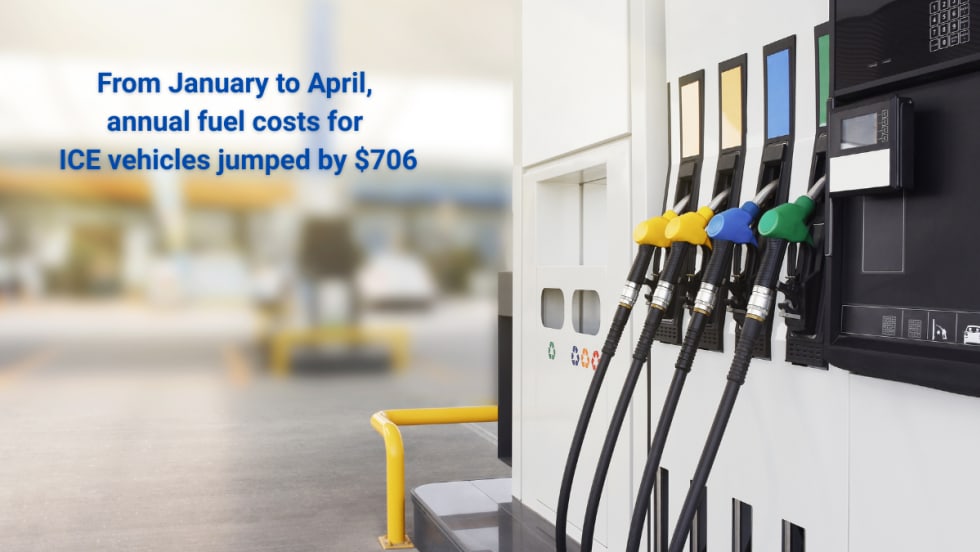
Study: How 2026's Gas Price Hikes Affect Different Vehicle Types
New data from iSeeCars reveals how rising fuel costs have affected different vehicle segments as gasoline prices climbed nearly 46% over the past four months.
Read More →
Are You Tracking Your Fleet's True Total Cost of Ownership?
Bobit Business Media surveyed 190 fleet professionals and found that while most fleets are tracking costs, fragmented systems and data gaps are keeping true TCO visibility out of reach. With rising pressure to control spend in an increasingly volatile environment, the gap between what fleets think they know and what the data actually shows is wider than you might expect. See how your peers are managing costs today and where the industry still has room to improve.
Read More →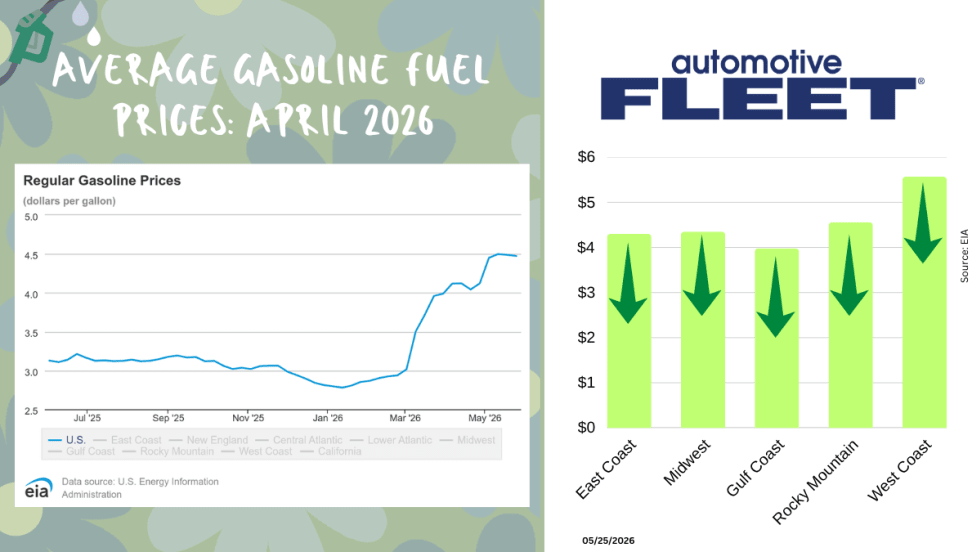
May Fuel Update: All Regions Experience Declines
Gas prices are finally easing in much of the country, but experts warn global tensions could quickly reverse the trend as the national average remains well above last month’s levels.
Read More →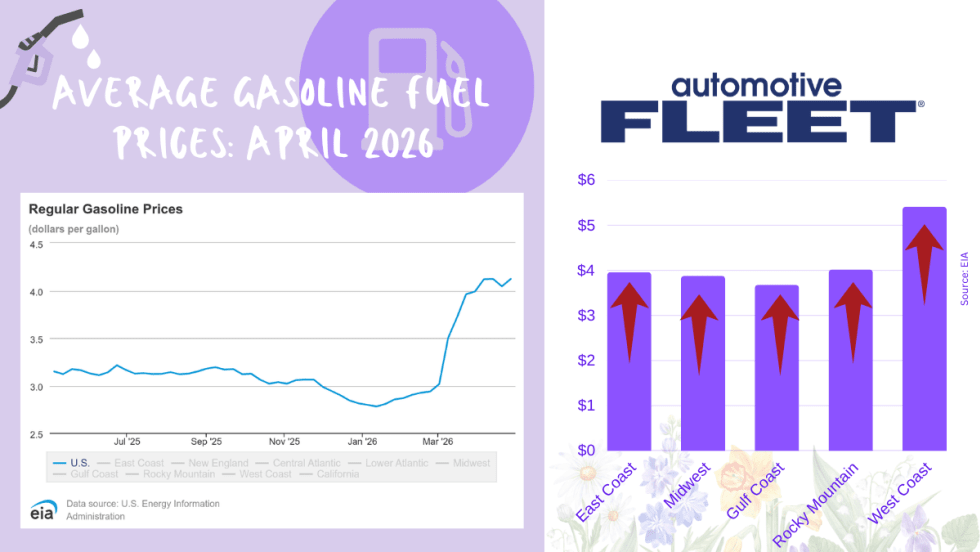
April Fuel Update: Prices Climb Above $4 as Spring Surge Accelerates
National average jumps to $4.04 per gallon, up sharply from last year, with West Coast prices topping $5 and further increases expected amid rising oil tensions.
Read More →
Tips from Fleet Managers on Saving Fuel Costs
Fleet leaders share practical strategies to reduce fuel spend through smarter policy, routing, and driver guidance.
Read More →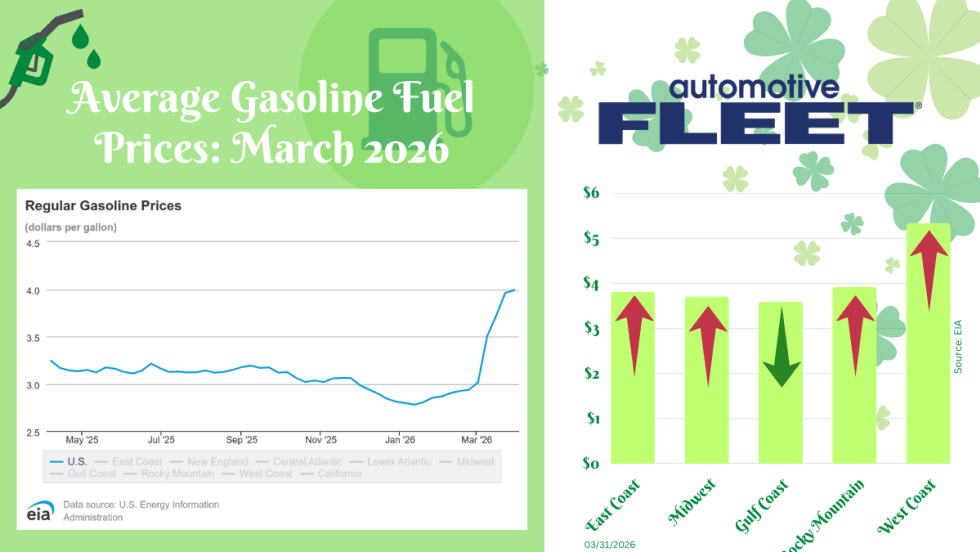
March Fuel Update: Prices Settle With a $4 Average
Fuel prices significantly slowed this week, but a $4 national average is still expected.
Read More →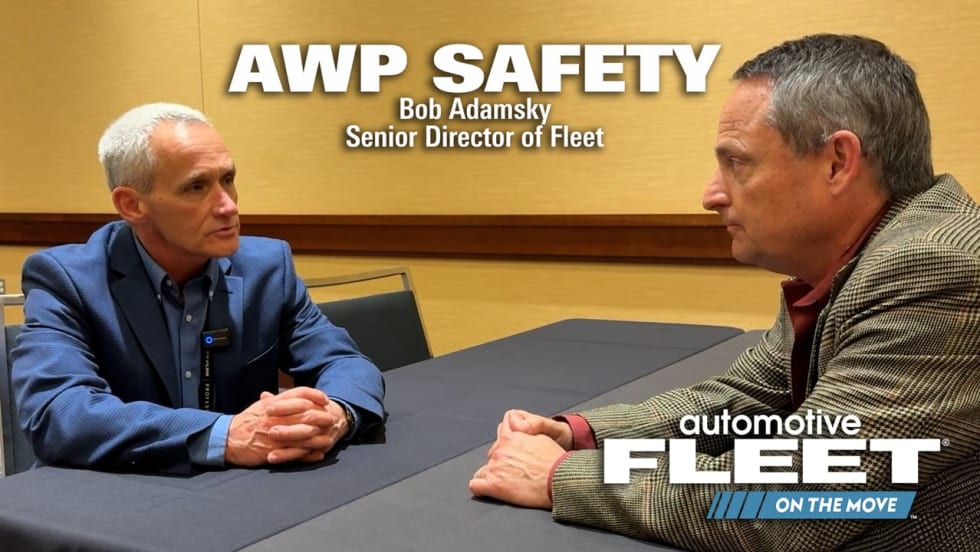
Bob Adamsky on Fuel Volatility: “Don’t Panic — Have a Plan”
With oil prices rising again, AWP Safety’s fleet manager shares how to respond to rising fuel costs and how the right strategy can turn fuel spikes into cost-saving opportunities.
Read More →
Oil Market Turbulence Is Complicating Fleet Cost Planning
Rapid swings in crude oil prices driven by the conflict in the Middle East could create longer-term cost pressures for fleets, affecting fuel prices, supply chains, and vehicle strategy, says NTEA’s Andrew Wrobel.
Read More →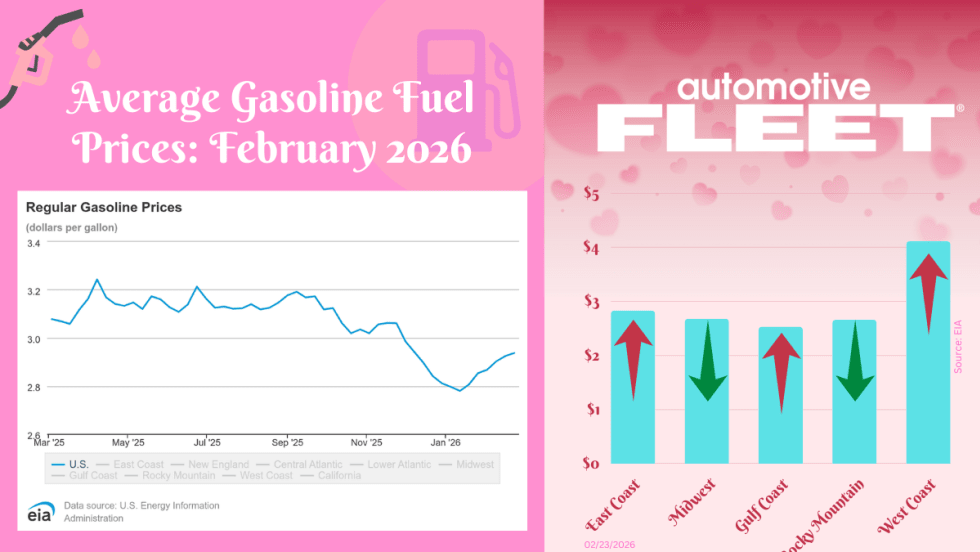
February Fuel Update: Prices Inch Higher for Third Week in a Row
The final February fuel update reveals prices continuing to inch higher for the third week in a row.
Read More →
The 2026 Fuel Economy Guide: Updated Cost and Efficiency Benchmarks for Fleets
Fleet managers can use the DOE’s 2026 Fuel Economy Guide to benchmark MPG across powertrain types using side-by-side vehicle ratings and compare new model-year options.
Read More →