




All-New Ford Flex Poised to Deliver a Quiet Ride
DEARBORN, MI – During the development of the new Flex, Ford engineers tackled one of the biggest sources of interior noise — the front and rear side doors.


DEARBORN, MI – Ford Flex, available this summer, delivers a quieter ride than competitors, according to Ford tests. During the development of the new Flex, Ford engineers tackled one of the biggest sources of interior noise — the front and rear side doors. One of their solutions was a new inset door design rather than the traditional "limo" door that wraps into the roof.
"There's a margin on the traditional limo door along the A-pillar up to the windshield that's right in the path of the wind and acts like a scoop," says John Wheeler, Closure Systems integrator. "That's where the majority of the wind noise comes from. We've eliminated this noise path in the Flex."
Engineers are able to pinpoint problem areas like the limo door design thanks to hours spent in testing facilities such as Jacobs Technology's Drivability Test Facility (DTF) in Allen Park, Mich. The facility includes wind tunnels that can subject vehicles to temperatures from minus 40 degrees F to 130 degrees F, winds of more than 150 mph and altitudes ranging from 280 feet below sea level to more than 12,000 feet above sea level.
Wind Tunnel 8 is where NVH (noise, vibration, and harshness) Development Engineer Steve Dworack and his team have been putting Flex to the test. Starting with the first prototype a year ago and continuing now with random vehicles pulled from production, the NVH team has used Aachen Head technology to measure and pinpoint sounds inside the car.
In these tests, the Aachen Head — a microphone-equipped mannequin — picks up sounds while a giant, 23-foot fan blows 100 mph winds at the car.
"On a Flex prototype, we found a buzz that came from a half-inch section under the mirror mount," says Dworack. "That tiny gap accounted for one whole sone, which is a unit of perceived loudness."
The NVH team isolates noises such as this through a process of using a special high-speed tape to cover seals in windshields, windows, doors, etc., and then strategically untaping certain areas during testing. Once a problem is identified, the team works with Design & Release engineers to fix it. In the case of the miniscule section under the mirror mount, the gap-hider seal was lengthened by one millimeter.
More Operations

How to Manage Conflict for Your Fleet Operations
Conflict management is becoming a core leadership skill. Here are five strategies fleet leaders should know.
Read More →
Turning Connected Vehicle Data Into Decisions That Matter
Fleet leaders have more data than ever, but turning that data into clear, actionable decisions remains a challenge. This white paper shows how leading organizations are using connected vehicle data to improve safety, reduce costs, and optimize fleet performance. Learn how to turn insight into action across your fleet.
Read More →
Cameras, Safety and Insurance: From Reactive Claims to Real-time Prevention
Commercial auto remains one of the most challenging and costly lines of coverage for fleet operators and insurers alike. Learn more about how to effectively address these issues from Onur Aksan, Enterprise Business Development Executive, Geotab.
Read More →

Are You Tracking Your Fleet's True Total Cost of Ownership?
Bobit Business Media surveyed 190 fleet professionals and found that while most fleets are tracking costs, fragmented systems and data gaps are keeping true TCO visibility out of reach. With rising pressure to control spend in an increasingly volatile environment, the gap between what fleets think they know and what the data actually shows is wider than you might expect. See how your peers are managing costs today and where the industry still has room to improve.
Read More →
Turn Fleet Data Into Smarter Decisions
Fleet leaders have access to more operational data than ever, but disconnected systems and unclear metrics often slow decision-making instead of improving it. This article outlines five practical steps fleets can take to transform fragmented data into actionable insights that improve planning, safety, utilization, and long-term performance.
Read More →
Hybrids: Electrification Without the Challenges
For fleet managers, fuel is one of the biggest line items in the budget — and it's one hybrids can shrink without changing how your people work. Download the eBook to see the numbers, understand the technology, and get a step-by-step guide to making the switch.
Read More →
How NOV Uses Telematics to Improve Fleet Safety Across 160 Locations
James Victory of NOV discusses how the company manages fleet safety, maintenance, and telematics across more than 150 locations supporting oilfield operations throughout the U.S.
Read More →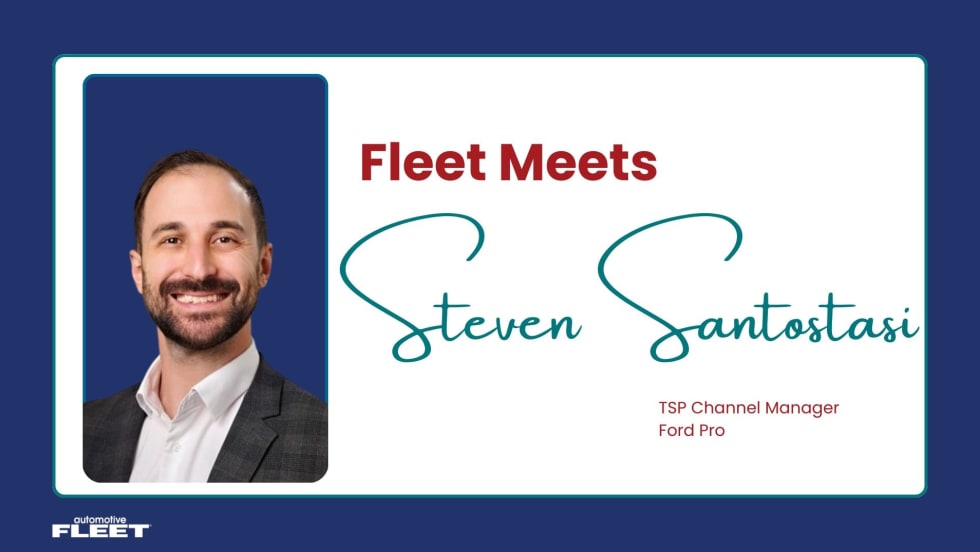
Fleet Meets: Steven Santostasi
This edition of the Fleet Meets series features Steven Santostasi, the current TSP channel manager for Ford Pro.
Read More →
Why Fleet Managers Are Replacing Departmental Vehicles with Shared Motor Pools
Departmentally assigned vehicles often create hidden costs through underutilization, poor visibility, and increased administrative burden. This white paper explores how shared motor pool strategies help fleets reduce costs, improve accountability, and optimize vehicle utilization.
Read More →
Soap Box Derby Challenge: Assembling the Crew
Meet Gabriel, Matthew, and Angel — the team helping bring this soap box derby build to life.
Read More →