




UPS Fleet Veteran Provides Fuel-Saving Advice
ATLANTA --- UPS's Robert Hall offers tips on reducing fuel consumption.
ATLANTA --- Twenty-year UPS Automotive veteran Robert Hall has spent a lot of time looking for ways to reduce fuel consumption. With a fleet of 94,500 vehicles on the road each day, drivers can learn a thing or two from UPS's fuel conservation practices.
"Fuel conservation has been a priority at UPS since our founding nearly 100 years ago. We find that even the smallest changes to daily driving habits can make a difference," said Hall. "What we do for a large fleet can be easily adapted for any driver."
To help drivers improve their vehicle's performance, resulting in greater fuel mileage, Hall offers some simple tips:
Plan your route. When running errands or going on a trip, consider the best way to get to the locations without backtracking. When taking a long trip, use maps or Internet sites to determine the quickest and most direct route.
Avoid left turns. UPS routes are designed to avoid left turns. The company has learned that idling waiting to turn left wastes gas -- not to mention the cars idling behind you waiting for you to turn. It is also safer to avoid left turns since you reduce the number of times you turn across oncoming traffic.
Schedule regular car maintenance. Maintaining your car can affect its gas mileage. Just making sure that the tires are properly inflated can save on fuel economy.
Drive responsibly. Driving style can affect the gas mileage of your vehicle. Making a fast start from a stoplight or driving over the speed limit can reduce fuel economy. UPS practices safe driving and a "no idling" policy --- no matter how short of a stop a UPS driver makes, the engine is turned off.
Reduce the weight in the vehicle. Unnecessary items in the trunk can contribute to lower gas mileage. Eliminate anything you don't need.
Use the car with the best gas mileage. If you have more than one car, use the one that gets the best gas mileage when making long trips. UPS tries to match its vehicle to the needs of its routes. In some cases, that means deliveries are made by bicycle, particularly if the streets are too congested to pass through easily.
More Fuel
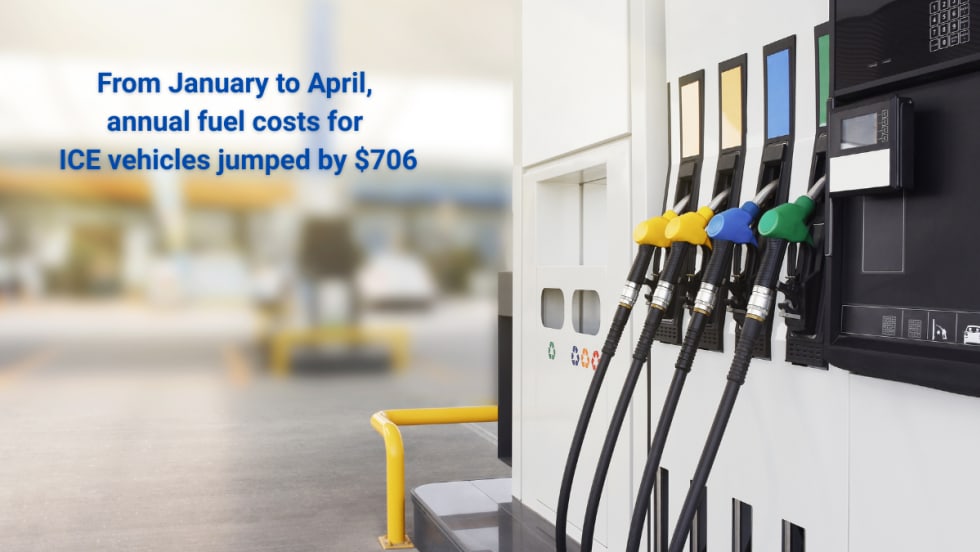
Study: How 2026's Gas Price Hikes Affect Different Vehicle Types
New data from iSeeCars reveals how rising fuel costs have affected different vehicle segments as gasoline prices climbed nearly 46% over the past four months.
Read More →
Are You Tracking Your Fleet's True Total Cost of Ownership?
Bobit Business Media surveyed 190 fleet professionals and found that while most fleets are tracking costs, fragmented systems and data gaps are keeping true TCO visibility out of reach. With rising pressure to control spend in an increasingly volatile environment, the gap between what fleets think they know and what the data actually shows is wider than you might expect. See how your peers are managing costs today and where the industry still has room to improve.
Read More →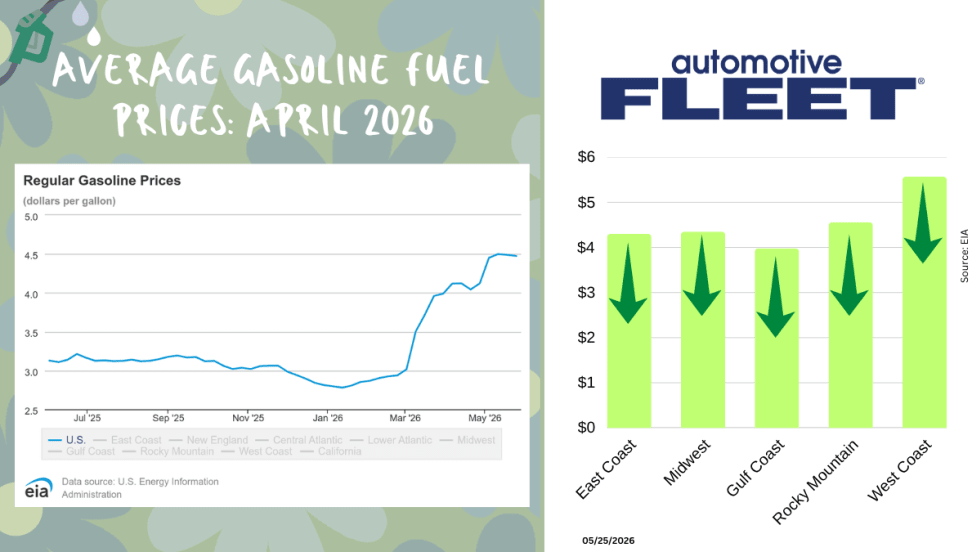
May Fuel Update: All Regions Experience Declines
Gas prices are finally easing in much of the country, but experts warn global tensions could quickly reverse the trend as the national average remains well above last month’s levels.
Read More →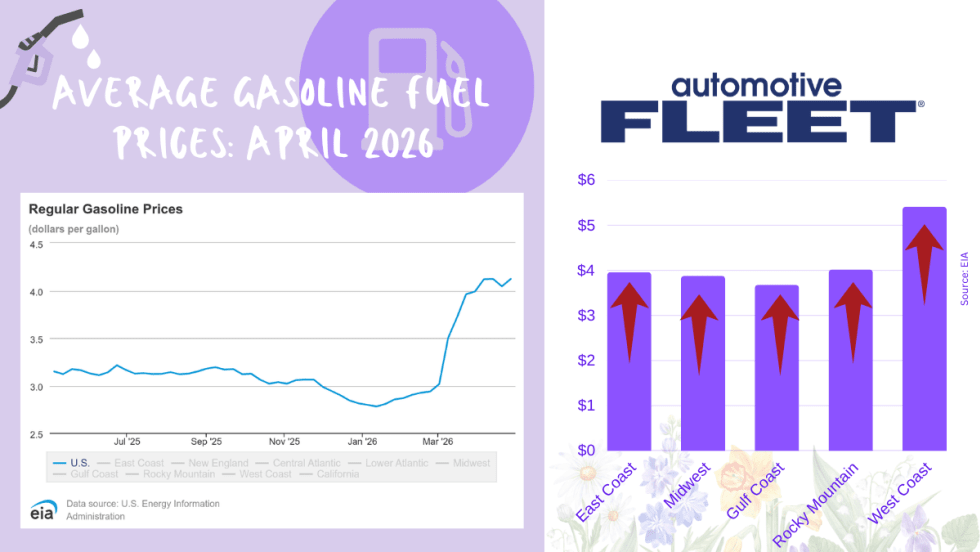
April Fuel Update: Prices Climb Above $4 as Spring Surge Accelerates
National average jumps to $4.04 per gallon, up sharply from last year, with West Coast prices topping $5 and further increases expected amid rising oil tensions.
Read More →
Tips from Fleet Managers on Saving Fuel Costs
Fleet leaders share practical strategies to reduce fuel spend through smarter policy, routing, and driver guidance.
Read More →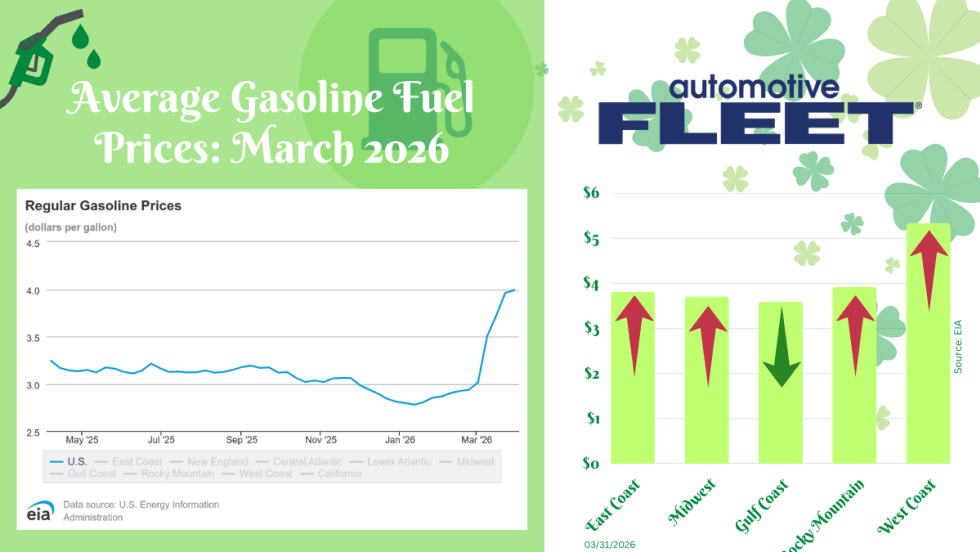
March Fuel Update: Prices Settle With a $4 Average
Fuel prices significantly slowed this week, but a $4 national average is still expected.
Read More →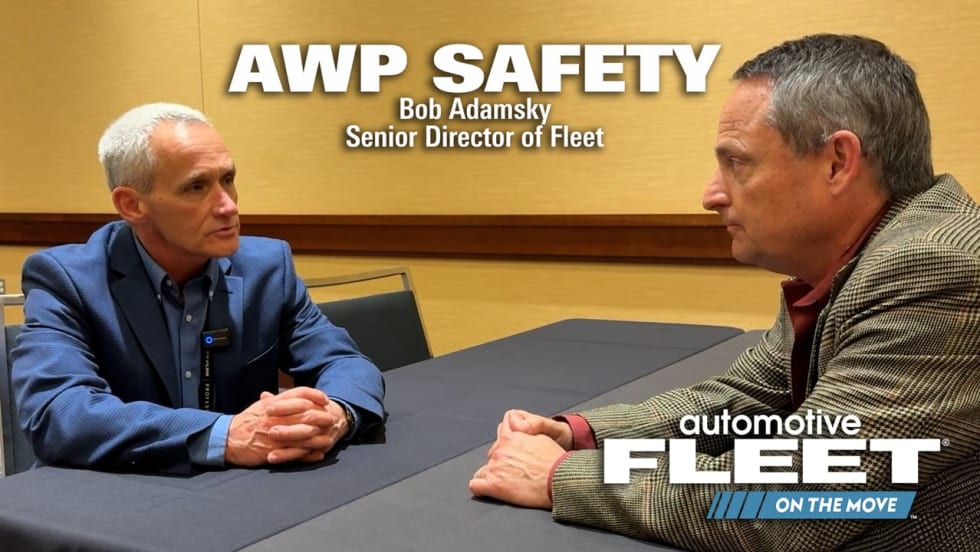
Bob Adamsky on Fuel Volatility: “Don’t Panic — Have a Plan”
With oil prices rising again, AWP Safety’s fleet manager shares how to respond to rising fuel costs and how the right strategy can turn fuel spikes into cost-saving opportunities.
Read More →
Oil Market Turbulence Is Complicating Fleet Cost Planning
Rapid swings in crude oil prices driven by the conflict in the Middle East could create longer-term cost pressures for fleets, affecting fuel prices, supply chains, and vehicle strategy, says NTEA’s Andrew Wrobel.
Read More →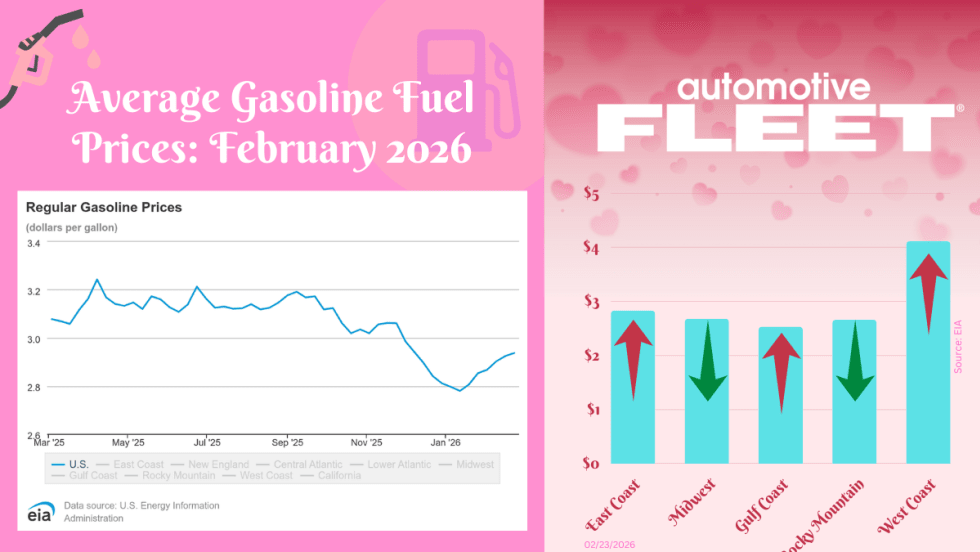
February Fuel Update: Prices Inch Higher for Third Week in a Row
The final February fuel update reveals prices continuing to inch higher for the third week in a row.
Read More →
The 2026 Fuel Economy Guide: Updated Cost and Efficiency Benchmarks for Fleets
Fleet managers can use the DOE’s 2026 Fuel Economy Guide to benchmark MPG across powertrain types using side-by-side vehicle ratings and compare new model-year options.
Read More →