




Subaru Forester Earns Top Safety Pick Award
ARLINGTON, VA --- The redesigned 2009 Subaru Forester, a small SUV, has earned the Insurance Institute for Highway Safety's "Top Safety Pick" award.
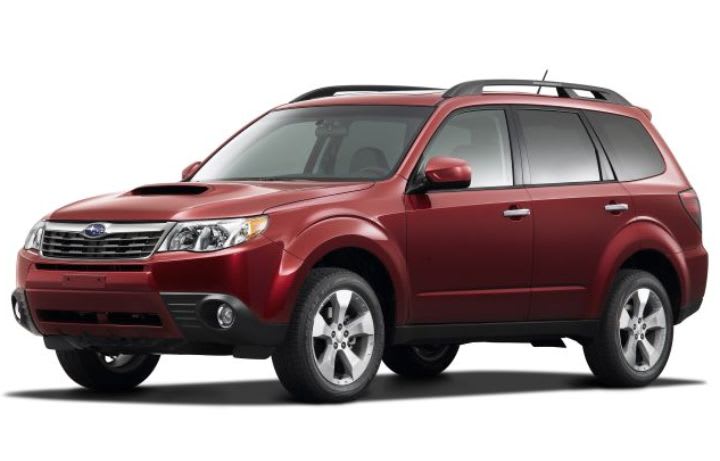
To qualify for the "Top Safety Pick" award, a vehicle must earn the highest ratings in the IIHS's front, side, and rear tests and be equipped with electronic stability control.
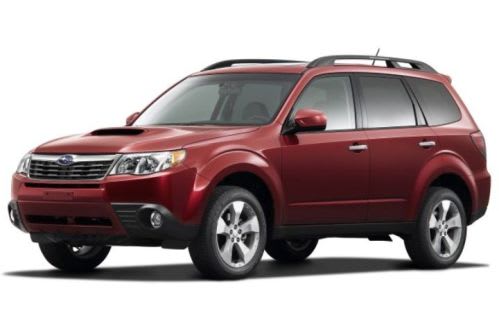
ARLINGTON, VA - The redesigned 2009 Subaru Forester, a small SUV, has earned the Insurance Institute for Highway Safety's "Top Safety Pick" award.
Winners demonstrate superior overall crash protection among the vehicles in their class. To qualify, a vehicle must earn the highest rating of "good" in the institute's front, side and rear tests and be equipped with electronic stability control.
Criteria to win are tough because the award is intended to drive continued safety improvements such as top crash test ratings and the rapid addition of electronic stability control, which is standard on the Forester.
"Recognizing vehicles at the head of the class for safety helps consumers distinguish the best overall choices without having to sort through multiple test results," said Institute President Adrian Lund.
Only 13 cars, minivans, and SUVs initially qualified for 2007 awards. Now 37 models earn the designation. As automakers introduce new models or make safety changes to existing ones, the institute adds winners throughout the year.
"The performance of the Forester underscores Subaru's commitment to delivering state-of-the-art safety to its customers," Lund says. "You don't know what kind of crash you're going to be in. That's why it's important to choose a vehicle that will protect you in all kinds of crashes. The Top Safety Pick designation is intended to help people find the safest choices."
The institute's frontal crashworthiness evaluations are based on results of 40 mph frontal offset crash tests. Each vehicle's overall evaluation is based on measurements of intrusion into the occupant compartment, injury measures recorded on a Hybrid III dummy in the driver seat, and analysis of slow-motion film to assess how well the restraint system controlled dummy movement during the test.
Side evaluations are based on performance in a crash test in which the side of a vehicle is struck by a barrier moving at 31 mph. The barrier represents the front end of a pickup or SUV. Ratings reflect injury measures recorded on two instrumented SID-IIs dummies, assessment of head protection countermeasures, and the vehicle's structural performance during the impact.
Injury measures obtained from the two dummies, one in the driver seat and the other in the back seat behind the driver, are used to determine the likelihood that a driver and/or passenger in a similar real-world crash would sustain serious injury to various parts of the body. The movements and contacts of the dummies' heads during the test also are evaluated. Structural performance is based on measurements indicating the amount of B-pillar intrusion into the occupant compartment.
Rear crash protection is rated according to a two-step procedure. Starting points for the ratings are measurements of head restraint geometry — the height of a restraint and its horizontal distance behind the back of the head of an average-size man. Seats with "good" or "acceptable" restraint geometry are tested dynamically using a dummy that measures forces on the neck. This test simulates a collision in which a stationary vehicle is struck in the rear at 20 mph. Seats without good or acceptable geometry are rated "poor" overall because they can't be positioned to protect many people.
More Safety
How Emotions Behind the Wheel Can Affect Fleet Safety
During National Safety Month, fleets are encouraged to look beyond distracted driving and recognize how stress, fatigue, and emotional well-being influence driver performance and crash risk.
Read More →
Nominations Open for 2026 Fleet Safety Award
Nominations have officially opened for the 2026 Fleet Safety Award Winner.
Read More →
Turning Connected Vehicle Data Into Decisions That Matter
Fleet leaders have more data than ever, but turning that data into clear, actionable decisions remains a challenge. This white paper shows how leading organizations are using connected vehicle data to improve safety, reduce costs, and optimize fleet performance. Learn how to turn insight into action across your fleet.
Read More →

Cameras, Safety and Insurance: From Reactive Claims to Real-time Prevention
Commercial auto remains one of the most challenging and costly lines of coverage for fleet operators and insurers alike. Learn more about how to effectively address these issues from Onur Aksan, Enterprise Business Development Executive, Geotab.
Read More →
NAFA Fleet Safety Symposium to Collocate With 2026 Fleet Forward Conference
The daylong certificate program will precede the Fleet Forward Conference at the Gaylord National Harbor in Maryland.
Read More →
The Distractions You Can’t Turn Off: What Drivers Face Outside the Vehicle
Fleet drivers face constant visual, cognitive, and environmental interruptions the moment they hit the road. From roadside chaos to mental fatigue and digital overload, today’s biggest driving risks often come from outside the vehicle itself.
Read More →
FLASH Weather AI Launches First Deep-Learning Hail Prediction Model With High-Resolution Forecasting
FLASH Weather AI has launched a first-of-its-kind hail prediction model capable of forecasting hail size and arrival time at 1-kilometer resolution up to 55 minutes ahead, giving fleets and insurers critical time to prepare for severe storms.
Read More →
How Coca-Cola United Protects Its Fleet from Growing Legal Risk
As litigation risk rises, vehicles are increasingly targeted. This Coca-Cola bottler shares how it’s reducing exposure through driver training, technology, and a proactive risk management approach.
Read More →
How to Speak the Same Language on Fleet Safety
Drivers, supervisors, and data often speak different safety “languages.” Getting on the same page will drive better results.
Read More →
Fleet Cybersecurity 101: What You Need from Your Technology Vendors
From identity management to third-party certifications, the right technology partner should make security easier to manage. Here are the three building blocks that fleet managers need to stay in control as connected systems scale.
Read More →