




Pricing for All-New 2010 Dodge Ram Heavy-Duty Announced
AUBURN HILLS, MI - Chrysler Group LLC announced pricing for the all-new 2010 Ram 2500 and 3500 heavy-duty trucks, scheduled to arrive in dealerships at the end of the 2009 calendar-year.
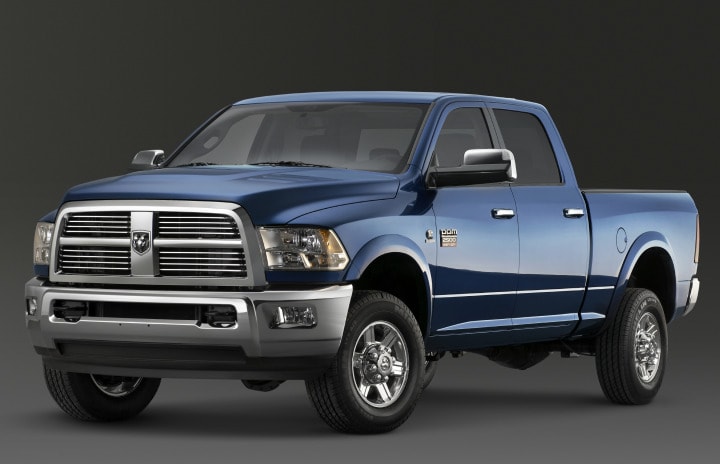
2010 Dodge Ram Laramie Crew Cab
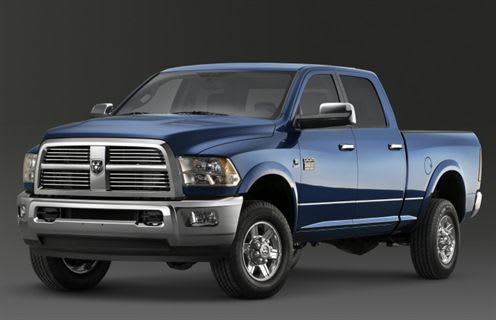
AUBURN HILLS, MI- Chrysler Group LLC announced pricing for the all-new 2010 Ram 2500 and 3500 heavy-duty pickups, scheduled to arrive in dealerships end of this year.
The all-new 2010 Ram Heavy Duty features three cab styles (regular cab, crew-size cab and Mega Cab) and two cargo-box sizes (6-foot, 4-inches and 8-foot), single- and dual-rear-wheel configurations, five trim levels, all-new exterior and interior styling and superior towing capability. The 2010 model is available starting at $28,165 MSRP for regular cab models, $31,415 for crew cab models, and $36,865 for Mega Cab models. All prices include $950 for destination.
The all-new Ram Heavy Duty is available in five distinct trim models - ST, SLT, TRX, Power Wagon and Laramie.
Improved suspension tuning and new C-pillar hydra mounts were added to the 2010 Ram Heavy Duty models to improve damping through the frame-bending mode frequency in order to better manage shake and after-shake response for reduced shake and improved ride.
The new 2010 Ram 2500 and 3500 pickups offer the only standard exhaust brake in the segment (diesel-equipped models), according to the manufacturer. The feature reduces brake fade, prolongs brake life, and provides confidence and safety when hauling heavy loads on downhill grades. Large front (360 mm) and rear (358 mm) brakes with integrated Anti-lock Brake System (ABS) increase brake life and braking stability.
An available integrated trailer brake control provides better driver control in towing situations. Trailer brake control information is displayed in the Electronic Vehicle Information Center (EVIC) that is standard on diesel models and available on gas SLT, TRX and Laramie models.
In addition, new 2010 Ram transmissions include Electronic Range Select, which enables the driver to manually limit the highest available transmission gear, allowing manual upshifts and downshifts based on road speed and engine speed. A tow/haul mode switch enhances tow capability while towing. Tow/haul mode is available on both five-speed and six-speed automatic transmissions.
The new 2010 Ram 2500 and 3500 also feature increased:
Gross Vehicle Weight Rating (GVWR) on 2500 4x4 crew cab diesel models to 9,600 lbs. from 9,000 lbs.
Gross Combined Weight Rating (GCWR) on 3500 dually models with diesel, auto transmission and 4.10 rear axle to 24,500 lbs. from 24,000 lbs. With the Max Tow Package, GCWR increases to 25,400 lbs. (late availability).
GCWR on 3500 4x2 models to 24,000 lbs. from 23,000 lbs.
Front Gross Axle Weight Rating (GAWR) on several models: 5,500 lbs. from 5,200 lbs. on diesel 4x4 pickups; 5,000 lbs. from 4,700 lbs. on diesel 4x2 pickups.
Ram will further enhance its commercial vehicle presence with the introduction of a "new crew" of commercial-grade work trucks: the new 2011 Dodge Ram 3500, 4500 and 5500 Chassis Cabs.
More Operations
How to Manage Conflict for Your Fleet Operations
Conflict management is becoming a core leadership skill. Here are five strategies fleet leaders should know.
Read More →
Turning Connected Vehicle Data Into Decisions That Matter
Fleet leaders have more data than ever, but turning that data into clear, actionable decisions remains a challenge. This white paper shows how leading organizations are using connected vehicle data to improve safety, reduce costs, and optimize fleet performance. Learn how to turn insight into action across your fleet.
Read More →
Cameras, Safety and Insurance: From Reactive Claims to Real-time Prevention
Commercial auto remains one of the most challenging and costly lines of coverage for fleet operators and insurers alike. Learn more about how to effectively address these issues from Onur Aksan, Enterprise Business Development Executive, Geotab.
Read More →

Are You Tracking Your Fleet's True Total Cost of Ownership?
Bobit Business Media surveyed 190 fleet professionals and found that while most fleets are tracking costs, fragmented systems and data gaps are keeping true TCO visibility out of reach. With rising pressure to control spend in an increasingly volatile environment, the gap between what fleets think they know and what the data actually shows is wider than you might expect. See how your peers are managing costs today and where the industry still has room to improve.
Read More →
Turn Fleet Data Into Smarter Decisions
Fleet leaders have access to more operational data than ever, but disconnected systems and unclear metrics often slow decision-making instead of improving it. This article outlines five practical steps fleets can take to transform fragmented data into actionable insights that improve planning, safety, utilization, and long-term performance.
Read More →
Hybrids: Electrification Without the Challenges
For fleet managers, fuel is one of the biggest line items in the budget — and it's one hybrids can shrink without changing how your people work. Download the eBook to see the numbers, understand the technology, and get a step-by-step guide to making the switch.
Read More →
How NOV Uses Telematics to Improve Fleet Safety Across 160 Locations
James Victory of NOV discusses how the company manages fleet safety, maintenance, and telematics across more than 150 locations supporting oilfield operations throughout the U.S.
Read More →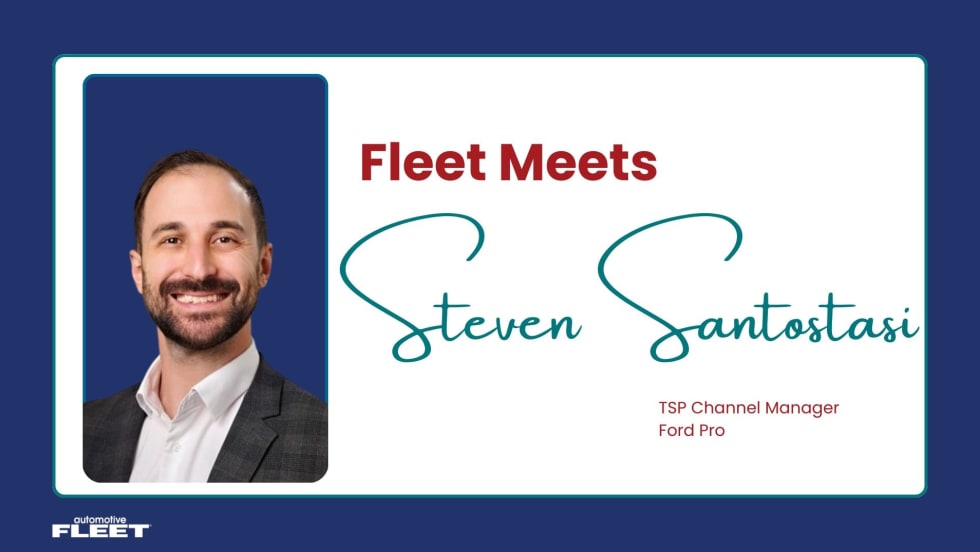
Fleet Meets: Steven Santostasi
This edition of the Fleet Meets series features Steven Santostasi, the current TSP channel manager for Ford Pro.
Read More →
Why Fleet Managers Are Replacing Departmental Vehicles with Shared Motor Pools
Departmentally assigned vehicles often create hidden costs through underutilization, poor visibility, and increased administrative burden. This white paper explores how shared motor pool strategies help fleets reduce costs, improve accountability, and optimize vehicle utilization.
Read More →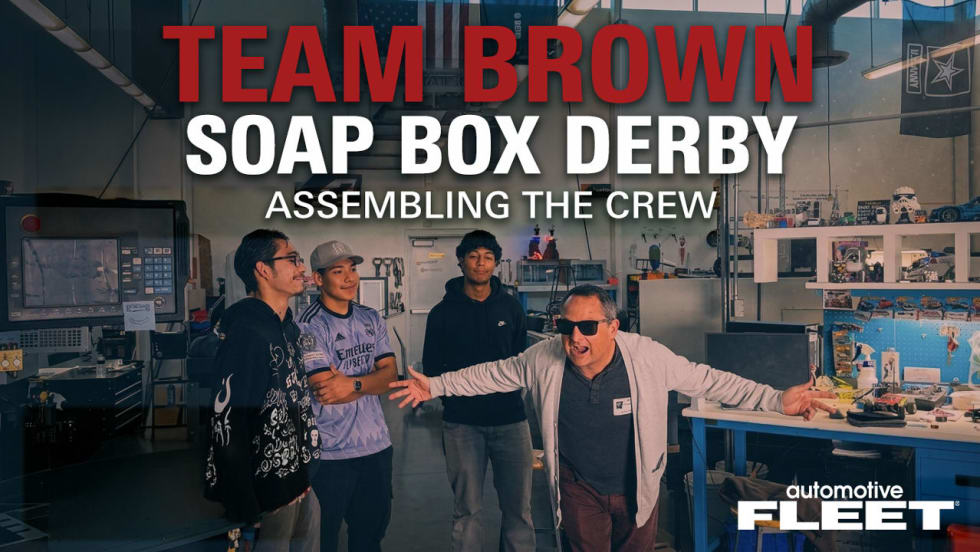
Soap Box Derby Challenge: Assembling the Crew
Meet Gabriel, Matthew, and Angel — the team helping bring this soap box derby build to life.
Read More →