




Improving Order-to-Delivery Times: You Want Your Truck When?
When it comes time to acquire a new truck, small fleets need it “yesterday.” If you can’t choose a vehicle to your specs and with your equipment out of dealer stock, then yesterday can turn into weeks, or even months. Here are seven tips to help shorten the order-to-delivery process.

When possible, have truck equipment installed by a truck body company close to the delivering dealer.
Photo: Automotive Fleet
When it comes time to acquire a new truck, small fleets need it "yesterday." If you can’t choose a vehicle to your specs and with your equipment out of dealer stock, then yesterday can turn into weeks, or even months.
Here are seven tips to help shorten the order-to-delivery process.
7 Tips to Shorten OTD for Trucks
The end-user should plan at least 90 days in advance of when a vehicle is needed. Some advanced planning by the end user will save hundreds, perhaps thousands of dollars in acquisition costs by using a factory order not buying a vehicle out of stock.
Have the dealer or fleet management company check the manufacturer’s downtime at the plant. This delay can be invisible to the end-user, but can add weeks to total delivery time.
Before ordering a specific model, have the dealer or fleet management company double-check with the manufacturer to determine if any options or standard components are on hold or in short supply. This can hold up an order for weeks or months.
For commercial trucks, use body company truck pools if possible. A truck sitting on the ground and in stock at the body company can save eight to 12 weeks alone on total delivery time.
Use manufacturer vehicle pools if possible.
Make sure the dealer or fleet management company sends a purchase order immediately to the body company for any upfit installed on a factory-ordered vehicle. They should tell the body company the approximate delivery date so the body company can get the equipment ordered before the truck arrives. This alone will save many weeks or months
When possible, have truck equipment installed by a truck body company close to the delivering dealer. Though factory ship-thru systems are convenient, placing a truck back into shipping traffic can add 1-2 weeks to shipping time, especially for medium-duty units. In this way, a truck can be upfit after it arrives at the end destination and doesn’t need to be reshipped. This works best with smaller orders of one to 10 units.
Glossary of Ordering and Shipping Terms in Fleet
Bailment pool: A "pool" or inventory of already-built vehicles on consignment at body companies, awaiting sale and upfit by dealers or leasing companies.
Body company: A fabricator that manufactures and installs special equipment for vehicles. Also, the location where a vehicle is shipped to be upfit with equipment not installed at the factory.
Completed vehicle: A fully manufactured truck, including the chassis, body, and usable cargo area.
Factory order: A new-vehicle order placed directly with the manufacturer by the dealer or leasing company to meet the user’s exact specifications.
Incomplete vehicle: Vehicle chassis completed by adding specialized equipment.
Lead time: The anticipated length of time between an order’s placement and delivery.
Ship-Thru: The process of shipping a vehicle from the manufacturer to a body company for equipment installation. The completed vehicle is returned to the manufacturer and then sent to the delivering dealer.
Ship-To: The vehicle is shipped from the manufacturer to a body company. The completed vehicle is then transported directly to the delivering dealer or customer location.
Upfitting: The addition of equipment on a vehicle not installed by the manufacturer.
More Operations
How to Manage Conflict for Your Fleet Operations
Conflict management is becoming a core leadership skill. Here are five strategies fleet leaders should know.
Read More →
Turning Connected Vehicle Data Into Decisions That Matter
Fleet leaders have more data than ever, but turning that data into clear, actionable decisions remains a challenge. This white paper shows how leading organizations are using connected vehicle data to improve safety, reduce costs, and optimize fleet performance. Learn how to turn insight into action across your fleet.
Read More →
Cameras, Safety and Insurance: From Reactive Claims to Real-time Prevention
Commercial auto remains one of the most challenging and costly lines of coverage for fleet operators and insurers alike. Learn more about how to effectively address these issues from Onur Aksan, Enterprise Business Development Executive, Geotab.
Read More →

Are You Tracking Your Fleet's True Total Cost of Ownership?
Bobit Business Media surveyed 190 fleet professionals and found that while most fleets are tracking costs, fragmented systems and data gaps are keeping true TCO visibility out of reach. With rising pressure to control spend in an increasingly volatile environment, the gap between what fleets think they know and what the data actually shows is wider than you might expect. See how your peers are managing costs today and where the industry still has room to improve.
Read More →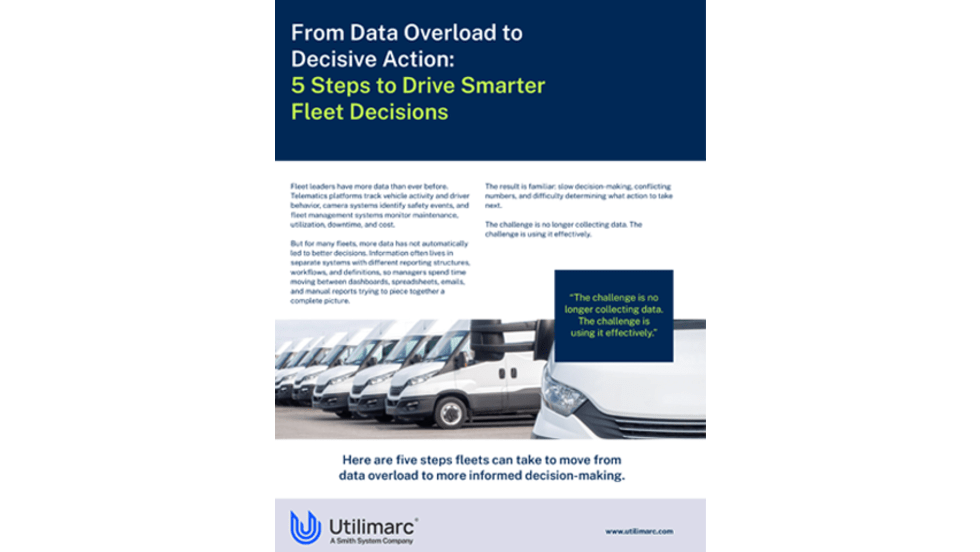
Turn Fleet Data Into Smarter Decisions
Fleet leaders have access to more operational data than ever, but disconnected systems and unclear metrics often slow decision-making instead of improving it. This article outlines five practical steps fleets can take to transform fragmented data into actionable insights that improve planning, safety, utilization, and long-term performance.
Read More →
Hybrids: Electrification Without the Challenges
For fleet managers, fuel is one of the biggest line items in the budget — and it's one hybrids can shrink without changing how your people work. Download the eBook to see the numbers, understand the technology, and get a step-by-step guide to making the switch.
Read More →
How NOV Uses Telematics to Improve Fleet Safety Across 160 Locations
James Victory of NOV discusses how the company manages fleet safety, maintenance, and telematics across more than 150 locations supporting oilfield operations throughout the U.S.
Read More →
Fleet Meets: Steven Santostasi
This edition of the Fleet Meets series features Steven Santostasi, the current TSP channel manager for Ford Pro.
Read More →
Why Fleet Managers Are Replacing Departmental Vehicles with Shared Motor Pools
Departmentally assigned vehicles often create hidden costs through underutilization, poor visibility, and increased administrative burden. This white paper explores how shared motor pool strategies help fleets reduce costs, improve accountability, and optimize vehicle utilization.
Read More →
Soap Box Derby Challenge: Assembling the Crew
Meet Gabriel, Matthew, and Angel — the team helping bring this soap box derby build to life.
Read More →