




Research Raises Concerns Over Aftermarket Crash Parts
PROSSER, WA - New collision-repair research is raising concerns about the safety of some aftermarket crash parts requested by some insurance companies to settle claims, according to the Society of Collision Repair Specialists (SCRS).
PROSSER, WA - New collision-repair research is raising concerns about the safety of some aftermarket crash parts requested by some insurance companies to settle claims, according to the Society of Collision Repair Specialists (SCRS).
The research, overseen by SCRS National Director Toby Chess, compared randomly selected OEM parts with aftermarket structural replacement parts, including front and rear bumper reinforcement beams, radiator core supports, bumper brackets and bumper energy absorbers.
According to SCRS, tests revealed "significant differences" in the aftermarket parts' construction and materials used, compared to the OEM parts. These differences were reflected in the parts' effectiveness in the transfer of energy resulting from a collision, SCRS said.
The aftermarket parts also had an impact on the effectiveness and response of the vehicle safety restraint system, potentially affecting airbag functionality, SCRS added. However, the research also found that when aftermarket crash parts manufacturers pay particular attention to using the same materials as the OEM and employ credible third-party testing, the parts perform much better in crash tests.
"This is a serious issue that has not received enough attention from the industry in the past," Chess said. "These parts are critically affecting the structural design of a vehicle in its post-repair state."
[PAGEBREAK]
As a result of the research, the Auto Body Parts Association has advised its members to distribute and supply only aftermarket crash parts that have been sufficiently tested. For parts that lack such testing, ABPA recommends "discontinuation of the production and sale of these part types as well as immediate notification to the estimating systems to eliminate these parts from their database."
A presentation summarizing the research is available at www.scrs.com. Chess has made a number of presentations about the research at recent industry conferences.
Chess stressed that the collision repair industry needs to hold parts manufacturers accountable for the quality and safety of their products.
"The OEMs put a lot of money into research and development to ensure that the end product operates, reacts and sustains damage in a very specific way," Chess explained. "Any replacement part made available to the market should be required to have that same expectation of performance."
SCRS Executive Director Aaron Schulenburg said a system needs to be in place so that aftermarket parts installed but later deemed unsafe can be readily recalled through consumer notification. "It is not enough to accept that suppliers will deal with the issue on a case-by-case basis if or when there is a problem," Schulenburg said. "If the process and infrastructure are not in place to support the ability to notify consumers when a problem has been identified, then we need to significantly fix that infrastructure before more parts are sold."
Efforts to bring attention to such concerns about aftermarket crash parts seem to be having an impact. Insurance company GEICO last week implemented a policy shift, announcing it would no longer specify aftermarket replacement parts for bumper reinforcements, energy absorbers and brackets in the repair of customers' vehicles.
The company said it planned to gather additional information about aftermarket bumper reinforcements, absorbers and brackets; GEICO didn't rule out eventually returning to its previous policy if its own research supported that decision.
More Safety

Nominations Open for 2026 Fleet Safety Award
Nominations have officially opened for the 2026 Fleet Safety Award Winner.
Read More →
Turning Connected Vehicle Data Into Decisions That Matter
Fleet leaders have more data than ever, but turning that data into clear, actionable decisions remains a challenge. This white paper shows how leading organizations are using connected vehicle data to improve safety, reduce costs, and optimize fleet performance. Learn how to turn insight into action across your fleet.
Read More →
Cameras, Safety and Insurance: From Reactive Claims to Real-time Prevention
Commercial auto remains one of the most challenging and costly lines of coverage for fleet operators and insurers alike. Learn more about how to effectively address these issues from Onur Aksan, Enterprise Business Development Executive, Geotab.
Read More →

NAFA Fleet Safety Symposium to Collocate With 2026 Fleet Forward Conference
The daylong certificate program will precede the Fleet Forward Conference at the Gaylord National Harbor in Maryland.
Read More →
The Distractions You Can’t Turn Off: What Drivers Face Outside the Vehicle
Fleet drivers face constant visual, cognitive, and environmental interruptions the moment they hit the road. From roadside chaos to mental fatigue and digital overload, today’s biggest driving risks often come from outside the vehicle itself.
Read More →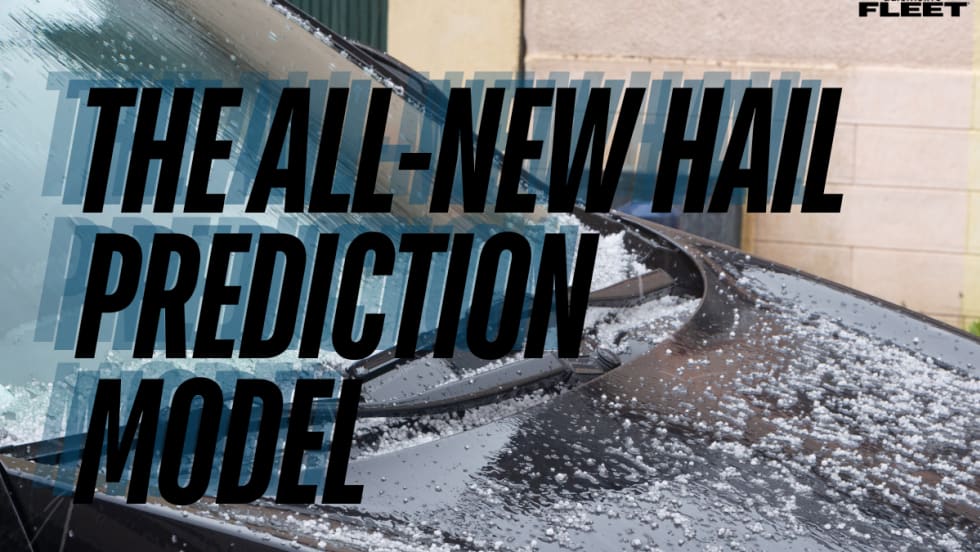
FLASH Weather AI Launches First Deep-Learning Hail Prediction Model With High-Resolution Forecasting
FLASH Weather AI has launched a first-of-its-kind hail prediction model capable of forecasting hail size and arrival time at 1-kilometer resolution up to 55 minutes ahead, giving fleets and insurers critical time to prepare for severe storms.
Read More →
How Coca-Cola United Protects Its Fleet from Growing Legal Risk
As litigation risk rises, vehicles are increasingly targeted. This Coca-Cola bottler shares how it’s reducing exposure through driver training, technology, and a proactive risk management approach.
Read More →
How to Speak the Same Language on Fleet Safety
Drivers, supervisors, and data often speak different safety “languages.” Getting on the same page will drive better results.
Read More →
Fleet Cybersecurity 101: What You Need from Your Technology Vendors
From identity management to third-party certifications, the right technology partner should make security easier to manage. Here are the three building blocks that fleet managers need to stay in control as connected systems scale.
Read More →
Reducing Risk by Eliminating Phone Use Behind the Wheel
Distracted driving remains one of the most persistent risks in fleet operations. New approaches focus on removing mobile device use entirely while adding real-time safety support.
Read More →