




How to Prevent a Collision Course with Accident Costs
The cost of on-the-job crashes to employers is jaw-dropping. Companies can significantly reduce their rates of preventable accidents with proactive, comprehensive safety programs to positively impact the bottom line.

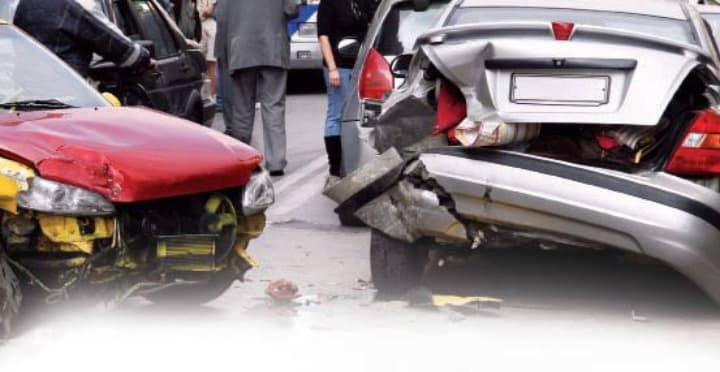
According to an August 2005 National Highway Traffic Safety Administration (NHTSA) report, the cost to employers from on-the job vehicle crashes is staggering:
Including wage-risk premiums, on-the-job crashes cost employers over $24,500 per crash and $128,000 per injury.
In one year, off-the-job crash injuries cost employers approximately $20 billion.
Employer health care (medical) spending on crash injuries is nearly $8 billion every year. Another $9 billion is spent on sick leave and life and disability insurance for crash victims.
Clearly, in addition to the human costs of life and limb, preventing collisions involving company vehicles and drivers can substantially impact the corporate bottom line.
Developing a Safety Program
A new resource from the Network of Employers for Traffic Safety (NETS) provides help in developing a comprehensive fleet safety program.
Produced in collaboration with NHTSA and the Occupational Safety and Health Administration (OSHA), the 32-page Guidelines for Employers to Reduce Motor Vehicle Crashes offers direction on setting up an employee safe driving program, promoting safe driving, and calculating fleet costs from motor vehicle crashes, plus specific tools on eliminating distracted, aggressive, impaired, and drowsy driving.
A downloadable PDF from the NETS Web site, www. trafficsafety.com, the guide includes NETS' 10-Step Program to Minimize Crash Risk.
Manage 'Employee Element'
Les Sokolwski, director of division services for the National Safety Council (NSC), suggests several basic measures to reduce the rate of preventable crashes. Among the most critical is "managing the employee element" beginning with the hiring process, he says.
"With a salesperson, maybe 50 percent of their time is 'windshield' time. Look at that person not as a salesperson or delivery person, but as a driver, with exposure that is more associated with their driving behavior than the function of their job," Sokolwski advises. "Avoid the 'I don't really want to know' about an employee or prospective employee's driving record."
Develop and enforce standard policies, check each employee's driving record regularly, institute a proactive training and instruction program, implement a "solid" driver tracking mechanism, and hold everyone accountable, Sokolwski also recommends.
[PAGEBREAK]
Program Based on Best Practices
Memphis, Tenn.-based ServiceMaster provides home and commercial services through eight business units; the most well-known include TruGreen, Merry Maids, and Terminix. The company operates a fleet of nearly 16,500 vehicles, including cars, light- and medium-duty trucks, vans, and SUVs.
Michael Higgins, director of injury and collision prevention, was appointed April 1 to this newly created position. He draws upon 20 years experience in the safety field and is a Certified Safety Professional (CSP), a Board of Certified Safety Professionals designation.
"My primary responsibility is to bring best practices to ServiceMaster and its business units," he explains. "We approach injury and collision prevention as any other business challenge," says Higgins. That challenge is addressed by:
Planning.
Staffing.
Executing.
Measuring results.
"Then we go back to see what worked, refine it or change it," says Higgins.
The company's best safety program practices echo NETS recommended guidelines and include:
Accountability. "We have implemented different accountability systems" throughout the program, says Higgins. For instance, "We make safety accountability a factor in compensation either through the bonus program, merit increases, and insurance deductible and premium allocation," he notes.
The company operates a wholly owned insurance captive, and the premiums for coverage are used as an accountability tool with the business units, according to Higgins.
Policies and Procedures. Pre-employment motor vehicle reports (MVRs) and background checks are performed. The company goes beyond government drug-testing mandates for CDL drivers with vehicles greater than 26,000 lbs. in weight. "ServiceMaster mandates all commercial motor vehicle drivers be drug tested. And when an incident occurs, there's a post-incident drug and alcohol test again for every commercial motor vehicle driver," says Higgins.
In addition, "over the years, we've implemented a policy to report claims as quickly as possible," Higgins reports. "There is a financial incentive to do so." Not reporting in a timely manner "can trigger a higher deductible with the internal insurance program. Timely reporting helps mitigate the costs to the individual branch office location," says Higgins.
Driver Training. The company's driver safety education includes new-hire classroom and in-vehicle commentary drive training. "Master trainers in the field conduct the training," says Higgins. The in-field safety professionals monitor, track, and support the training. Veteran employees undergo annual refresher classroom and ride-along training. Additional training modules include instruction for specific situations such as backing up, intersections, distracted driving, etc.
Hazard Recognition. Higgins and other safety professionals in the enterprise analyze claims data to determine root causes of collision or occupational injury incidents. He partners with other ServiceMaster business unit groups and the fleet department in new production- vehicle design. "We work with the design team to eliminate problem areas, modify the design, for instance, to make loading cargo safer and less prone to injury."
Technology. "ServiceMaster business units use technologies in different ways," says Higgins. "One has invested in 'smart trucks,' equipped with GPS to monitor truck activity such as location and speed."
In addition, event data recorder (EDR) technology, an in-vehicle camera system that helps identify causes associated with collisions, has been installed on approximately 3,500 business unit vehicles. The technology has been used to "successfully defend drivers in situations in which the other party falsely accused them of causing the collision," Higgins explains.
The primary purpose of the EDR technology "is not to punish or discipline people, but to help associates improve their driving skills and behaviors," he adds.
New technologies are reviewed for opportunities to improve operations, says Higgins. "We continue to beta test technology to see if it will work and provide a positive return on investment (ROI)."
Auditing. The business units have implemented auditing protocols. Program changes and new ideas pinpointed in yearly evaluations are incorporated into the next year's annual plan.
"We're beginning to integrate safety into the overall strategic plan," he notes.
Through quarterly actuarial reviews provided by ServiceMaster's internal insurance company, business units "can connect the dots of safety and collision prevention efforts to bottom-line impact," says Higgins. "The reviews provide quantitative results - savings."
Individual safety programs are benchmarked internally with statistical analyses before and after deployment. "We benchmark externally through NETS' Strength in Numbers annual benchmark program," says Higgins.
ServiceMaster and its eight business units also benchmark against other companies through ORC Worldwide's network of environmental, health, and safety professionals representing "150 of the largest U.S. companies."
The ServiceMaster collision and injury prevention program is a collaborative effort of business unit safety leaders, field safety professionals, and representatives from risk management, finance, operations, claims, and legal, says Higgins. "The largest resource we have is all the brainpower in the different functions and business units. Each group brings its unique perspective so we can collaborate to develop better ideas and programs."
The results of the company's focus on prevention are impressive. "Between 2003 and 2008, from all continuing business units, our prevention collision frequency decreased by 26.5 percent, and all occupational injury frequency declined by 41 percent," Higgins reports.
However, he added, "We would like it to be better. This is a continuous journey of improvement."
[PAGEBREAK]
Education is Essential
"Education, constant and given to all drivers" is key to preventing company driver crashes, attests Jessica Fasquelle, fleet manager for Houston-based Energy Maintenance Services USA (EMS). The company's U.S. fleet numbers 500 vehicles, primarily work trucks, including Chevrolet and Ford Crew Cab pickups.
Mandated for "anyone authorized to drive a company vehicle for business purposes," the company's driver safety education, based on the Alert Driving program, is provided online. All drivers must complete the six-module course when hired and annually thereafter. They must pass the module tests with an 85-percent grade and are also tested on fleet policy, which they must pass with a 100-percent score, Fasquelle explains.
Employee supervisors are automatically alerted when a driver must take the course and when the course has been successfully completed. Drivers who fail to take the course on time are "locked out of the authorized driver pool and denied access to the company fuel card," says Fasquelle.
The company investigates EMS driver-involved crashes. Incidents deemed preventable require additional driver online and advanced education and training courses, according to Fasquelle.
Other EMS safety program components include a cash prize incentive program, an 800 number to report employees driving unsafely, MVR checks, a GPS system that provides management alerts to driver speeding, and prohibition on texting and non-hands-free cell phone use.
The collision prevention measures, emphasizing driver education, have "definitely" produced a "reduction in the rate of preventable accidents," says Fasquelle.
'No Such Thing as Excess Safety'
For James Blais, director of fleet services for Bridgewell Inc., safety must be the Lynnfield, Mass.-based nonprofit's number one priority. The organization's drivers transport developmentally and psychiatrically disabled clients from residences and day care facilities to and from medical appointments, shopping, and other travel within the community. The fleet comprises 150 vehicles, including Ford E-350 12-passenger vans and a "small number of minivans."
Bridgewell drivers must undergo the NSC course, "Coaching the Van Driver," which Blais teaches. The 4-5 hour-long course includes a 20-question test, class discussion, and material on defensive driving, accident report filing, etc., says Blais.
In addition, on their anniversary hire dates, employees take an eAcademy online driver safety course. Failure to complete the annual training results in suspension.
Blais has refined driver hiring qualifications. "They must be 19 years of age, with at least three years of driving with a license, high school diploma or GED, and fewer than three moving violations in the last three years," he says. New hires must supply DMV reports at their expense; thereafter, the company pulls and pays for annual record checks. Pre-hire and annual drug tests are required, as well as an annual criminal background check.
Drivers are not allowed to use cell phones, eat, drink, or write while operating a Bridgewell vehicle. An in-vehicle two-way radio may be used only when the van is in park.
A safety committee reviews all collision incidents. Two at-fault accidents result in a 12-month driving privilege suspension. "If a non-driving position is not available, the driver could lose his or her job," says Blais.
Each vehicle is checked every three months or 3,000 miles. Daily pre- and post-check van safety walkarounds are also performed.
The Bridgewell safety program has reduced accident occurrences from six to three per month, Blais notes. "Just in insurance costs, we have saved $50,000 each year."
Many people look at collision prevention reactively, says Blais. "But you must approach it proactively, looking at what steps to put into place now. The return is more than the investment. There is no such thing as excess safety."
More Safety

Nominations Open for 2026 Fleet Safety Award
Nominations have officially opened for the 2026 Fleet Safety Award Winner.
Read More →
Turning Connected Vehicle Data Into Decisions That Matter
Fleet leaders have more data than ever, but turning that data into clear, actionable decisions remains a challenge. This white paper shows how leading organizations are using connected vehicle data to improve safety, reduce costs, and optimize fleet performance. Learn how to turn insight into action across your fleet.
Read More →
Cameras, Safety and Insurance: From Reactive Claims to Real-time Prevention
Commercial auto remains one of the most challenging and costly lines of coverage for fleet operators and insurers alike. Learn more about how to effectively address these issues from Onur Aksan, Enterprise Business Development Executive, Geotab.
Read More →
NAFA Fleet Safety Symposium to Collocate With 2026 Fleet Forward Conference
The daylong certificate program will precede the Fleet Forward Conference at the Gaylord National Harbor in Maryland.
Read More →
The Distractions You Can’t Turn Off: What Drivers Face Outside the Vehicle
Fleet drivers face constant visual, cognitive, and environmental interruptions the moment they hit the road. From roadside chaos to mental fatigue and digital overload, today’s biggest driving risks often come from outside the vehicle itself.
Read More →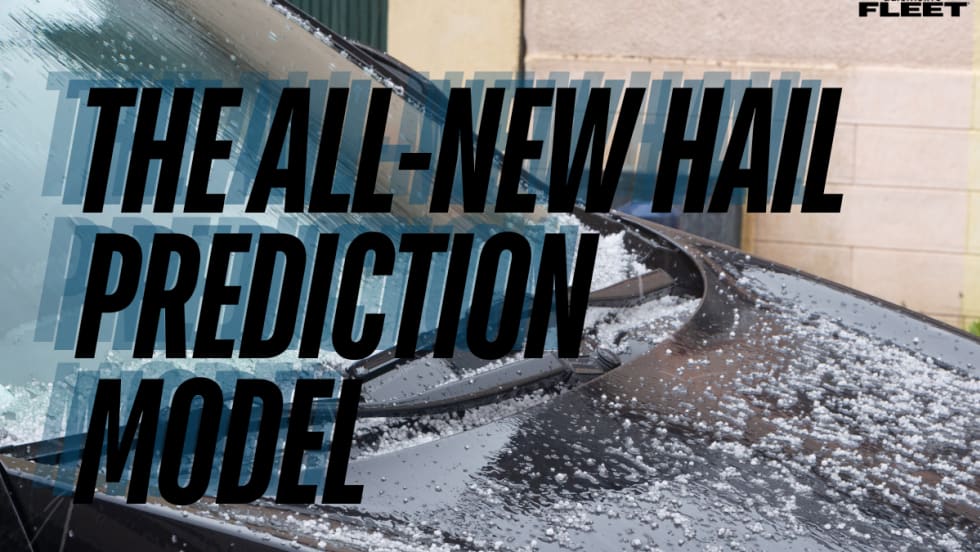
FLASH Weather AI Launches First Deep-Learning Hail Prediction Model With High-Resolution Forecasting
FLASH Weather AI has launched a first-of-its-kind hail prediction model capable of forecasting hail size and arrival time at 1-kilometer resolution up to 55 minutes ahead, giving fleets and insurers critical time to prepare for severe storms.
Read More →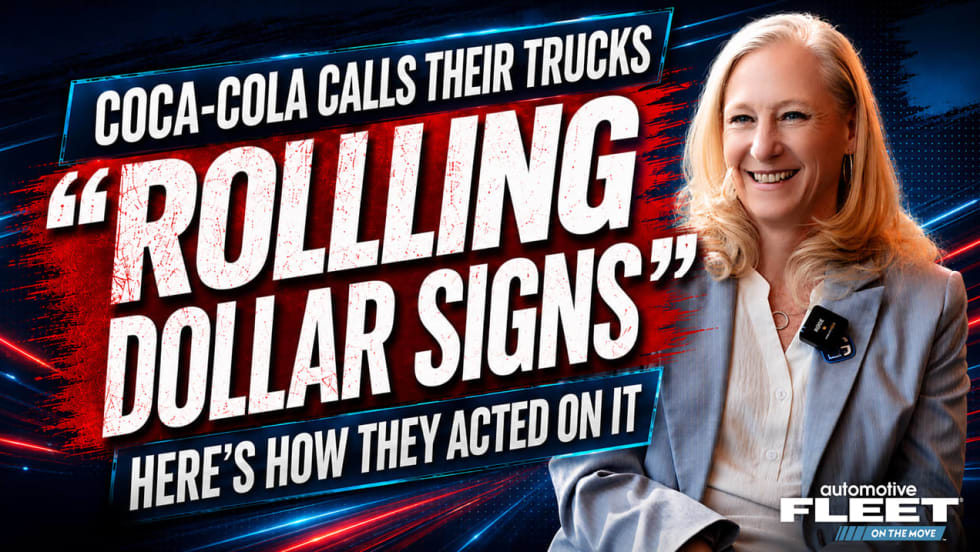
How Coca-Cola United Protects Its Fleet from Growing Legal Risk
As litigation risk rises, vehicles are increasingly targeted. This Coca-Cola bottler shares how it’s reducing exposure through driver training, technology, and a proactive risk management approach.
Read More →
How to Speak the Same Language on Fleet Safety
Drivers, supervisors, and data often speak different safety “languages.” Getting on the same page will drive better results.
Read More →
Fleet Cybersecurity 101: What You Need from Your Technology Vendors
From identity management to third-party certifications, the right technology partner should make security easier to manage. Here are the three building blocks that fleet managers need to stay in control as connected systems scale.
Read More →
Reducing Risk by Eliminating Phone Use Behind the Wheel
Distracted driving remains one of the most persistent risks in fleet operations. New approaches focus on removing mobile device use entirely while adding real-time safety support.
Read More →