




Nalco Uses Safety Course to Train Drivers
Nalco, a global integrated water treatment and process improvement company, has sent more than 300 drivers through a safety course that includes classroom and on-road instruction.
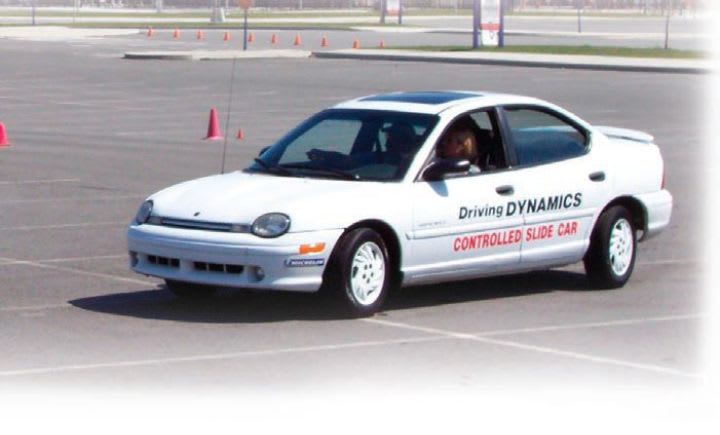
No fleet manager would allow a driver to perform even a slightly reckless maneuver on a public thoroughfare. However, such driving maneuvers in a cordoned-off stadium parking lot can provide an ideal learning opportunity, benefiting both drivers and fleets, a fleet manager and a driver training expert agreed.
A global integrated water treatment and process improvement company, Nalco Co., has put more than 300 drivers through such training sessions since June 2007. Drivers steer through slalom courses, slam on the brakes, and learn what it feels like to lose — and regain — control of a vehicle.
By the end of 2008, Nalco expects to have sent another 300 drivers through the course, said Brian Bonds, global safety, health and environmental administrator for Nalco. Headquartered in Naperville, Ill., the company’s worldwide workforce numbers 11,000, serving 70,000 customers in 130 countries.
“We were doing more in-classroom training where drivers receive a lot of good principles, but we wanted to go beyond the classroom,” said Bonds, who has taken the course. “The in-vehicle driving course really shows how your car handles in a variety of situations.”
Drivers are told to accelerate to a specific speed before slamming on the brakes and steering through a tight turn, Bonds said.
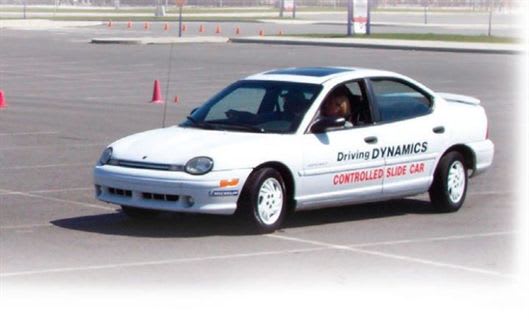
Such exercises build driver confidence in avoiding obstacles and familiarity with anti-lock braking systems (ABS), Bonds said. Many drivers aren’t familiar with the sensation of an activated ABS. Some drivers have said it feels like a small hammer is tapping against the bottom of the driver’s foot as the driver presses hard on the brake pedal. The eight-hour session Nalco drivers take, which includes classroom instruction, ends with a turn in the “slide car,” a specially equipped vehicle used to teach driving in slippery conditions. Drivers are instructed in regaining control of a vehicle, Bonds said.
As important, the course covers how to check tire pressures and adjust mirrors and the driver’s seat “so you can actually see 180 degrees behind your car,” Bonds said.
The course is conducted by Driving Dynamics at sites around the country. Nalco employees sign up via the Driving Dynamics Web site, choosing a local venue from a list. They use their company vehicles, which include such Ford models as the Five-Hundred, Escape, and F-150 pickup.
Most drivers overrate their driving skills, said Boyd Smith, sales director for Driving Dynamics, based in Little Silver, N.J. “There are some bad habits out there,” Smith said. “Texting while driving is a huge problem.”
Those who do it steer with one hand and type with the other, Smith said.
Drivers have told him they can text without looking at a cell phone’s keys.
“But they have to look to see what it is they’re responding to,” Smith said. “When they pull their eyes off the road at 60 miles per hour to look at a message for two seconds, they’ve covered 176 feet.”
Corporate policy should clearly state prohibitions on cell phone use while driving apply to all use of such devices, including texting, Smith advised.
More Safety

Nominations Open for 2026 Fleet Safety Award
Nominations have officially opened for the 2026 Fleet Safety Award Winner.
Read More →
Turning Connected Vehicle Data Into Decisions That Matter
Fleet leaders have more data than ever, but turning that data into clear, actionable decisions remains a challenge. This white paper shows how leading organizations are using connected vehicle data to improve safety, reduce costs, and optimize fleet performance. Learn how to turn insight into action across your fleet.
Read More →
Cameras, Safety and Insurance: From Reactive Claims to Real-time Prevention
Commercial auto remains one of the most challenging and costly lines of coverage for fleet operators and insurers alike. Learn more about how to effectively address these issues from Onur Aksan, Enterprise Business Development Executive, Geotab.
Read More →
NAFA Fleet Safety Symposium to Collocate With 2026 Fleet Forward Conference
The daylong certificate program will precede the Fleet Forward Conference at the Gaylord National Harbor in Maryland.
Read More →
The Distractions You Can’t Turn Off: What Drivers Face Outside the Vehicle
Fleet drivers face constant visual, cognitive, and environmental interruptions the moment they hit the road. From roadside chaos to mental fatigue and digital overload, today’s biggest driving risks often come from outside the vehicle itself.
Read More →
FLASH Weather AI Launches First Deep-Learning Hail Prediction Model With High-Resolution Forecasting
FLASH Weather AI has launched a first-of-its-kind hail prediction model capable of forecasting hail size and arrival time at 1-kilometer resolution up to 55 minutes ahead, giving fleets and insurers critical time to prepare for severe storms.
Read More →
How Coca-Cola United Protects Its Fleet from Growing Legal Risk
As litigation risk rises, vehicles are increasingly targeted. This Coca-Cola bottler shares how it’s reducing exposure through driver training, technology, and a proactive risk management approach.
Read More →
How to Speak the Same Language on Fleet Safety
Drivers, supervisors, and data often speak different safety “languages.” Getting on the same page will drive better results.
Read More →
Fleet Cybersecurity 101: What You Need from Your Technology Vendors
From identity management to third-party certifications, the right technology partner should make security easier to manage. Here are the three building blocks that fleet managers need to stay in control as connected systems scale.
Read More →
Reducing Risk by Eliminating Phone Use Behind the Wheel
Distracted driving remains one of the most persistent risks in fleet operations. New approaches focus on removing mobile device use entirely while adding real-time safety support.
Read More →