




Intangibles Make the Difference in Successful Subrogation
Successful auto claim collectors are well prepared, know the laws and regulations in their states, and are ready to challenge insurers whose practices are meant to intimidate.

Understanding the process of subrogation recovery is not as difficult as actually performing the task. What separates the best from good or average collectors is an understanding of the value of the intangibles that truly affect overall costs to the corporate fleet client. Once (or if) collectors understand the value of the intangibles along with the true costs, they must be up for the challenge — as well as the abuse — that goes hand-in-hand with negotiating with an adverse party.
The adverse party, whether it is an insurance company, a self-insured corporate account, or the actual third-party driver, weighs heavily in the collection process. Breaking down the parties separately reveals similarities as well as differences.
Insurance companies know all relevant case laws, legalities, statutes and/or regulations. Unfortunately, armed with this knowledge, they use it to their advantage almost to the point of violating many regulations that exist for the protection of all parties.

In years past, second- or third-tier insurance providers were the most flagrant abusers. This is no longer the case, especially since Sept. 11, 2001, because most major insurance providers take full advantage of claimants. Every claimant, if not at fault, is entitled to 100 percent of the loss, regardless of whether they decide to fix the vehicle.
Too often, insurance companies demand a copy of the shop invoice to verify the loss, rather than send their own adjuster. This practice results in the following:
Insurance companies do not incur the expense of an actual vehicle inspection by their own appraiser.
Claimants are subjected to unnecessary inconvenience.
Claimants, who typically do not know the value of an actual loss, are offered a reduced settlement.
The reductions can include betterments, used or aftermarket parts, alleged lower labor rates from phantom shops, or just flat-out lower offers non-negotiable by the average consumer.
Many insurers consider claims a nuisance. They provide coverage simply as an adjunct to securing bigger-ticket items for which they can charge significant premiums and fees to earn profits. Following that thought, many claims administrators assigned to handle losses have little to no experience in the collision industry, nor do they know how to estimate damages. Thus, when they review claims for settlements, if they do not have an experienced adjuster available for advice or guidance, one of a few events occur. The inexperienced administrator ignores the claim until it is pursued for payment. He or she cuts out a percentage citing various reasons — no proof needed. Finally, in some instances, the administrator pays the demand as is.
The most prevalent practice is to either offer or pay a short amount, usually in the 50- to 75-percent range, and wait for the claimant to call for the rest. If the claimant calls, the administrator begins to negotiate, still trying to NOT pay 100 percent. If there is no call from the claimant, the administrator just saved the insurance company money it now keeps as profit.
This practice is condoned by every major, second-, and third-tier insurer, as well as the insurance commissions in each state. The claimant has very little power because the insurance commission only recommends legal recourse, rather than stepping in and taking action. Thus, the claimant is back to square one with few options: fight like heck to obtain a fair share, find an attorney for help, or just take less money. In most situations, inexperienced claimants will take less money because they feel that some money is better than no money. Insurance companies depend on this reaction and almost defiantly dare the claimant to challenge them. This practice is absolutely unconscionable.
Some insurers still have a conscience. If there are no injuries, many offer arbitration — while typically still taking a firmer stance against paying full reimbursement — as if it were a concession of good faith on their part. Often, while offering arbitration and holding firm with a lower reimbursement figure, insurers force the claimant to make the difficult decision of taking less money or preparing an argument in writing to support the claim.
Obviously, the other choice is legal action. However, depending on the loss amount, this option may not be costeffective. Needless to say, without experience in claims management and negotiations, the claimant is at a disadvantage.
Self-insured companies that submit claims to an insurance company only when losses are excessive also may abuse the laws. Insurance companies such as those just discussed have provided a great example. Self-insured companies may treat claimants in the same abusive manner as they had been treated as claimants themselves. Once again, inexperienced collectors or claimants settle for less rather than fight for their entitled payment.
[PAGEBREAK]
Underinsured or uninsured motorists pose a set of problems that can be challenging as well. Underinsured motorists can legally obtain insurance at a state’s minimum requirement. These motorists can insure for as little as $5,000 of coverage, cause $20,000 in damage, and if their insurance company offers to pay the $5,000, the insurance company will do so as long the claimant releases their insured party from further liability.
Uninsured situations create the most work because persistence is required to collect; claimants start with zero and work up.
What do all of these problems mean to the self-insured corporate client without the staffing or knowledge to begin the process? Corporate management shouldn’t fool itself into believing that just because it was successful in less difficult claims, the process is easy. One answer is to find a person or a company well-versed in subrogation and with a proven track record in collections.
Professional subrogation experts understand the true cost of an accident. Many factors come into play: actual physical damage loss, rental expenses, lease payments, downtime, loss of use, product loss, diminished value, and much more. Insurers know what they are responsible to pay; however, they will not pay a dime more than they are asked. Nor will they volunteer free advice. Like a good attorney going to court, corporate claimant representatives need good preparation, case law, strong nerves, and “thick skin” to stand up and fight for every dollar. Anything less than a 100-percent commitment results in poor recoveries.
Dealing with adversity is standard operating procedure when subrogating. Many individuals are either up for the challenge every day or they are not. Competent collectors find ways to stand their ground against unprofessional insurers or the company insurance manager who does not want to pay because the company was shorted on the last claim. Effective collectors also communicate directly with underinsured or uninsured motorists to let them know their negligence won’t compromise the claimant demand or integrity.
While arbitration is a choice over litigation, other options exist. Good collectors know them and use them; others simply take the easy way out, all at the cost of the claimant.
More Operations
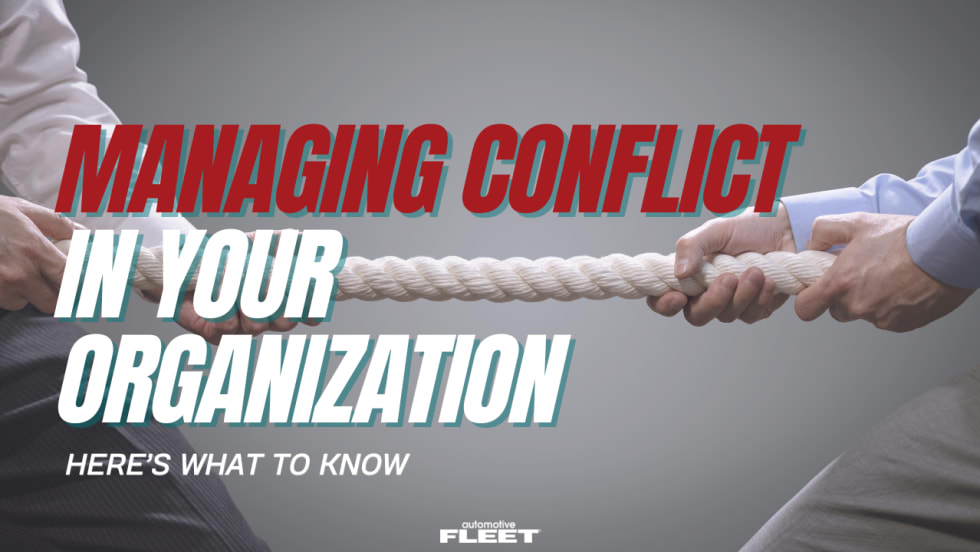
How to Manage Conflict for Your Fleet Operations
Conflict management is becoming a core leadership skill. Here are five strategies fleet leaders should know.
Read More →
Turning Connected Vehicle Data Into Decisions That Matter
Fleet leaders have more data than ever, but turning that data into clear, actionable decisions remains a challenge. This white paper shows how leading organizations are using connected vehicle data to improve safety, reduce costs, and optimize fleet performance. Learn how to turn insight into action across your fleet.
Read More →
Cameras, Safety and Insurance: From Reactive Claims to Real-time Prevention
Commercial auto remains one of the most challenging and costly lines of coverage for fleet operators and insurers alike. Learn more about how to effectively address these issues from Onur Aksan, Enterprise Business Development Executive, Geotab.
Read More →

Are You Tracking Your Fleet's True Total Cost of Ownership?
Bobit Business Media surveyed 190 fleet professionals and found that while most fleets are tracking costs, fragmented systems and data gaps are keeping true TCO visibility out of reach. With rising pressure to control spend in an increasingly volatile environment, the gap between what fleets think they know and what the data actually shows is wider than you might expect. See how your peers are managing costs today and where the industry still has room to improve.
Read More →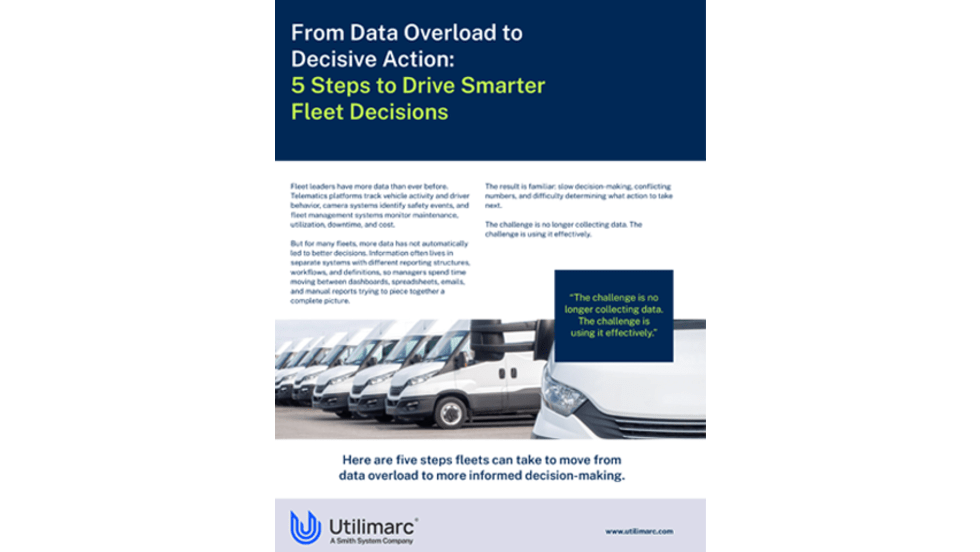
Turn Fleet Data Into Smarter Decisions
Fleet leaders have access to more operational data than ever, but disconnected systems and unclear metrics often slow decision-making instead of improving it. This article outlines five practical steps fleets can take to transform fragmented data into actionable insights that improve planning, safety, utilization, and long-term performance.
Read More →
Hybrids: Electrification Without the Challenges
For fleet managers, fuel is one of the biggest line items in the budget — and it's one hybrids can shrink without changing how your people work. Download the eBook to see the numbers, understand the technology, and get a step-by-step guide to making the switch.
Read More →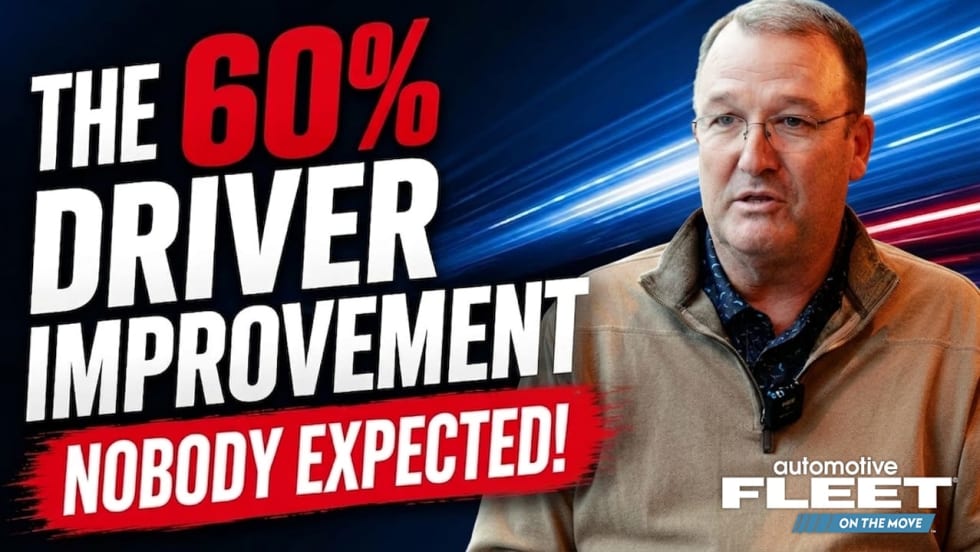
How NOV Uses Telematics to Improve Fleet Safety Across 160 Locations
James Victory of NOV discusses how the company manages fleet safety, maintenance, and telematics across more than 150 locations supporting oilfield operations throughout the U.S.
Read More →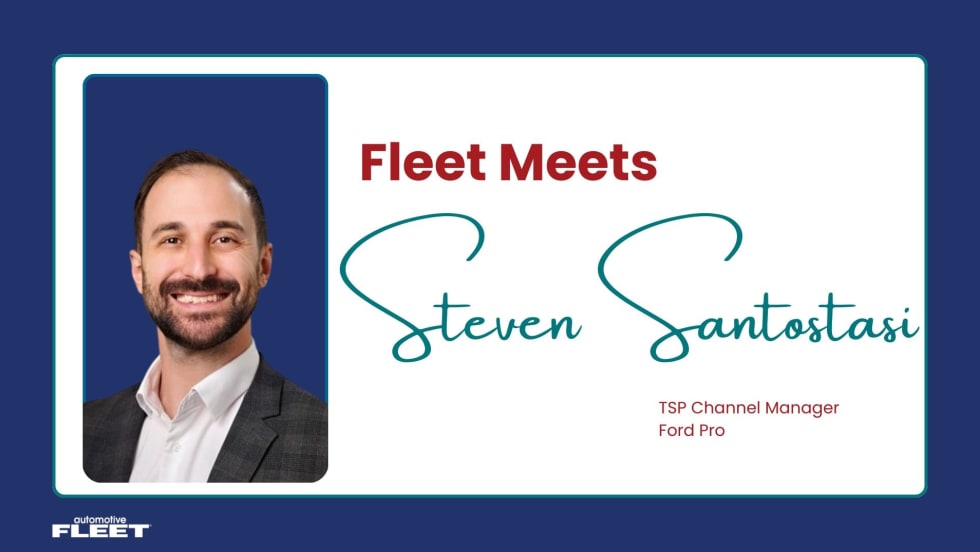
Fleet Meets: Steven Santostasi
This edition of the Fleet Meets series features Steven Santostasi, the current TSP channel manager for Ford Pro.
Read More →
Why Fleet Managers Are Replacing Departmental Vehicles with Shared Motor Pools
Departmentally assigned vehicles often create hidden costs through underutilization, poor visibility, and increased administrative burden. This white paper explores how shared motor pool strategies help fleets reduce costs, improve accountability, and optimize vehicle utilization.
Read More →
Soap Box Derby Challenge: Assembling the Crew
Meet Gabriel, Matthew, and Angel — the team helping bring this soap box derby build to life.
Read More →