




Forecast of Truck Fleet Management Trends: 2008-2010
The No. 1 factor is the ongoing high cost of fuel, in particular diesel, which is driving management demands to lower operating costs. Another huge factor that will influence fleets will be the 2010 diesel emission standards.

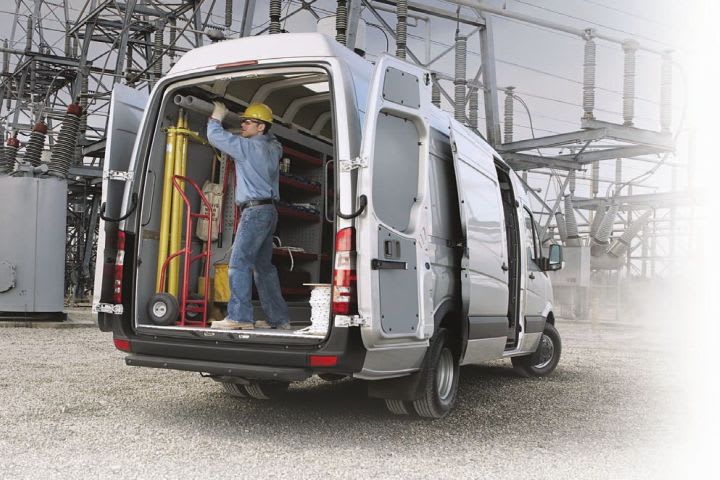
A number of factors will impact truck fleet management in 2008 and beyond. Foremost is the high cost of fuel, which shows no signs of abating. On the fleet acquisition side, truck service lives have been increasing and there has been consolidation in the truck equipment industry. In terms of upfitting, the emerging trend will be to reuse upfitted bodies and equipment, especially high-dollar assets, to cope with rising commodity prices, such as steel and aluminum.
Technology will continue to have a major and ongoing impact on truck fleet management. Telematics will grow as the biggest onboard technology trend as more truck fleets ask for it and more vendors offer applications.
Another emerging trend is the aging baby boomer work force influence on work truck design. Already, fleets are supplying drivers with low-profile chassis, which are easier for drivers to enter and exit.
One concern is the ongoing maintenance technician shortage, especially for centrally maintained fleets. The shortage of qualified and properly trained technicians is creating an issue of service availability, impacting maintenance turnaround and increasing downtime.
To get a better reading on current and emerging truck fleet management trends, Automotive Fleet sought out truck experts from ARI, GE Capital Solutions Fleet Services, LeasePlan USA, Mike Albert Vehicle Fleet Management, Napleton Fleet Group, PHH Arval, Union Leasing, and Wheels, Inc.
Here are their forecasts and assessments of key trends that will influence truck fleet management in the 2008 to 2010 timeframe.
The high cost of fuel will continue to have a major impact on fleet operating expense in 2008. Especially hard-hit will be truck fleets, since the cost of a gallon of diesel is predicted to remain higher than unleaded gasoline. Higher fuel prices will have a domino effect on increasing prices for other oil-based products, such as replacement tires.
"Managers want to lower fuel costs and are looking for any kind of relief in their operating expenses. This includes looking at tires, maintenance, and downtime to find ways to counteract the effect of higher fuel costs," said Vivek Khosla, director, product management for PHH Arval.
According to Khosla, Arval Trucks has conducted a study offering suggestions on how to reduce fuel costs through slightly overspec’ing the truck. "By slightly over-spec’ing engines to run more consistently in the ‘sweet spot,’ choosing a gear ratio low enough to suit a fleet’s application and location, and enabling the correct fuel-efficient, engine-specific parameters, fuel economy will improve by as much as 0.3 mpg," said Khosla.
One positive observation related to escalating fuel costs is that despite the great fear generated by the new 2007-compliant engines, fleet managers are finding the impact has not been as bad as anticipated. "Fleet managers anticipated a 3-percent decrease in mileage per gallon, but so far have not experienced degradation in fuel mileage," said Khosla.
One controllable fuel expenditure is eliminating unnecessary idling. Most observers foresee a continued move to this fuel-efficient practice. "An example would be limiting long idle times in tractors by the addition of self-powered AC/heat systems. These can be cost-effective over time," said Wayne Reynolds, operations manager, truck and vehicle upfitting for LeasePlan USA.
Also, several state laws have mandated idling limit devices, such as those in California and North Carolina; however, there may be an unintended consequence to fleet operations. "As more states adopt regulations similar to those announced for California and North Carolina, the ordering process for customers, especially those with pools of vehicles, may become more complex. In the early stages, this could result in a pool having vehicles that can’t be put in service in the location desired due to compliance with idling limitation regulations," said Ken Gillies, manager, truck operations for GE Capital Solutions Fleet Services.
"It’s too early to predict the full scope of the idling limitations, but it has the potential to impact fleets employing most any class of diesel trucks," added Gillies.
Anti-idling laws will also increase the use of auxiliary power units (APU) for larger trucks with sleepers. "With states passing anti-idling laws, APUs will be necessary to run the heating and cooling systems, TVs, computers, refrigerators, and other electrical accessories a truck driver plugs in when parked," said Jeff Robley, national truck sales manager – western zone for ARI.
Another factor impacting fleet fuel economy, but not given the attention it deserves, is traffic congestion. "Traffic congestion is increasing labor and transportation costs for every American business. This congestion will continue to worsen for the near future and will drive up product and service costs for consumers," said Khosla. "The estimated cost of delays is roughly $77 per hour of truck time."
The high cost of fuel, especially if prices continue to remain elevated in the coming years, will be the stimulus to spur a shift to alternative fuels. For instance, Robley foresees more use of alternative fuels such as LNG, biodiesel, and synthetic fuels.
Already, propane systems are gaining in popularity. "Propane is more readily accessible than ethanol and has improved the weather-related starting issues encountered with previous propane models. CNG, diesel, and E-85 technology will all bridge what eventually will be the answer between internal combustion power plants and fuel cells," said Greg Carson, director of operations for Union Leasing.
[PAGEBREAK]
A new round of more stringent diesel engine emission standards will be implemented in the 2010 model-year. As was the case with the 2007 emission standard, a significant pre-buy is anticipated since the cost of the new engines is expected to increase. If past events are predictors of the future, there will be a shortage of diesel-powered trucks during the 2009 model-year as many large fleets order additional units beyond their normal replacement cycle to beat the large price increase anticipated for 2010 engines. Other fleets will try to manage their replacement schedules to delay purchase until past the effective date to avoid early problems with the new engines.
"Truck fleets will shortly commence ordering 2009 trucks and budgeting for 2010. The issue is delivery — fleet managers want trucks ordered and delivered in 2009 to avoid the higher prices for the 2010 models," said Kholsa of PHH Arval.
"As in the case of 2007 engines, a significant pre-buy is expected since the cost of the engines per OEM manufacturer is expected to rise by approximately $4,000. In addition, the operational impact and maintenance needs of nitrous oxide (NOx) absorbers, regardless of technology, remains unknown and will be uncovered only as more units go into testing and put on significant cycles," added Khosla.
The technology to meet the 2010 emission standards appears to be settling on the selective catalytic reduction (SCR) technology (urea injection system).
"The addition of the urea injection system and, most importantly, the tank, will affect the available space on a truck’s frame to mount the necessary equipment to make a work truck functional," said Gillies. "There’s potential for this tank installation, when added to the diesel particulate filter (DPF) from the 2007 regulations, to tip some applications into a longer wheelbase to gain the cab-to-axle dimension necessary to allow mounting of all the customer’s equipment. Scrutiny of the chassis and upfit specs for compatibility will continue to rise in importance to ensure no surprises when the chassis arrives at the upfitter," added Gillies.
Fleets are keeping trucks in service for longer periods. This trend is adding importance to up-front decisions in truck spec’ing, which can achieve a longer lifecycle without the related costs.
"This makes the up-front decisions when designing a vehicle very important. If the vehicle is built properly, you can achieve a longer lifecycle," said Robley. "Fleet managers have to be kept up-to-date on both product and service trends to achieve this. That’s where fleet management companies fit right in."
Another trend is that factories are selling direct to fleets, which is causing service consequences. "As manufacturers continue to move away from distributor networks, we — the fleet management companies — move toward the manufacturers who offer support," said Dan Doucette, manager, national truck lease for Mike Albert Vehicle Management. "It’s really simple. Small fleets do not have the ability to send a vehicle 140 miles away for repairs and go without the unit when doing so. It makes sense to use local suppliers when possible. The manufacturers need to get back to improving service period, regardless of where the vehicle comes from."
There is also a trend by truck fleets to use alternative acquisition methods. "Wheels has seen clients seeking out alternative means of acquiring units such as bailment, general pools, and out-of-stock units. This is mainly because of the increased need of out-of-stock vehicles due to factors such as company growth and extended factory lead times," said Dave Decker, manager of truck engineering for Wheels Inc. "Fleets are not able to wait as long as they used to for their vehicles and need to seek out alternative methods," added Decker.
Consolidation in the truck equipment industry is another trend in fleet acquisition. "Manufacturers are acquiring other manufacturers and distributors, resulting in a more consolidated industry. This consolidation is taking place with both chassis manufacturers and truck equipment manufacturers alike. There could be many impacts on fleet such as changes in pricing, lean manufacturing lead times, and product availability," said Decker.
Others see the same trend. "Many alliances are being formed in the truck industry among manufacturers and between manufacturers and component suppliers, such as transmission and engine manufacturers," said Reynolds of LeasePlan USA.
[PAGEBREAK]
An emerging upfitting trend is the reuse of upfitted bodies and equipment. Cycling a truck body every other time a chassis is replaced will become more common as a result of the increase in the cost of raw materials. "Managing specialty applications, such as pumping or crane operation, may lead to closer scrutiny of the decision process for replacement, refurbish, or transfer when a chassis is ready for retirement," said Gillies.
The trend to reuse service bodies will likely occur with high-dollar equipment. "There is a trend for body refurbishing and transfer in lieu of acquiring new equipment. This is especially true for end-users who utilize high-dollar service bodies with additional equipment such as cranes," said Mike Sturges, national truck sales manager – southern zone for ARI.
Union Leasing also foresees much more customization with equipment, van, and body innovations that not only will improve the delivery process, but also "have the value, flexibility, and quality to be utilized over second- and third-generation applications," said Carson of Union Leasing.
Another trend impacting upfitting has been the labor shortage. "Upfit suppliers continue to face the scarcity of available, qualified technicians. The technician gap may limit production capacity in some areas, negatively impacting cycle times," said Gillies.
Another factor is increased proximity of upfitters to OEMs. "There will be more ship-thru availability as upfitters build facilities close to manufacturer assembly plants, allowing end-users a greater range of upfit possibilities," said Bob Barr, truck manager for Napleton Fleet Group.
Since the late 1980s, telematics has been used by the over-the-road truck industry for delivery scheduling, route optimization, and driver communication. The widespread use of satellite tracking and communication technology in the Class 8 market will continue to migrate to the Class 3-7 market. Fleets are using telematics to capture and report key data related to the truck’s diagnostics, idling, drive time, and fuel economy. In addition, companies are using telematics to enhance driver productivity and route management. In the coming years, telematics will play a larger role in maximizing cargo space for increased delivery capacity, fuel savings, and productivity.
"Telematics allows fleets to capture and report key data related to the truck’s diagnostics, idle and drive time, and fuel economy. Other onboard technologies, such as GPS and Wi-Fi, are also on the rise and help with route planning and asset tracking," said Mike Corchin, manager of truck business development for Wheels Inc.
Future advances promise to make telematics an integral part of fleet management.
"Telematics will be offered by the OEMs and will help in monitoring engines to prevent failures. This should reduce the cost of telematics overall for the options offered," said Bob Shipp, northern zone, national truck sales manager for ARI.
"Due to its rising popularity, telematics equipment may eventually be mandated by the government, especially for trucks that need to comply with DOT requirements," added Corchin.
Telematics applications for Class 6-8 trucks will continue to expand in capabilities and usage in the 2008-2010 timeframe.
"We’re seeing more telematics used for engine diagnostics, preventive maintenance, and decision-making about when to service and/or replace the vehicle. In addition, companies are being very creative in the use of telematics to enhance driver productivity, as this technology helps manage the route, the number of stops, and more. For a service fleet, just adding one more stop per day per vehicle can add up to hundreds of thousands of additional dollars to the bottom line," said Khosla.
Not only will telematics assist in cost-efficient fleet operations, some predict it will also help remarket trucks in the future.
"This type of technology allows fleets to capture more of the truck’s diagnostic data and provides more insight to its service life, which can be a real advantage when it comes to resale," said Pat O’Connor, national truck sales manager for Wheels Inc.
Telematics is beginning to play a larger role with truck fleets interested in improving cargo space for increased delivery capacity, fuel savings, and greater driver productivity.
"Telematics improvements can successfully identify driving behaviors and expose habits that yield inefficient operation. Telematics and BlueTooth wireless technology are also opening a whole new avenue by diagnosing maintenance issues early, prior to major malfunctions. Diagnostic codes can be captured, acknowledged, and acted upon between the fleet management company and the driver — all before a vehicle actually breaks down," said Carson of Union Leasing.
A number of trends will influence OEM design of future model-year trucks.
"Truck manufacturers are moving towards more vertical integration, especially with engines. They can’t afford to engineer every engine choice out there today into their vehicles," said Robley of ARI.
Another trend impacts brakes. "Disc brakes will overtake drum brakes when the stopping distances are shortened under FMVSS 121. They are also lighter weight, which is an added benefit," said Robley.
Another prediction is that multiplex wiring adoption will spread to body builders. "Multiplex wiring has been around in the truck wiring system and body builders will finally adapt to the system to power lights and accessories on installed equipment," said Robley.
OEMs will adopt other new technologies in vehicle design. "This new technology will include items such as drive-by-wire rather than cables, capacitors for electric storage rather than battery power, accident avoidance systems, and backing cameras," said Lou Pastras, director of key account development for ARI.
Engine governors, common among medium- and heavy-duty trucks, will migrate to light-duties.
"Among the changes to trucks will be engine governors on light-duty trucks from the OEMs. Battery saver systems cut power when the voltage gets below preset levels. Telematics will be used for odometer and location reporting, and engine diagnostics. As with hybrids, telematics may become more commonplace should pricing come down," said Sturges of ARI.
There is greater availability of truck models in individual class segments.
"End-users will have additional choices with new Class 4 and 5 offerings from Dodge with 4500 and 5500 chassis cabs to compete against Ford and GM," said Barr of Napleton Fleet Group.
"Additionally you will have more commercial vehicles from Toyota and Nissan in coming years that will compete in Classes 1-3. There is a possibility of competition for the Dodge Sprinter with the import of the Ford Transit from Europe. There is also the possible import of Ford’s Transit Express to fill the void left by the absence of the GM Astro/Safari. There will be more diesel offerings from all manufacturers with Class 1 diesels becoming available," said Barr.
[PAGEBREAK]
he forecast for truck replacement tire prices remains a mixed picture. "With demand booming in Asia and an increased appetite for rubber, Asian companies continue to manufacture more products, such as tires. This has increased demand despite drops in North America, where demand has fallen as suppliers face growing threats from those same imports," said Vivek Khosla, director, product management for PHH Arval. "Although fundamental supply-and-demand analysis suggests rubber prices should fall, in recent years, speculators have had a bigger impact, making it more difficult to judge the market. In addition, higher prices of oil are only likely to escalate tire prices," added Khosla.
"To control truck tire prices, fleet managers need to eliminate driver behavior that lowers the tread life of the tires, such as speeding, excessive braking, driving over curbs, and even the way the load is distributed on the truck," said Khosla.
Another truck tire trend is the increased use of super single tires. These are wider long-haul truck tires designed to replace dual tires. The advantages are lighter weight and reduced rolling resistance, both of which impact fuel economy.
"Super single tires for highway applications will become more commonplace due to increased tire technology and their lighter weight," said Jeff Robley, national truck sales manager – western region for ARI.
wenty-one of the biggest mixed fleets in North America are working together to help speed the development of a cost-effective, light-duty work truck that reduces exhaust emissions while improving fuel economy. These fleets make up the Light-duty Hybrid Action Group facilitated by the National Truck Equipment Association (NTEA). They represent a cross-section of work truck users, including utilities (such as American Electric Power and Florida Power and Light Company), state and county transportation departments (such as Arlington County, Va., government), and private companies (including Heritage Propane and Titan Propane). Combined, they manage more than 200,000 vehicles across Classes 1–8.
ServiceMaster, a Fortune 500 company with brands such as TruGreen ChemLawn, Terminix, and Merry Maids, requested that NTEA facilitate a hybrid action group in Spring 2006. The NTEA has monitored hybrid initiatives in the work truck and trailer industry since the concept began to determine how the technology might impact its members. As hybrid and alternative-fuel technology have become commercially viable, the association agreed to facilitate the group to further technical knowledge on the subject.
The Light-duty Hybrid Action Group is initially focusing on hybrid light-duty vans and pickup trucks that could be incorporated into participants’ individual procurement schedules. They are interested in cost-competitive new vehicles that offer at least the same utility as current models, while providing significant reductions in fuel consumption and operating emissions.
Florida Power & Light (FPL) was the first company in the U.S. to put a medium-duty industrial hybrid into service in May 2006. That FPL hybrid truck is operating in Palm Beach County and already exceeds the EPA’s 2010 diesel admissions standards. In addition to the Palm Beach County truck, FPL hybrid trucks are on the road in Miami-Dade County and Sarasota, Fla. "These trucks are widely regarded as the cleanest medium-duty trucks in the country," said George Survant, director of fleet services for FPL.
FPL has led a group of 30 utilities from across the country in developing a pilot hybrid truck program. Fourteen companies have put 24 trucks into service in companies across North America. Funding the hybrid packages was provided by the Department of Defense and the utilities themselves.
Survant says FPL plans to convert one-third of its 2,900 company cars to hybrids by 2010. The company has 53 hybrid cars on the road today.
"Fuel is price-volatile and supply is fragile," Survant said. "Anytime we can reduce our exposure to a volatile and fragile commodity, we’ve made a good business decision."
Pacific Gas and Electric Co. (PG&E) is also testing a new diesel-electric utility service truck with the potential to avoid the release of 2 tons of carbon dioxide per year. The hybrid bucket truck, manufactured by International and Eaton Corp., is conducting routine and emergency overhead line work in PG&E’s San Francisco service area that would normally be done by a standard, less-efficient diesel-powered bucket truck.
The nation’s biggest retailer, Wal-Mart, has partnered with auto component supplier ArvinMeritor to develop a diesel-electric hybrid truck. The companies have agreed to develop a dual-mode, diesel-electric drivetrain for a Class 8 tractor truck. This vehicle will be based on an International ProStar tractor and powered by a Cummins engine. The planned dual-mode units will use electric motors powered by batteries to supplement the diesel engine power during acceleration and hill climbing.
Wal-Mart CEO Lee Scott previously announced that the company intended to improve the efficiency of its 7,000-truck fleet 25 percent by 2008.
Hybrid trucks using an electric motor coupled with a gas or diesel engine present special maintenance concerns.
"The hybrid system uses voltages that range from about 100 to more than 300 volts. As such, the unique service procedures and safety precautions pose additional challenges when performing some repairs," said Ken Gillies, manager, truck operations for GE Capital Solutions Fleet Services. Independent repair facilities face decisions regarding what training and maintenance services to provide, which will cause further service availability issues depending on the geographic areas of operation.
"Independent shops can easily provide basic hybrid maintenance services including oil changes, air/fuel/cabin filter and brake repairs, but may be slower in adopting the procedures and purchasing special tooling to address any hybrid system repair needs," said Gillies. "Training for OEM dealerships is in place, which will provide support for repairs, especially where warranty coverage applies."
Overall, the hybrid systems will further strain the already capacity-challenged maintenance and repair community. "Fleets with their own service infrastructure will need additional investments in training. The judicious use of OEM dealerships for certain repairs may be a temporary bridge for some, and others may elect to stay that course long-term," said Gillies.
A key factor to increased hybrid acceptance will be pricing.
"Medium- and heavy-duty hybrids are becoming more commonplace in the market when prices for the hybrid system start coming down. The hybrid systems would include parallel system, series system, and hydraulic," said Jeff Robley, national truck sales manager – western zone for ARI.
The challenge, as always with early adoption, is supply and demand, which has a direct impact on overall cost. "Although fleet management companies would like to think they have some control over the successful adoption of ‘green solutions’ we will most likely be at the mercy of government intervention and the free enterprise system. Economics always have and will most likely continue to dictate the adoption of alternative-fuel development. It will, in all likelihood, also drive the evolution of alternative transportation and commerce," said Greg Carson, director of operations for Union Leasing.
[PAGEBREAK]
A growing trend starting to exert influence on truck specifications is corporate "green" initiatives to reduce a company’s carbon footprint and greenhouse gas emissions. These initiatives are being felt at major truck fleets such as Wal-Mart, UPS, FedEx, and Coca-Cola. Corporate green initiatives often go hand-in-hand with fuel reduction initiatives. Many fleets are looking to offset petroleum usage with biofuels. Biodiesel is growing in popularity with truck fleets since it requires no modification to the truck engine and can be applied toward meeting EPAct mandates. Also, more nontraditional trucks, such as hybrid trucks, will enter the market.
he aging work force will impact the design of utility crew work trucks. Ergonomics is playing a greater role in upfitting decisions to minimize Workers’ Comp claims. The aging workforce is also significantly influencing work truck design. More fleets are specifying low-profile chassis, which make it easier for drivers to enter and exit, and equipment, such as hydraulic-assisted drop-down ladder racks, liftgates, and slide-out beds.
"The ergonomics for entering and exiting bodies easier is designed with more steps, grab handles, etc. Lift-gates and small cranes are added to lift heavy items," said Bob Shipp, national truck sales manager – northern zone for ARI.
"Fleets are supplying drivers with safer trucks such as low-profile spec chassis, which are easier for the driver to get in and out; and equipment, such as hydraulic-assisted drop-down ladder racks, which are less dangerous and easier to use than conventional ladder racks. Safer chassis and equipment are usually more expensive up-front, but fleets may save over time because safer trucks and equipment help reduce driver accidents, which reduces driver downtime and Workers’ Compensation claims," said Mike Corchin, manager of truck business development for Wheels Inc. "In addition to choosing safer vehicles and equipment, truck fleets are upgrading company fleet policies to be sure they are aligned with all safety regulations."
"One particular vendor we work with spends much of the consultative process working with our clients on driver safety and ergonomic issues. How many times does he bend, from what angle, and from what height?" said Greg Carson, director of operations for Union Leasing.
Fleets continue to struggle with a shortage of CDL drivers. In fact, demand for CDL drivers is greater than supply. For a number of years now, there has been a driver shortage, which is forecast to become even more severe.
"With the driver shortage continuing to worsen, automated manual transmissions will become more commonplace as they are somewhat cheaper than an Allison automatic," said Jeff Robley, national truck sales manager – western zone for ARI. More stringent security requirements are also impacting the available labor pool of truck drivers.
"Recent hiring restrictions and the shrinking of the labor pool will continue to push driver compensation higher," said Ken Gillies, manager, truck operations for GE Capital Solutions Fleet Services. "The demand on a fleet to find and retain competent drivers will continue to be a hurdle." Another industry-wide labor issue is service availability relating to the continuing shortage of qualified (and properly trained) maintenance/repair technicians.
Maintenance turnaround and decreased downtime will become a greater issue as the shortage of qualified service technicians becomes more exacerbated in the coming years. In addition, technologies employed to meet the 2007 and 2010 emission regulations require technicians to have a higher skill set since maintenance and repairs have become more complex.
"The technologies employed to meet the 2007 and the upcoming 2010 emission regulations add to the complexity as well as place additional strain on parts inventory. Both loom large for their effect on up-time," said Gillies. "Operating margin pressure will certainly continue to increase and the right-sizing of a fleet serves to continually pull spare truck availability out of fleets. It is simply one more factor that ratchets up the delicate balance of technician-to-vehicle ratios."
More Green Fleet

Turning Connected Vehicle Data Into Decisions That Matter
Fleet leaders have more data than ever, but turning that data into clear, actionable decisions remains a challenge. This white paper shows how leading organizations are using connected vehicle data to improve safety, reduce costs, and optimize fleet performance. Learn how to turn insight into action across your fleet.
Read More →
Are You Tracking Your Fleet's True Total Cost of Ownership?
Bobit Business Media surveyed 190 fleet professionals and found that while most fleets are tracking costs, fragmented systems and data gaps are keeping true TCO visibility out of reach. With rising pressure to control spend in an increasingly volatile environment, the gap between what fleets think they know and what the data actually shows is wider than you might expect. See how your peers are managing costs today and where the industry still has room to improve.
Read More →
Hybrids: Electrification Without the Challenges
For fleet managers, fuel is one of the biggest line items in the budget — and it's one hybrids can shrink without changing how your people work. Download the eBook to see the numbers, understand the technology, and get a step-by-step guide to making the switch.
Read More →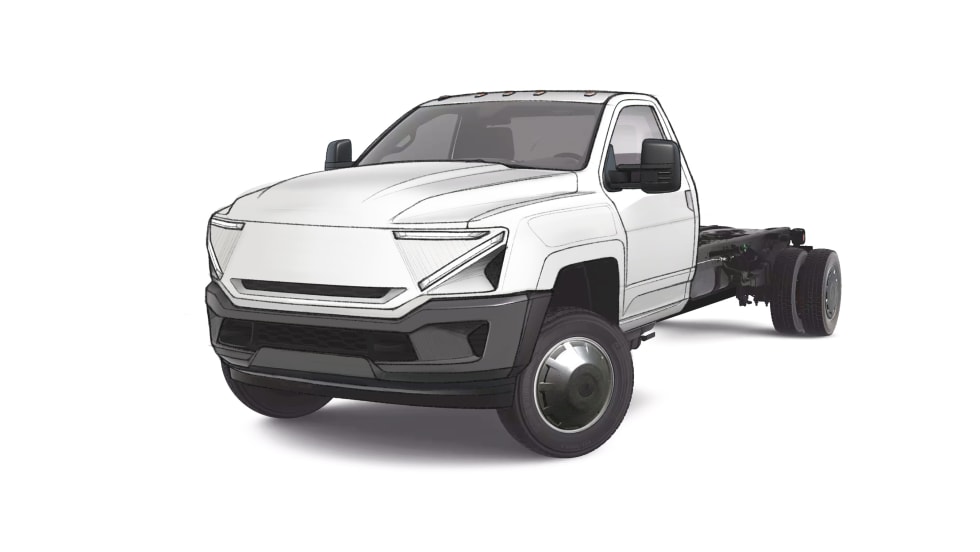
Startup ZMD Motors Developing Electric Conversion for Ram 5500 Work Trucks
Detroit-based company says it has begun early development of a system to convert internal combustion Ram 5500 chassis-cab trucks to electric power.
Read More →
U.S. EV Adoption Is Climbing, but Commercial and Passenger Markets Diverge
New industry group data revealed that light-duty electric vehicle sales are hitting record market share and volumes, while commercial EV volume dipped. What’s driving the fluctuations?
Read More →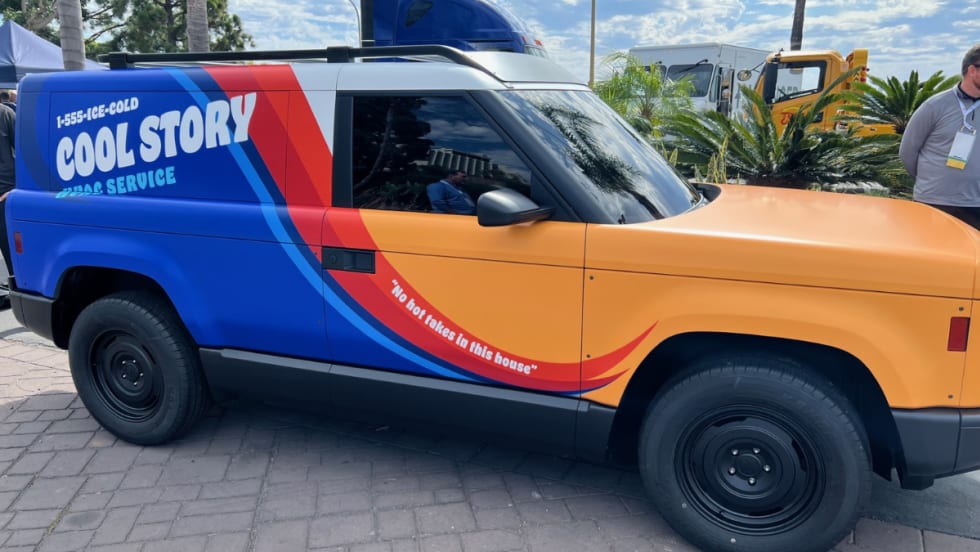
How To Upfit Electric Work Trucks and Vans
The biggest challenge lies in balancing additional equipment and accessories with EV battery capacity and range.
Read More →
How Fleets Can Adjust Approaches To EV Adoption
With the expiration of federal incentives, EV success now hinges less on government policy and more on discounts, battery tech progress, increased range, and broader infrastructure.
Read More →
Despite World Troubles, Forward Thinking Guides Fleets
Fleet operators shared their challenges during an annual conference that embraced the latest advances across all aspects of running private- and public-sector vehicles.
Read More →
GM Energy Details Partnerships and Targets for Public Charging Build-Out
EVgo, Pilot, ChargePoint and IONNA named; goal is 35k GM-invested DC stalls by 2030, with customer-experience upgrades at sites.
Read More →
Q3 Electric Vehicles Sales Hit Record High
EV buyers took advantage of the final federal tax credit days, while average prices edged up for new EVs and continued to decline for used models.
Read More →