




FTC Discounts Claims of Fuel-Boosting Gadgets
NEW YORK --- The price of gasoline has sparked sales of products designed to boost gas mileage, but the federal government warns that these gadgets aren't worth the money.
NEW YORK --- The price of gasoline has sparked sales of products designed to boost gas mileage, but the federal government warns that these gadgets aren't worth the money.
The products range from devices that fit inside an engine's air intake valve to fuel additives, according to the Associated Press. Manufacturers of these products claim they boost mileage by helping gasoline burn more efficiently. But critics of these products claim otherwise.
"The EPA [Environmental Protection Agency] has tested hundreds of these products," Laura DeMartino, a Federal Trade Commission attorney, told AP. "Even for the few that worked, the gas savings was so small it didn't justify the price."
Nonetheless, consumers are snapping up the gadgets.
"Our sales have probably close to doubled," over the past year, said Dan Baxley, founding partner of Automotive Research Laboratory LLC. The company makes the Vortec Cyclone, which the company claims to boost gas mileage by improving an engine's air flow.
The $40 device fits inside a car's air intake hose, where it "creates a swirling mass like a tornado," Baxley told AP. That creates a finer gas-air mix that burns more efficiently, he said.
National Fuelsaver Corp., which makes Platinum Gas Saver, claims it can improve fuel mileage by 22 percent. The product injects a small amount of platinum into a vehicle's air intake system. The platinum molecules boost the amount of fuel burned by the engine, the company claims, and the remainder is expelled as vapor and burned off by the catalytic converter. Platinum Gas Saver costs $150 for a 30,000 mile supply.
Company owner Joel Robinson said he has been contacted by the FTC and some state attorneys general. But he's been able to defend his product thanks to his victory in an early 1980s lawsuit brought by the U.S. Post Office, which said he was trying to obtain money through the mail by making false claims.
Infomercials for gas-saving gadgets have even made their way on late-night TV, taking up slots previously used by fat-burning belly belts and shiny Asian knife sets.
More Fuel
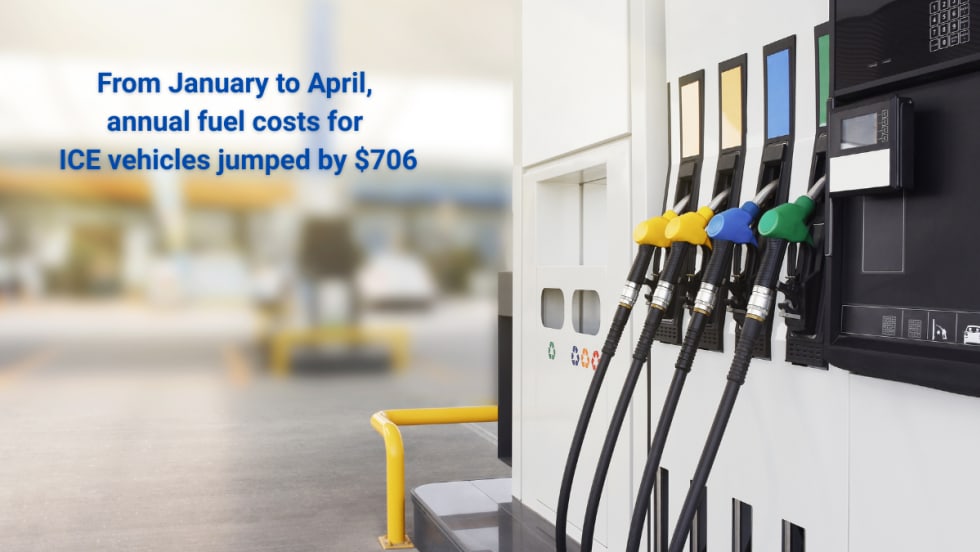
Study: How 2026's Gas Price Hikes Affect Different Vehicle Types
New data from iSeeCars reveals how rising fuel costs have affected different vehicle segments as gasoline prices climbed nearly 46% over the past four months.
Read More →
Are You Tracking Your Fleet's True Total Cost of Ownership?
Bobit Business Media surveyed 190 fleet professionals and found that while most fleets are tracking costs, fragmented systems and data gaps are keeping true TCO visibility out of reach. With rising pressure to control spend in an increasingly volatile environment, the gap between what fleets think they know and what the data actually shows is wider than you might expect. See how your peers are managing costs today and where the industry still has room to improve.
Read More →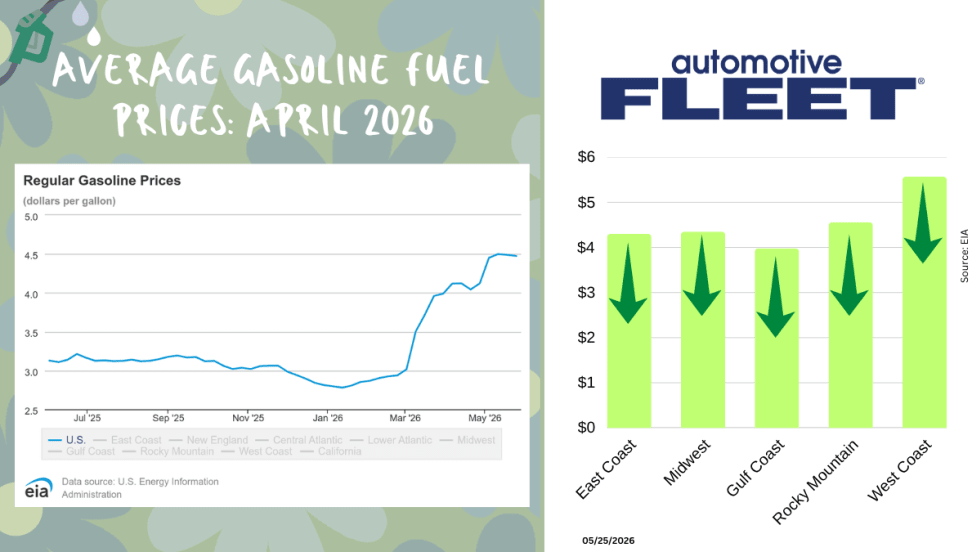
May Fuel Update: All Regions Experience Declines
Gas prices are finally easing in much of the country, but experts warn global tensions could quickly reverse the trend as the national average remains well above last month’s levels.
Read More →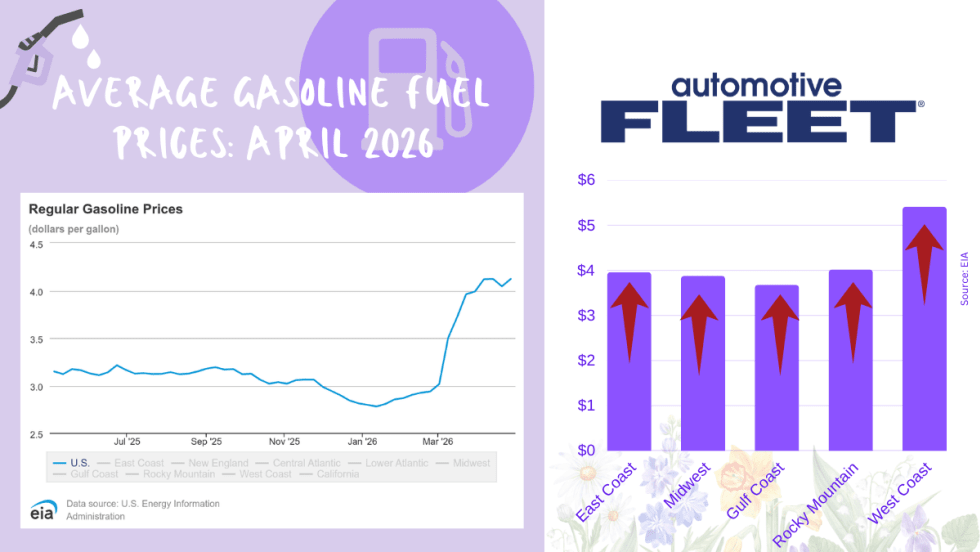
April Fuel Update: Prices Climb Above $4 as Spring Surge Accelerates
National average jumps to $4.04 per gallon, up sharply from last year, with West Coast prices topping $5 and further increases expected amid rising oil tensions.
Read More →
Tips from Fleet Managers on Saving Fuel Costs
Fleet leaders share practical strategies to reduce fuel spend through smarter policy, routing, and driver guidance.
Read More →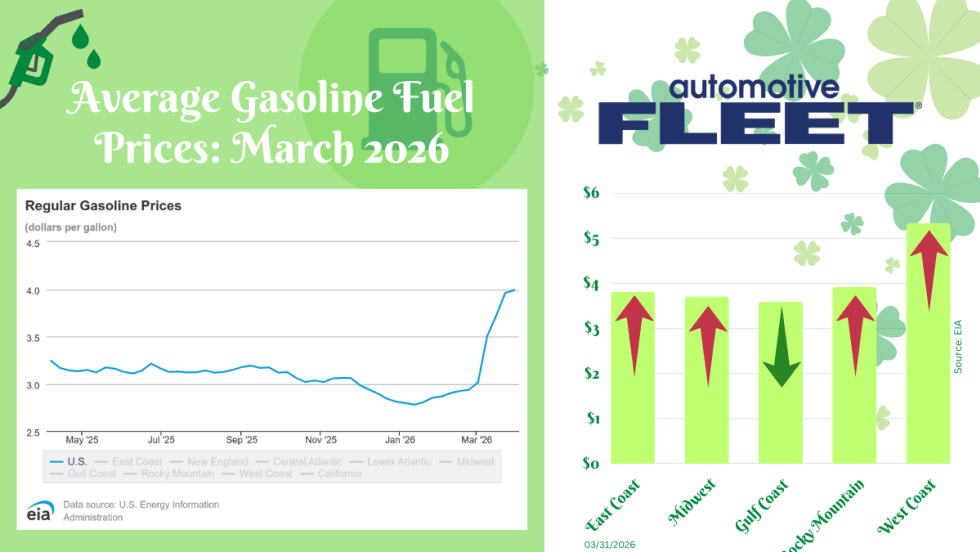
March Fuel Update: Prices Settle With a $4 Average
Fuel prices significantly slowed this week, but a $4 national average is still expected.
Read More →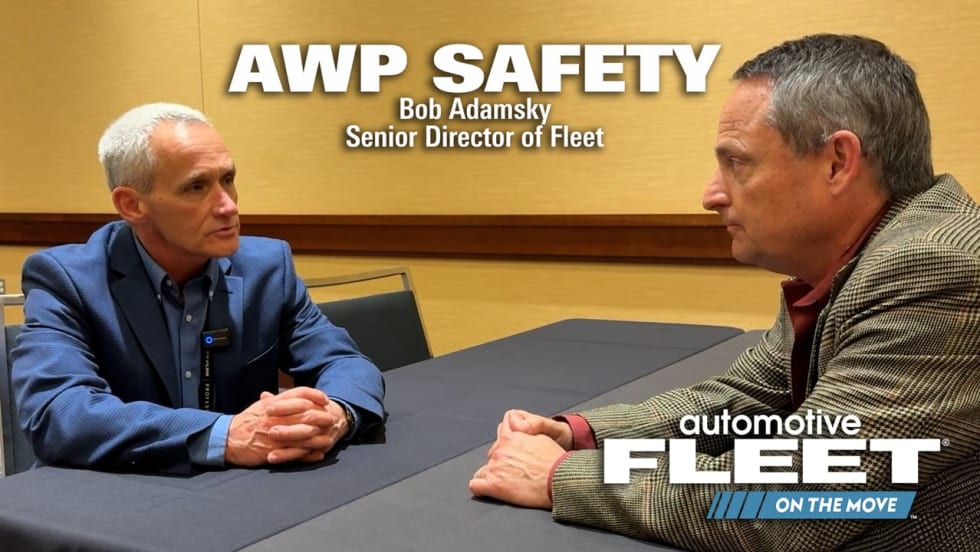
Bob Adamsky on Fuel Volatility: “Don’t Panic — Have a Plan”
With oil prices rising again, AWP Safety’s fleet manager shares how to respond to rising fuel costs and how the right strategy can turn fuel spikes into cost-saving opportunities.
Read More →
Oil Market Turbulence Is Complicating Fleet Cost Planning
Rapid swings in crude oil prices driven by the conflict in the Middle East could create longer-term cost pressures for fleets, affecting fuel prices, supply chains, and vehicle strategy, says NTEA’s Andrew Wrobel.
Read More →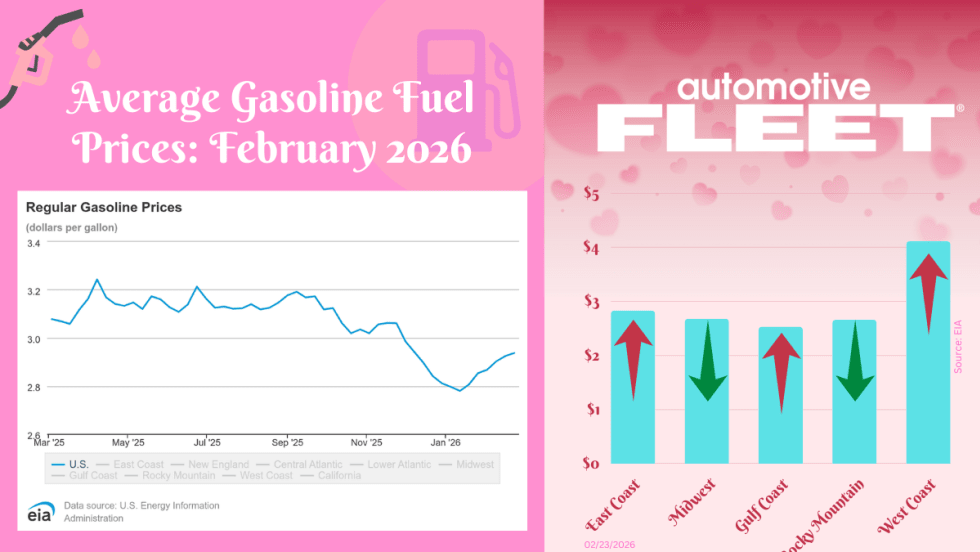
February Fuel Update: Prices Inch Higher for Third Week in a Row
The final February fuel update reveals prices continuing to inch higher for the third week in a row.
Read More →
The 2026 Fuel Economy Guide: Updated Cost and Efficiency Benchmarks for Fleets
Fleet managers can use the DOE’s 2026 Fuel Economy Guide to benchmark MPG across powertrain types using side-by-side vehicle ratings and compare new model-year options.
Read More →