




5 Fleets Successfully Reduce Fuel Expense
Fleets are improving gas mileage by as much as 50 percent, decreasing operation costs by 30 percent, and positively impacting the environment by reducing fuel usage and expense.

Currently, fuel prices have leveled out; however, proactive fleet managers have been and will continue to look for ways to reduce fuel expenses. Several commercial fleets have switched to more fuel-efficient vehicles or right-sized existing units while others have looked to alternative fuels or driver training to keep fuel expenses out of the “red” at budget review.
Fleets Switch to More Fuel-Efficient Vehicles
Frito-Lay North America is adding more than 1,200 fuel-efficient Sprinter vehicles to its nationwide fleet, helping the company improve miles per gallon, continue cutting energy costs, and reduce emissions. The new additions make up 10 percent of the Plano, Texas-based company’s fleet of vehicles that transport snack food products daily across the U.S.
The new Sprinter vehicles improve gas mileage to 17 mpg — more than 50 percent over current route trucks, according to Frito-Lay. The improved mpg and more efficient 3.0L diesel engines translate to a 28-percent reduction of CO2 emissions per vehicle.
“Lowering fuel consumption is one approach to reduce costs and our environmental impact, but in the future, new emerging technologies and advances in hybrids, fuel cells, and hydrogen might move us away from gasoline altogether,” said Mike O’Connell, director, fleet, Frito-Lay North America.
Owens Corning, a Toledo, Ohio-based supplier of building materials systems and glass fiber reinforcements, has begun systematically measuring and reducing fleet greenhouse gas emissions. To cut fuel consumption and operating costs, improve efficiency, and reduce emissions from North American sales fleet vehicles, the company joined the PHH GreenFleet program, developed by PHH Arval and the Environmental Defense Fund.
Through PHH GreenFleet, Owens Corning incorporated more efficient vehicles into its fleet. Early steps included eliminating the company’s least fuel-efficient vehicles, right-sizing trucks and SUVs, and incorporating more front-wheel drive and four-cylinder engine vehicles. Owens Corning expects to increase fleet average mpg by 18 percent, reduce greenhouse emissions by 15 percent, and trim projected operating costs by 8 percent.
Parcel Delivery Companies Deploy Alt-Fuel Vehicles
UPS deployed 300 new CNG-powered delivery trucks to seven cities in Colorado, Georgia, Oklahoma, and California. The vehicles joined more than 800 UPS CNG fleet vehicles already in worldwide use.
The CNG vehicles, part of an order placed May 2008, allow UPS to further reduce its dependence on traditional fossil fuels, such as gasoline and diesel, and lower its carbon footprint. UPS already operates the largest private fleet of alternative-fuel vehicles in its industry — 1,819 total, including these additions.
The CNG truck bodies are identical externally to the signature-brown trucks that comprise the UPS fleet. Marked with CNG decals, the trucks are expected to yield a 20-percent emissions reduction over the cleanest diesel engines available in the market today, according to the company.
In its alternative-fuel fleet, UPS has deployed CNG, liquefied natural gas, propane, electric, and hybrid-electric vehicles in the United States, Canada, Mexico, Germany, France, Brazil, Chile, Korea, and the United Kingdom. The company also announced the purchase of seven hydraulic hybrid delivery vehicles and has researched hydrogen fuel cell vehicles.
By 2020, FedEx Corp. plans to improve the fuel efficiency of its FedEx Express vehicle fleet by 20 percent. The new goal was outlined in the FedEx 2008 Global Citizenship Report. Since 2005, FedEx has improved FedEx Express vehicle fuel efficiency by 13.7 percent, reducing vehicle carbon emissions by almost 1 billion lbs.
“FedEx recognizes one of the most responsible steps we and the industrial sector can take for our businesses, society, and the environment is reduce our dependence on fossil fuels,” said Fred Smith, FedEx Corp. chairman, president, and CEO.
FedEx continues to make significant progress toward achieving its fuel efficiency goals by investing in more fuel-efficient vehicles and aircraft facilities, including:
FedEx E700 hybrid-electric trucks, which improve fuel economy by 42 percent, reduce greenhouse gas emissions by approximately 25 percent, and cut particulate pollution by 96 percent compared to conventional vehicles.
Optimized delivery routes to ensure the most efficient vehicle size is used on each route. As a result of these efforts, more than 25 percent of the FedEx Express fleet has been converted to smaller, more fuel-efficient vehicles, saving more than 45 million gallons of fuel in the past three years.
One Fleet Uses Cow Waste to Fuel Vehicles
At the World Agricultural Fair, Lindsay, Calif.-based representatives of Hilarides Dairy announced the company is converting cow waste into fuel to power trucks and generators while minimizing pollution and diversifying energy sources.
Rob Hilarides, owner, received a $600,000 grant from the California Air Resources Board Alternative Fuel Incentive Program, which subsidizes projects facilitating greater use of non-petroleum fuels.
“It’s energy projects like this that will reduce greenhouse gas emissions and get us off our dependency of foreign oil,” said Air Resources Board Chairman Mary Nichols. “It also addresses sources of long-term air and water pollution problems.”
Hilarides converted two heavy-duty diesel trucks to run on clean-burning bio-methane produced from his cows’ manure. Using an anaerobic-lagoon digester that processes the run-off from nearly 10,000 cows, the project generates 226,000 cubic-feet of biogas per day and enough fuel to run two heavy-duty trucks making daily runs. The dairy’s diesel consumption has been reduced by 650 gallons per day. Hilarides said he intends to convert five pickup trucks to use the biogas.
Click here for Fuel Card Chart.
More Fuel
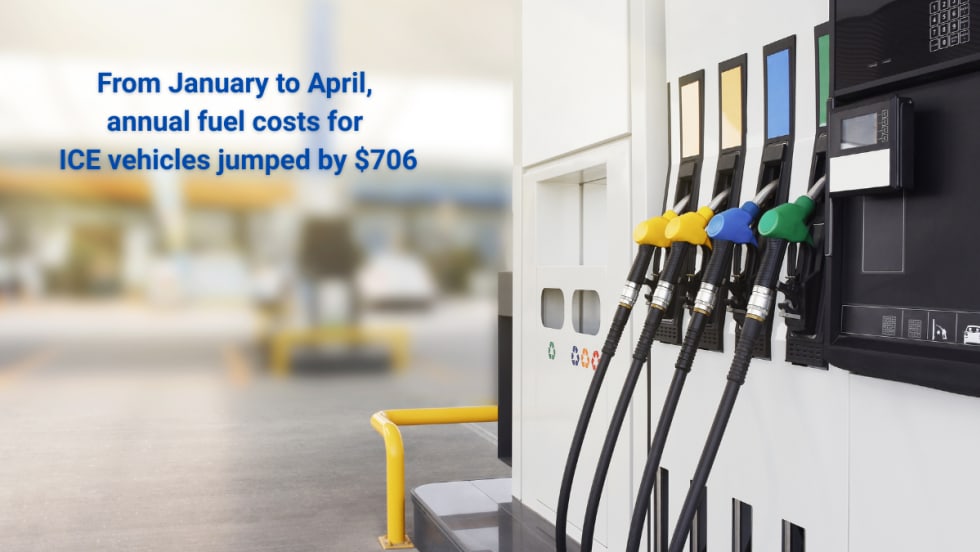
Study: How 2026's Gas Price Hikes Affect Different Vehicle Types
New data from iSeeCars reveals how rising fuel costs have affected different vehicle segments as gasoline prices climbed nearly 46% over the past four months.
Read More →
Are You Tracking Your Fleet's True Total Cost of Ownership?
Bobit Business Media surveyed 190 fleet professionals and found that while most fleets are tracking costs, fragmented systems and data gaps are keeping true TCO visibility out of reach. With rising pressure to control spend in an increasingly volatile environment, the gap between what fleets think they know and what the data actually shows is wider than you might expect. See how your peers are managing costs today and where the industry still has room to improve.
Read More →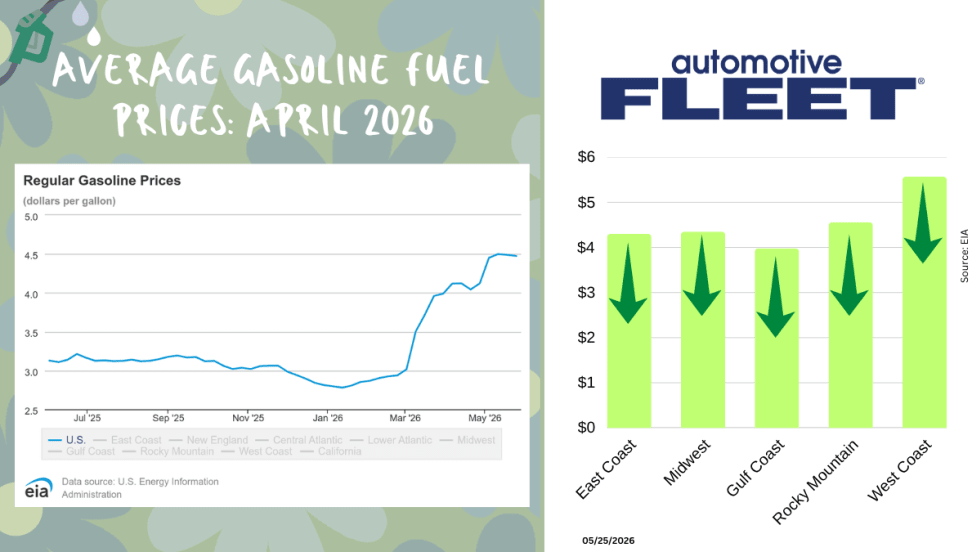
May Fuel Update: All Regions Experience Declines
Gas prices are finally easing in much of the country, but experts warn global tensions could quickly reverse the trend as the national average remains well above last month’s levels.
Read More →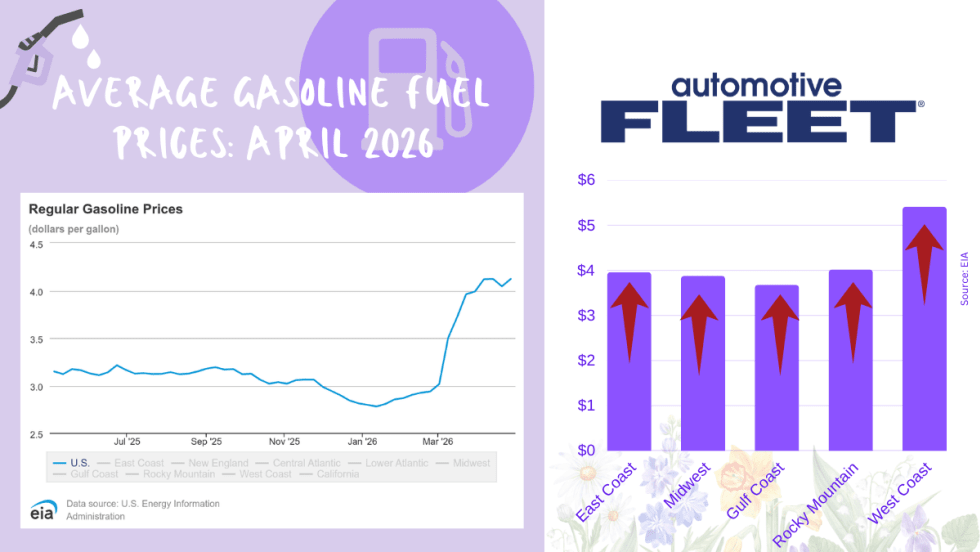
April Fuel Update: Prices Climb Above $4 as Spring Surge Accelerates
National average jumps to $4.04 per gallon, up sharply from last year, with West Coast prices topping $5 and further increases expected amid rising oil tensions.
Read More →
Tips from Fleet Managers on Saving Fuel Costs
Fleet leaders share practical strategies to reduce fuel spend through smarter policy, routing, and driver guidance.
Read More →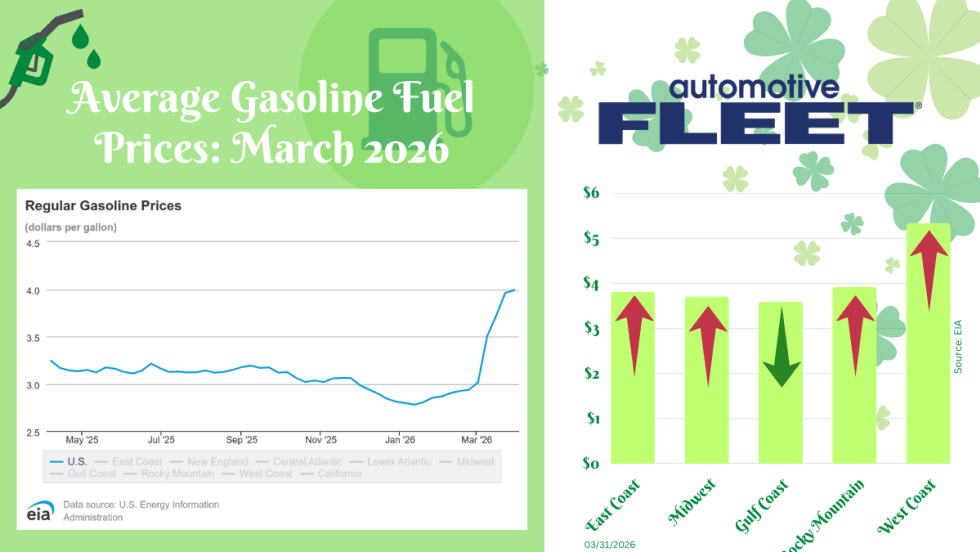
March Fuel Update: Prices Settle With a $4 Average
Fuel prices significantly slowed this week, but a $4 national average is still expected.
Read More →
Bob Adamsky on Fuel Volatility: “Don’t Panic — Have a Plan”
With oil prices rising again, AWP Safety’s fleet manager shares how to respond to rising fuel costs and how the right strategy can turn fuel spikes into cost-saving opportunities.
Read More →
Oil Market Turbulence Is Complicating Fleet Cost Planning
Rapid swings in crude oil prices driven by the conflict in the Middle East could create longer-term cost pressures for fleets, affecting fuel prices, supply chains, and vehicle strategy, says NTEA’s Andrew Wrobel.
Read More →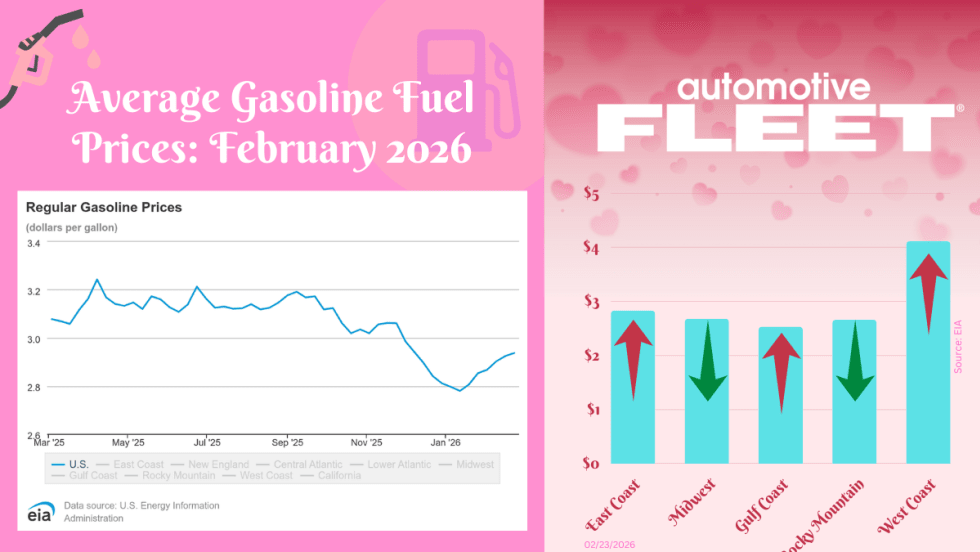
February Fuel Update: Prices Inch Higher for Third Week in a Row
The final February fuel update reveals prices continuing to inch higher for the third week in a row.
Read More →
The 2026 Fuel Economy Guide: Updated Cost and Efficiency Benchmarks for Fleets
Fleet managers can use the DOE’s 2026 Fuel Economy Guide to benchmark MPG across powertrain types using side-by-side vehicle ratings and compare new model-year options.
Read More →