




How Fleets Tackle Rising Fuel Costs
Fleets most successful at managing fuel costs have found that no single tactic is the solution. A multipronged strategy produces the best results.

It hardly needs stating — volatile and record-breaking fuel prices pose fleet managers’ biggest challenge. In fact, the cost of fuel is closing in on depreciation as fleet’s greatest expense. Fleets are tackling the fuel cost situation in several ways. The most successful have found that no single tactic is the solution, but a multipronged strategy produces the best results. Such a strategy can include:
Refined selector choices.
Technologies.
Fuel management programs.
Driver behavior modifications.
Alternative-fueled or hybrid vehicles.
From surveys of fleets and their fuel management practices, Automotive Fleet compiled the following review of proven approaches in reducing — or at least holding the line — on ever-rising fuel prices.
Increasingly, fleets are examining vehicle selectors to more closely match vehicle applications to the most fuel-efficient models available.
A company-wide green initiative led to a planned total replacement of fleet vehicles at Infinity Insurance. Fleet team members Judith Jones, Chuck Kukal, and Beverly Williams conducted a fleet evaluation that pinpointed a selector change from Infinity’s predominately Jeep Liberty fleet to a more environmentally friendly and more fuel-efficient model. The company began replacing the Liberty with the Jeep Compass 2WD compact SUV. The Compass is also a four-cylinder and requires only unleaded fuel, Kukal noted.
“By switching to the Jeep Compass, Infinity has experienced an average increase to 22.9 mpg,” said Kukal. “Even though our fleet has increased in size, we reduced our total greenhouse gas emissions from 11.9 per vehicle with the Liberty to 9.2 with the Compass.”
Henkel Corp. made changes to its 2008 buy to include new models that provide improved fuel economy, according to Vinnie Fugaro, purchasing agent for Henkel Corp. in Rocky Hill, Conn.
Twelve years ago, the Princeton, N.J.-based pharmaceutical company Bristol-Myers Squibb replaced the SUVs in its U.S. fleet with all-wheel-drive Subaru Legacy sedans. To be approved for the vehicle, drivers are told that they must confirm the Subaru fits within their territory requirements for carrying samples.
[PAGEBREAK]
With the convenience of fuel cards and data capture capabilities, fleet management programs help fleet managers track, monitor, and analyze fuel use. Based on that analysis, policies and procedures can be implemented to reduce fuel spend.
USG Corp. Fleet Operations Supervisor Maria Williams used a fleet management program for six years, but couldn’t measure fleet fuel use.
Based in Chicago, USG manufactures wall, ceiling, and floor products. The company’s 1,400-unit U.S. fleet serves the sales force.
“Now we have a national fuel card,” said Williams. “It has allowed us to capture all fleet costs and to know at any given time exactly where those costs are.” Drivers are limited to three transactions per day with a dollar limit.
Williams runs total expense reports that drill data down to individual vehicles by driver and vehicle class, year, make, and model. “Through analyzing this data, we can see where to trim costs,” she said.
Joe Micari, director, fleet operations, American Red Cross/Biomedical Unit, reported that requiring the use of the same fleet fuel card throughout the 35 Red Cross regions provides several benefits.
Where allowed, the cards accommodate deduction of state motor fuel taxes at the pump. When the deduction is not allowed, quarterly reports tracking fuel purchases are used to substantiate federal and state refund claims. The card is also a valuable tool to monitor mileage and maintenance requirements, said Micari. “We have realized administrative savings as a result of paying one monthly invoice for fuel,” he added.
Port City Electric Co., based in Mooresville, N.C., implemented a fuel company card program for the 3-cents-per-gallon rebate offering, according to Tony Lozano, CFO. He estimated the fleet’s total annual savings is $80,000, including rebates, fees, and the elimination of about 30 unnecessary fuel cards.
With a fleet of more than 750 vehicles, Cedar Rapids, Ohio-based Iowa Glass Depot uses a fuel card program to monitor driver behavior, fueling, and purchases, and to ease data management. Cards are assigned to a vehicle, rather than the driver, to prevent drivers from fueling personal vehicles. Each driver is assigned a PIN code to prevent fuel theft by another driver.
Cephalon fleet management, headquartered in Frazer, Penn., utilizes a fuel card program to monitor driver fuel consumption, including station location, fuel prices, grade used, and purchase frequency through monthly reports. E-mail alerts are sent to drivers who misuse the system, reported Dick Prettyman, Cephalon senior fleet administrator.
Another way to control fuel costs is tighter and more frequent exception reporting to ensure best buying practices and eliminate fraud, an approach taken by Sue Miller, senior fleet manager for McDonald’s Corp.
[PAGEBREAK]
Driver behavior remains a critical factor in managing fleet fuel costs. The message that drivers help contribute to the company’s bottom line through responsible driving habits and vehicle care must be communicated frequently and clearly.
Joe LaRosa, Merck director of global business services, has a simple solution. In addition to fleet policy mandates and fuel management programs, “How about driving the posted speed limit?” he asked. “I have sent reminders to all drivers to conserve fuel by being more aware of their stops and starts, as well as by slowing down.”
Vinnie Fugaro, purchasing agent for Henkel of America, agreed. “We need to educate our drivers to keep in mind the costs we face for fuel. While we cannot control the cost element at the pump, we can utilize effective measures to reduce consumption, the majority of which relies on the drivers for sound vehicle operation and efficiency. This includes proper tire pressure, avoiding jackrabbit starts, excessive idling, etc.,” he said.
All Bristol Myers Squibb vehicles include oil life monitoring systems and tire inflation monitors, where available, encouraging drivers to proactively maintain vehicles to achieve optimal fuel efficiency.
To maximize fuel efficiency, Dick Prettyman, Cephalon senior fleet administrator, also provides tire gauges to drivers. Through a Pep Boys program, drivers are taught how to regularly check a vehicle’s tire pressure. The fleet’s cars currently average 24.6 mpg, while SUVs average 19 mpg.
[PAGEBREAK]
From the software incorporated in fuel management programs to the growing use of telematics, technology has provided new tools and services to help fleets control fuel expense more tightly and comprehensively.
GPS telematics is proving a valuable tool in offsetting rising fuel costs for many fleets. One fleet manager’s experience was typical of the benefits GPS technology provides in fleet management. The fleet manager reported, “What has worked well for us is installing GPS units on all our vehicles.” This step allowed the fleet operation to:
Track fuel purchases, monitoring unauthorized fill-ups.
Pinpoint speeding incidents.
Uncover improper vehicle use.
Monitor driver location.
Route and dispatch vehicles more efficiently.
Fleet Director Vicki Dahlquist recorded a 10-percent reduction in fuel costs since implementing a fleet-wide GPS system at ValleyCrest Companies, a nation-wide landscape development and maintenance company headquartered near Los Angeles.
Jerry Lundberg, operations manager, Butterfield Lumber, based in Salt Lake City, oversees a fleet of pickup trucks and 18-wheelers. He uses GPS technology to track vehicles and improve routing efficiencies.
“I use the system to improve efficiency. It delivers a 90-mile radius of real-time vehicle tracking,” Lundberg said. He monitors driver speed and idle time and has reduced idle times from 48 percent to 23 percent.
Joe Spencer, president of the construction company Paul J. Rach, purchased a GPS fleet tracking system to monitor unauthorized evening and weekend use. The company’s management team now easily accesses its mobile resource management (MRM) provider’s mapping and reporting solution from any Internet-enabled device 24 hours a day, 7 days a week.
“After we installed the MRM solution, we curtailed off-hours use by 100 percent. We also began receiving discounts on our insurance premiums and gained vision into speeding episodes. Now if we identify a driver with a habitual speeding pattern, we counsel him accordingly,” said Spencer.
Paul J. Rach saves a minimum of $150 per vehicle each month in reduced overtime and fuel savings for an annual savings of more than $35,000.
The MRM solution also performs everyday functions such as easy vehicle location identification, more efficient routing, and identification of unauthorized vehicle use. Time card accuracy has also increased along with on-time morning arrivals.
“Occurrences of unauthorized weekend driving — with drivers filling up their gas tanks on Friday afternoon and then again on Monday mornings — are few and far between,” noted Kenny Tarbart, Paul J. Rach shop foreman.
Anchor Pest Control in Sonora, Calif., operates a 15-vehicle fleet of work trucks. Owner Don Wolf had installed a GPS system in the company trucks to track location. However, he needed a system to monitor vehicle and driver performance and generate easy-to-read reports. He turned to a small, plug-in telematics unit, simply installed into the diagnostic port under the vehicle dashboard.
Wolf now diagnoses vehicle problems early and arranges routine servicing to avoid extended downtime. From the unit’s mileage and fuel reports, he can determine if employee driving habits were causing increased brake wear and reduced fuel economy.
System reports, formatted in charts and graphs, also help Wolf correlate service records and employee driving habits. “I can determine how long our service technicians are on-site performing their pest control duties,” he said.
[PAGEBREAK]
The steadily increasing variety of alternative-powered vehicles available to fleets holds the promise to fulfill two corporate goals: reduce fuel spend and cut harmful vehicle-produced pollutants — the greenhouse gas emissions widely believed contributors to global warming.
From hybrid powertrain technologies to ethanol fuel blends, compressed natural gas (CNG), and liquefied petroleum gas (LPG), fleets are exploring the options. However, higher acquisition costs and resale value uncertainty for hybrids and lack of alternative-fuel distribution infrastructure present difficulties fleets must consider.
Toshiba America Medical Systems (TAMS), headquartered in Tustin, Calif., expects to replace its entire 170-unit sedan fleet with Toyota Camry Hybrids. “We will have replaced about half by the end of the 2009 model-year and should replace the remainder over the next two years,” said Jeff Berg, manager, fleet and travel administration. The current TAMS fleet consists of 500 leased vehicles, including Dodge Caravans, Chrysler 300s, Toyota Sienna AWDs, and Ford E-350 van conversions.
Berg expects to save between $3,000 and $4,000 in fuel during the lifecycle of each vehicle.
By this summer, Secura Insurance, based in Appleton, Wis., plans to convert its entire 75-unit fleet to hybrid and E-85-capable vehicles.
Secura has obtained a government rebate for vehicle purchases, an amount that will be reduced as the manufacturer reaches rebate volume limits. Company drivers achieve 8 mpg better than their previous vehicles. Average vehicle lifecycle is 60,000 miles. “The vehicles have performed very well, said Scott Huiras, senior VP of claims for Secura. “The wild card is resale value. We haven’t had to sell one yet; the first should start coming in later this year. We estimated the Ford Escape Hybrid would sell for $1,000 more than the standard gasoline model. With gas prices up, I am hopeful that will turn out to be true.”
In addition, growing availability of ethanol fueling stations in the upper Midwest has prompted Secura’s interest in E-85 vehicles.
Bausch & Lomb, headquartered in Rochester, N.Y., runs a 400-vehicle fleet. In early 2007, the company began deploying in its fleet Chevrolet Impala, Uplander, and Express van flex-fuel vehicles, which run on E-85. The Saturn VUE Hybrid was also added to the fleet selector.
According to Mark Dennis, manager, Bausch & Lomb fleet operations, future fleet strategy will consider deploying smaller, four-cylinder models and additional hybrids, such as the new Chevrolet Malibu and Saturn Green Aura.
The PepsiCo fleet operates more than 20,000 units, which include company cars, service vehicles, and light-, medium-, and heavy-duty delivery trucks. Nearly 650 are Toyota Prius and Ford Escape Hybrids, a total that will likely increase to more than 1,500 by 2010, according to Pete Silva, director-fleet procurement.
“Our Prius vehicles average around 45 mpg, a significant improvement over previous mid-size vehicles,” Silva says.
Dick Prettyman, senior administrator for Cephalon’s 775-unit fleet, seeks to balance the environmental benefits of hybrids with the cost and necessity of retaining a sales force. “Cost sides with the right thing to do now, but losing and retraining a sales force is the overwhelming concern of sales operations,” he said.
The company has incorporated an array of hybrids in its fleet selector, including the Toyota Prius, Camry, and Highlander, the Ford Escape Hybrid, and the Mercury Mariner Hybrid. “We made it a driver choice rather than an edict,” Prettyman added.
“For the 2009 model-year, I am proposing that we reach forward into the 2009-2010 calendar year to pull vehicles into the fall cycle so we avoid the build-out problems that occurred with our initial hybrid vehicle orders.”
Prettyman figures that at current fuel prices, the company can recover the extra cost of the hybrids within three years. “I think the market is moving to greater acceptance of used hybrid vehicles, particularly with younger drivers who can’t afford a new hybrid,” he said.
Comcast Communications, headquartered in Philadelphia, first tested the Ford Escape Hybrid in its 37,585-unit fleet in 2005, according to Bud Reuter, fleet manager.
“We chose the Ford Escape Hybrid because it meets the needs of our technicians,” said Reuter. “They have been very well received by our drivers and all have seen a significant increase in fuel mileage, resulting in fewer dollars spent.”
Since 2001, Exelon has been building its light-duty hybrid fleet, exclusively Ford Escape Hybrids. Headquartered in Oakbrook Terrace, Ill., and primarily serving PECO Energy in Pennsylvania and ComEd in Illinois, the 5,100-unit Exelon fleet comprises heavy- and medium-duty vehicles, light-duty trucks, passenger vehicles, trailers, and other equipment.
“The Escape Hybrids are an ideal solution for our front-line supervisors since the Escapes allow them to carry equipment they regularly transport while maintaining fuel efficiency,” said Dan Gabel, fleet manager. The fleet also includes two medium-duty hybrid bucket trucks, and CNG and LPG vehicles.
Headquartered in Charlotte, N.C., Coca Cola Bottling Company Consolidated (CCBCC) is the second-largest bottling company in the nation, operating a fleet of 2,500 light-duty vehicles that travel approximately 40 million miles annually.
The company fleet includes 550 Prius models. The switch to a hybrid vehicle produced a definitive fuel cost savings. Bo Calloway, director of fleet assets, determined a fuel cost savings of about $6,000 over 100,000 miles for the Toyota Prius. (The savings figures, calculated at a gas pump cost of $2 per gallon now look even better at the current $3-plus price per gallon.)
At a projected 100,000-mile cycle, the running cost-per-mile total is expected to bring another $2,000 per-unit savings, bringing CCBCC’s bottom-line savings to $8,000 per unit.
More Fuel
Study: How 2026's Gas Price Hikes Affect Different Vehicle Types
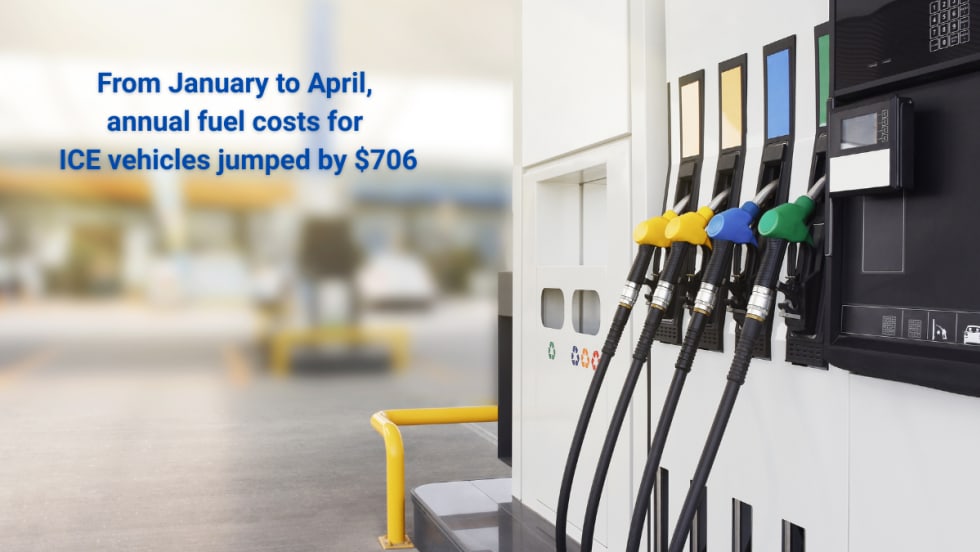
New data from iSeeCars reveals how rising fuel costs have affected different vehicle segments as gasoline prices climbed nearly 46% over the past four months.
Read More →
Are You Tracking Your Fleet's True Total Cost of Ownership?
Bobit Business Media surveyed 190 fleet professionals and found that while most fleets are tracking costs, fragmented systems and data gaps are keeping true TCO visibility out of reach. With rising pressure to control spend in an increasingly volatile environment, the gap between what fleets think they know and what the data actually shows is wider than you might expect. See how your peers are managing costs today and where the industry still has room to improve.
Read More →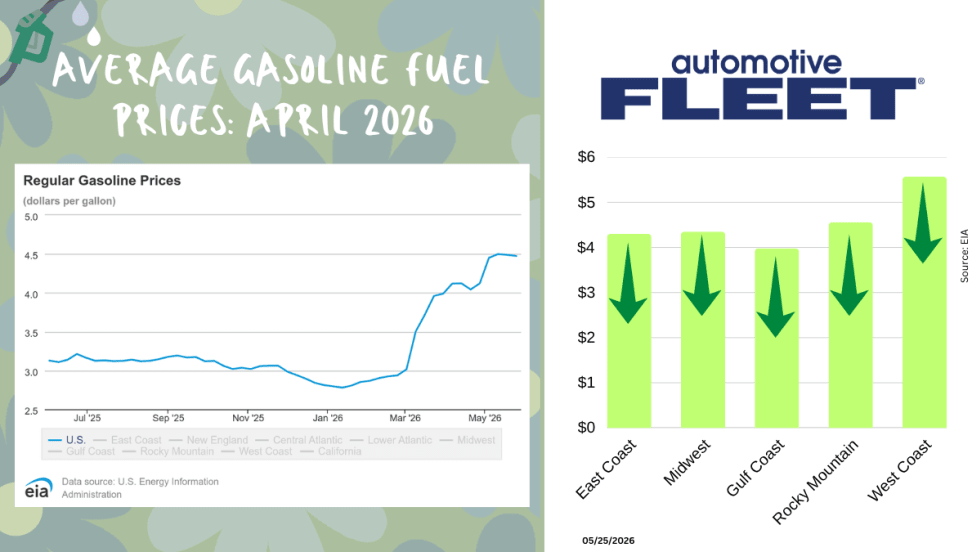
May Fuel Update: All Regions Experience Declines
Gas prices are finally easing in much of the country, but experts warn global tensions could quickly reverse the trend as the national average remains well above last month’s levels.
Read More →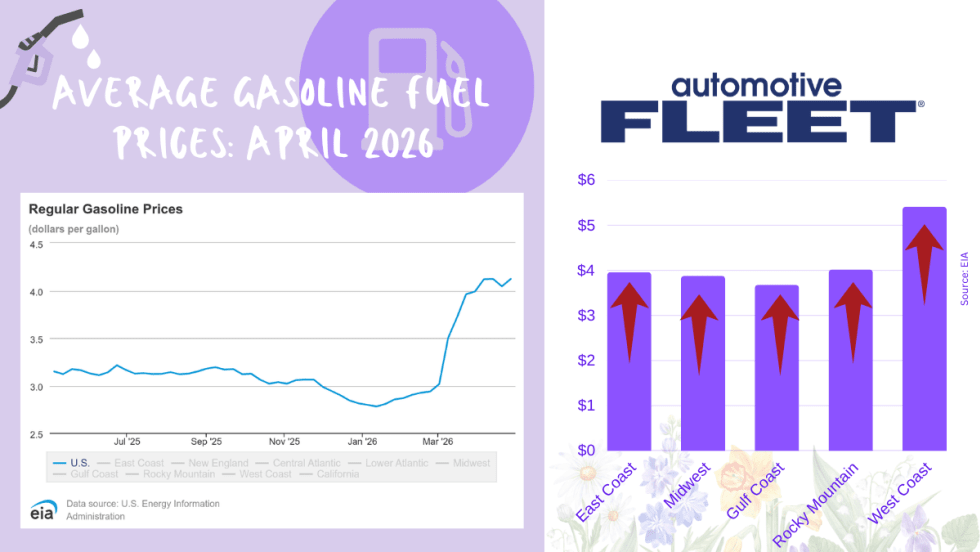
April Fuel Update: Prices Climb Above $4 as Spring Surge Accelerates
National average jumps to $4.04 per gallon, up sharply from last year, with West Coast prices topping $5 and further increases expected amid rising oil tensions.
Read More →
Tips from Fleet Managers on Saving Fuel Costs
Fleet leaders share practical strategies to reduce fuel spend through smarter policy, routing, and driver guidance.
Read More →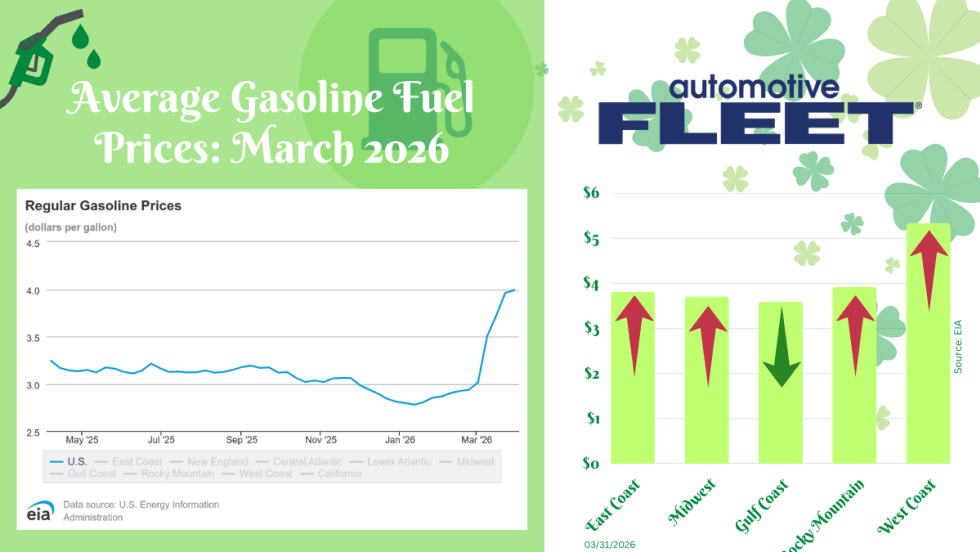
March Fuel Update: Prices Settle With a $4 Average
Fuel prices significantly slowed this week, but a $4 national average is still expected.
Read More →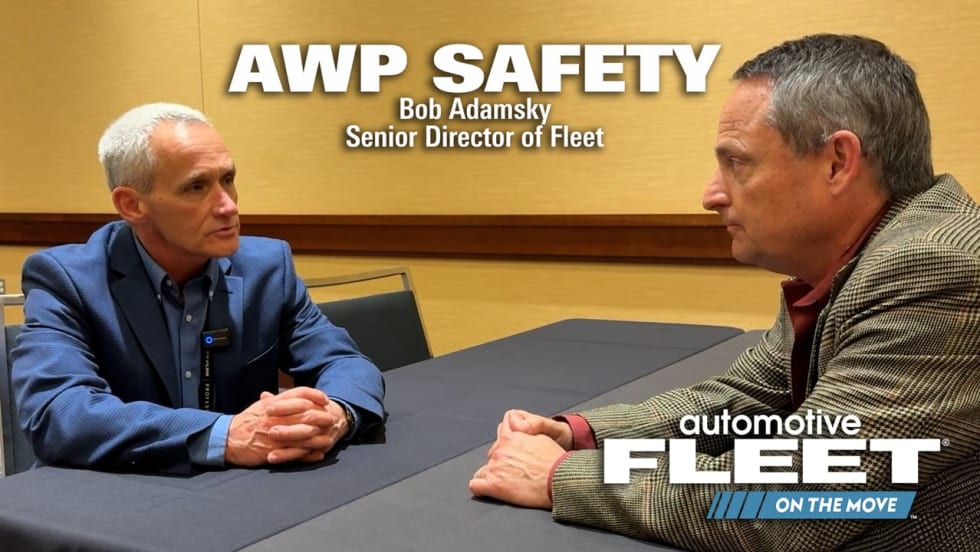
Bob Adamsky on Fuel Volatility: “Don’t Panic — Have a Plan”
With oil prices rising again, AWP Safety’s fleet manager shares how to respond to rising fuel costs and how the right strategy can turn fuel spikes into cost-saving opportunities.
Read More →
Oil Market Turbulence Is Complicating Fleet Cost Planning
Rapid swings in crude oil prices driven by the conflict in the Middle East could create longer-term cost pressures for fleets, affecting fuel prices, supply chains, and vehicle strategy, says NTEA’s Andrew Wrobel.
Read More →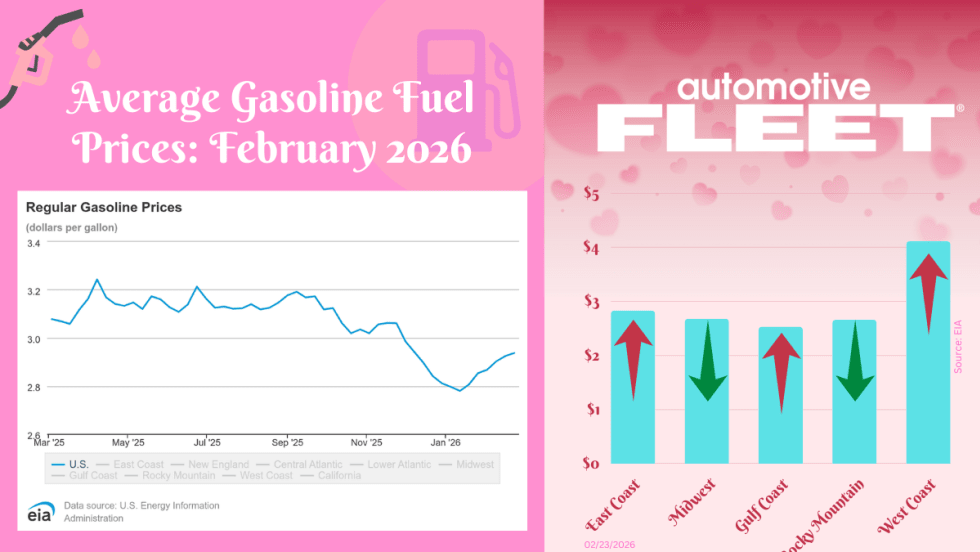
February Fuel Update: Prices Inch Higher for Third Week in a Row
The final February fuel update reveals prices continuing to inch higher for the third week in a row.
Read More →
The 2026 Fuel Economy Guide: Updated Cost and Efficiency Benchmarks for Fleets
Fleet managers can use the DOE’s 2026 Fuel Economy Guide to benchmark MPG across powertrain types using side-by-side vehicle ratings and compare new model-year options.
Read More →