




Chrysler Focused on the 'Long Term Plan'
Chrysler President Jim Press discusses streamlining the company’s product lineup, improving vehicle quality, developing new fuel-efficiency and safety technologies, forging strategic alliances, and serving the fleet industry.

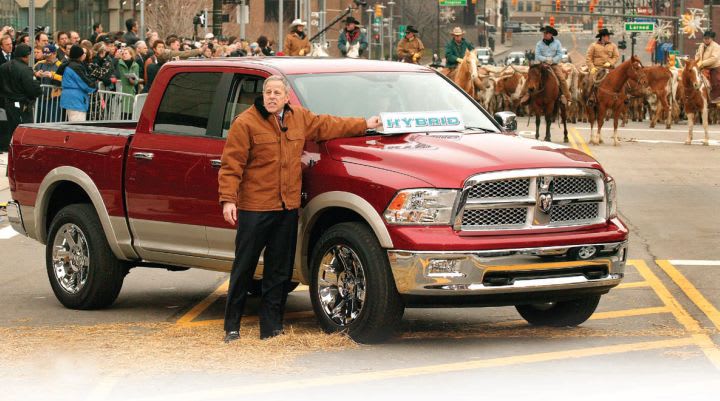
With a herd of 120 longhorn cattle forming a backdrop, Chrysler Vice Chairman and President Jim Press unveiled the all-new 2009 Dodge Ram at the North American International Auto Show last January. Press also announced a Dodge Ram HEMI Hybrid will be introduced in 2010.
On the eve of the 2009 model-year, Automotive Fleet sat down with Jim Press, Chrysler’s vice chairman and president, for a discussion of the automaker’s mission, current initiatives, and fleet-specific efforts. Press is responsible for North American and international sales, global marketing, product strategy, and service and parts for Chrysler LLC.
AF: What is the progress of Project Genesis, your initiative to eliminate redundancies in the product lineup and consolidation of the Chrysler, Jeep, and Dodge dealer franchise?
PRESS: First, it’s important to restate the objective of Project Genesis. It is a road map to building a world-class, global automotive company, and it encompasses every aspect of our business.
The customer is at the core of our strategy, and our entire product lineup is being reviewed to ensure we’re targeting new vehicles to distinct customer segments and that we are aligned with a tri-branded dealer strategy. We haven’t made any final decisions yet, but it’s safe to say we’ll be adjusting our lineup and adding some products in the segments in which we are not competing.
As Project Genesis evolves, we’ll work with our dealer partners to right-size our dealer network, with a focus on having world-class, tri-branded dealerships in every market. In the end, we will have a more viable dealer body focused on the customer. When that happens, the customer, dealer, and company wins. That establishes commitment, drives profitability, and builds franchise value.
AF: Will eliminating redundancies in vehicle lineup help fleets increase resale values? What are other Chrysler strategies to increase vehicle residual values?
PRESS: We’ve adjusted our manufacturing to better meet the reality of today’s market, which helps our dealers and our customers’ residual values. And we are working on our product lineup to make our vehicles more relevant to our customers and to improve the overall perception of quality, both actions that positively impact residual values.
AF: How will Chrysler balance its vehicle portfolio to include more fuel-efficient models and increase overall mpg across its entire fleet of vehicles?
PRESS: Chrysler’s approach is to take advantage of a variety of technologies and products geared towards individual customer needs.
Currently, our lineup features six product offerings that achieve 28 mpg or better: the Chrysler Sebring sedan and convertible, Dodge Avenger, Jeep Compass, Jeep Patriot, and Dodge Caliber. We also have eight models across the three brands that have earned the Environmental Protection Agency’s SmartWay certification, which means they’ve been tested and scored as very good environmental performers.
We are enhancing our lineup’s fuel efficiency by forging strategic partnerships, such as with Nissan to produce a small car for sale in North America in 2010. That entry will bring us into an important new segment and also help us meet increased demand for better fuel economy and reduced CO2 emissions.
This year, we will launch our first hybrid-electric vehicles — the 2009 Chrysler Aspen and Dodge Durango. We’ll follow up in 2010 with the Dodge Ram 1500 Hybrid. We’ve produced nearly 2 million flex-fuel vehicles (FFVs) in the past decade; that’s 10 percent of our vehicle production during that time, and that beats any other manufacturer’s ratio. This year we’re offering 10 FFVs.
We’ve dedicated a new division called ENVI to focus on energy-efficient vehicle technologies. It will solidify the work we’re already doing on several fronts, including utilizing hybrid technology, producing flex-fuel and electric vehicles, and developing industry-leading clean-diesel engines, as well as exploring fuel cells.
AF: What initiatives does Chrysler have in place to further improve vehicle quality?
PRESS: During the “New Chrysler’s” first 60 days last year, our team approved 260 line-item product enhancements, representing an investment of a half-billion dollars in better interiors, better materials, and less noise and vibration — improvements that really matter to customers. And that was just the beginning. Since then, we’ve approved more than 400 changes — and counting.
We’ve created a new executive position to advocate for corporate quality. Doug Betts was named vice president and chief customer officer last fall, and he’s orchestrating a company-wide effort across all departments to ensure a comprehensive quality organization and improved customer satisfaction.
Simply put, we believe in customers first and quality, period.
AF: Chrysler is introducing new technologies on some 2009 models instead of waiting for the traditional mid-cycle refresh. How will the fleet business benefit from this strategy?
PRESS: Our customers deserve the very best technology we have to offer, so we are pleased to have a number of unique new technologies coming to market this year. Examples include in-vehicle wireless Internet connectivity; blind-spot monitoring in our minivans; and rear cross path, a Chrysler-exclusive system that warns drivers of approaching traffic during back-up maneuvers.
Often, fleet customers are “early adopters” of many new vehicle technologies, particularly those that are safety related. By getting these features into vehicles sooner, our fleet customers and their drivers will get the day-to-day benefit of some of the industry’s most advanced technology.
AF: Will Chrysler remain “bullish” about the viability of diesel technology in future Chrysler products.
PRESS: Diesel is a very important part of the global drive to increase fuel efficiency. Our customers, especially of heavy-duty pickup trucks, know that clean diesels can significantly reduce emissions while increasing fuel economy by up to 30 percent. That can save a fleet operator a lot of money. For example, the new 6.7L Cummins turbodiesel gets great mileage for a truck and will meet 50-state emissions standards for 2010. Certainly going forward, we believe diesel powertrains will be an important part of the automotive landscape.
AF: As Chrysler seeks to redefine itself, how would you characterize the Chrysler brand identity?
PRESS: I can tell you it’s the mystique and appeal of Chrysler that brought me to the company with the goal of restoring Chrysler’s stature as an American icon. We have great DNA here, rooted in passion, speed, creativity, and pride. We are working to build on that by redefining the way we do business with a focus on our customers and our dealers. From a product brand standpoint, each Chrysler, Dodge, and Jeep brand resonates with different customers and means something completely unique to their owners. All of our vehicles must have a clear customer mission in the way that the Chrysler Town & Country or Jeep Wrangler does.
AF: What value will Chrysler find in the strategic alliances it is pursuing with partner manufacturers?
PRESS: We’ve pursued strategic alliances that allow us to strengthen our product pipeline in specific markets, capitalize on the value of our stellar products, and expand our reach internationally. Our most recent agreement with Nissan is a perfect example of leveraging strengths and synergies between two competitive companies. Nissan will manufacture an all-new, fuel-efficient small car (B-segment) based on a unique Chrysler concept and design. We plan to sell it in North America, Europe, and other global markets in 2010. Chrysler, in turn, will manufacture a full-size pickup for Nissan.
We’re also working with Nissan to supply a new car based on the Nissan Versa sedan for limited distribution in South America in 2009.
Our collaboration with Chery is another example of forging the key tactical partnerships critical to Chrysler’s long-term success. Chery will eventually produce vehicles for our Latin American and other international markets. And you can rest assured that while we’re eager to start exporting small cars from China, we will not bring a product to market prematurely. A vehicle won’t carry a Chrysler nameplate anywhere on the globe unless it unequivocally meets the standards and requirements of its intended market.
AF: What is Cerberus Capital Management’s long-term commitment to Chrysler LLC?
PRESS: Cerberus is a great owner. They support Chrysler’s leadership team and are fully committed to helping us revitalize our products, along with our relationships with customers, employees, dealers, suppliers, and unions. We all know we’re operating under extremely challenging economic circumstances, and I think Chrysler has a distinct advantage by going private. We’re focused on our long-term plan for recovery, not quarterly results. With this focus, we can fully commit to building inspirational vehicles with true competitive advantages that meet the needs of our customers.
More Operations
How to Manage Conflict for Your Fleet Operations
Conflict management is becoming a core leadership skill. Here are five strategies fleet leaders should know.
Read More →
Turning Connected Vehicle Data Into Decisions That Matter
Fleet leaders have more data than ever, but turning that data into clear, actionable decisions remains a challenge. This white paper shows how leading organizations are using connected vehicle data to improve safety, reduce costs, and optimize fleet performance. Learn how to turn insight into action across your fleet.
Read More →
Cameras, Safety and Insurance: From Reactive Claims to Real-time Prevention
Commercial auto remains one of the most challenging and costly lines of coverage for fleet operators and insurers alike. Learn more about how to effectively address these issues from Onur Aksan, Enterprise Business Development Executive, Geotab.
Read More →

Are You Tracking Your Fleet's True Total Cost of Ownership?
Bobit Business Media surveyed 190 fleet professionals and found that while most fleets are tracking costs, fragmented systems and data gaps are keeping true TCO visibility out of reach. With rising pressure to control spend in an increasingly volatile environment, the gap between what fleets think they know and what the data actually shows is wider than you might expect. See how your peers are managing costs today and where the industry still has room to improve.
Read More →
Turn Fleet Data Into Smarter Decisions
Fleet leaders have access to more operational data than ever, but disconnected systems and unclear metrics often slow decision-making instead of improving it. This article outlines five practical steps fleets can take to transform fragmented data into actionable insights that improve planning, safety, utilization, and long-term performance.
Read More →
Hybrids: Electrification Without the Challenges
For fleet managers, fuel is one of the biggest line items in the budget — and it's one hybrids can shrink without changing how your people work. Download the eBook to see the numbers, understand the technology, and get a step-by-step guide to making the switch.
Read More →
How NOV Uses Telematics to Improve Fleet Safety Across 160 Locations
James Victory of NOV discusses how the company manages fleet safety, maintenance, and telematics across more than 150 locations supporting oilfield operations throughout the U.S.
Read More →
Fleet Meets: Steven Santostasi
This edition of the Fleet Meets series features Steven Santostasi, the current TSP channel manager for Ford Pro.
Read More →
Why Fleet Managers Are Replacing Departmental Vehicles with Shared Motor Pools
Departmentally assigned vehicles often create hidden costs through underutilization, poor visibility, and increased administrative burden. This white paper explores how shared motor pool strategies help fleets reduce costs, improve accountability, and optimize vehicle utilization.
Read More →
Soap Box Derby Challenge: Assembling the Crew
Meet Gabriel, Matthew, and Angel — the team helping bring this soap box derby build to life.
Read More →