




Toyota Debuts All-New 2009 Corolla
Featuring 12.3 cubic feet of cargo space, a plethora of standard features, and an environmentally friendly design, the 2009 Toyota Corolla is all-new from the inside out.

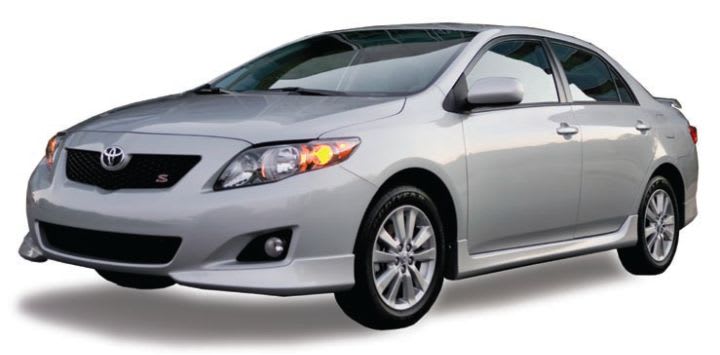
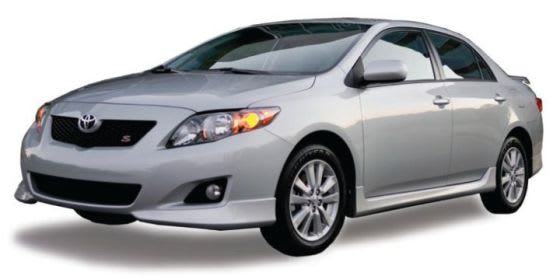
2009 Toyota Corolla
The all-new 2009 Toyota Corolla is now in its 10th generation. Launched originally in 1966, Corolla first arrived in the U.S. in 1968.
For nearly four decades, more than 30 million Corollas have been sold worldwide, making it one of the best-selling cars of all time.
Available in five grades — standard, LE, XLE, S, and XRS — the Corolla fits the needs of many automotive fleets.
Developed by Toyota Design in collaboration with styling studios in Turin, Italy, the 2009 Corolla features a wide, low profile for a lower, sportier shape. The angle of the window glass was increased, and the vehicle’s aerodynamics improved.
Design goals for the 2009 Corolla included creation of additional interior space, increased rigidity for reduced vibration and noise, and enhanced passenger safety.
The hood of the Corolla utilizes an interlayer anti-chip coating to reduce the effects of stone chips impacting the Corolla’s exterior paint.
Driver comfort was kept in mind as engineers repositioned the steering column and improved tilt and telescope capability to ensure all drivers find a comfortable driving position. The instrument panel was lowered as much as possible to ensure forward visibility as well.
Multiple easy-to-use storage areas are available and easy to access, with a total 12.3 cubic feet of available cargo space.
The all-new Corolla is equipped with several standard performance and safety features, including a heavy-duty rear window defogger, A/C, driver and passenger front airbags, front seat-mounted side airbags, side curtain airbags, intermittent windshield wipers, daytime running lights, two 12-volt power outlets, and 60/40 split folding rear seats.
Also standard are an anti-lock brake system, electronic brake-force distribution, brake assist, and tire pressure monitoring system. Vehicle stability control (VSC) and traction control (TRAC) are standard on the XRS grade. A new VSC off switch allows the driver to deactivate VSC and TRAC for complete control of vehicle performance.
A newly developed front suspension works to eliminate noise, vibration, and harshness (NVH) performance while achieving handling stability and ride comfort. Torsion-beam rear-suspension was also newly developed for the 2009 Corolla.
A first for Toyota, the 2009 Corolla comes equipped with a 2ZR-FE 1.8L DOHC 16-valve dual independent VVT-I, four-cylinder engine. Output at 132 hp, and torque at 128 lb.-ft., are both improved over previous models, and EPA-estimated mpg is 27 city, 35 highway. The vehicle also meets federal Tier 2 Bin 5 emissions standards.
The 2009 Corolla includes environmentally-friendly features in engine production such as hexavalent chromium-free plating, lead-free material for bearing and steel, element exchange-type oil, and long-lasting iridium spark plugs.
More Operations

How to Manage Conflict for Your Fleet Operations
Conflict management is becoming a core leadership skill. Here are five strategies fleet leaders should know.
Read More →
Turning Connected Vehicle Data Into Decisions That Matter
Fleet leaders have more data than ever, but turning that data into clear, actionable decisions remains a challenge. This white paper shows how leading organizations are using connected vehicle data to improve safety, reduce costs, and optimize fleet performance. Learn how to turn insight into action across your fleet.
Read More →
Cameras, Safety and Insurance: From Reactive Claims to Real-time Prevention
Commercial auto remains one of the most challenging and costly lines of coverage for fleet operators and insurers alike. Learn more about how to effectively address these issues from Onur Aksan, Enterprise Business Development Executive, Geotab.
Read More →

Are You Tracking Your Fleet's True Total Cost of Ownership?
Bobit Business Media surveyed 190 fleet professionals and found that while most fleets are tracking costs, fragmented systems and data gaps are keeping true TCO visibility out of reach. With rising pressure to control spend in an increasingly volatile environment, the gap between what fleets think they know and what the data actually shows is wider than you might expect. See how your peers are managing costs today and where the industry still has room to improve.
Read More →
Turn Fleet Data Into Smarter Decisions
Fleet leaders have access to more operational data than ever, but disconnected systems and unclear metrics often slow decision-making instead of improving it. This article outlines five practical steps fleets can take to transform fragmented data into actionable insights that improve planning, safety, utilization, and long-term performance.
Read More →
Hybrids: Electrification Without the Challenges
For fleet managers, fuel is one of the biggest line items in the budget — and it's one hybrids can shrink without changing how your people work. Download the eBook to see the numbers, understand the technology, and get a step-by-step guide to making the switch.
Read More →
How NOV Uses Telematics to Improve Fleet Safety Across 160 Locations
James Victory of NOV discusses how the company manages fleet safety, maintenance, and telematics across more than 150 locations supporting oilfield operations throughout the U.S.
Read More →
Fleet Meets: Steven Santostasi
This edition of the Fleet Meets series features Steven Santostasi, the current TSP channel manager for Ford Pro.
Read More →
Why Fleet Managers Are Replacing Departmental Vehicles with Shared Motor Pools
Departmentally assigned vehicles often create hidden costs through underutilization, poor visibility, and increased administrative burden. This white paper explores how shared motor pool strategies help fleets reduce costs, improve accountability, and optimize vehicle utilization.
Read More →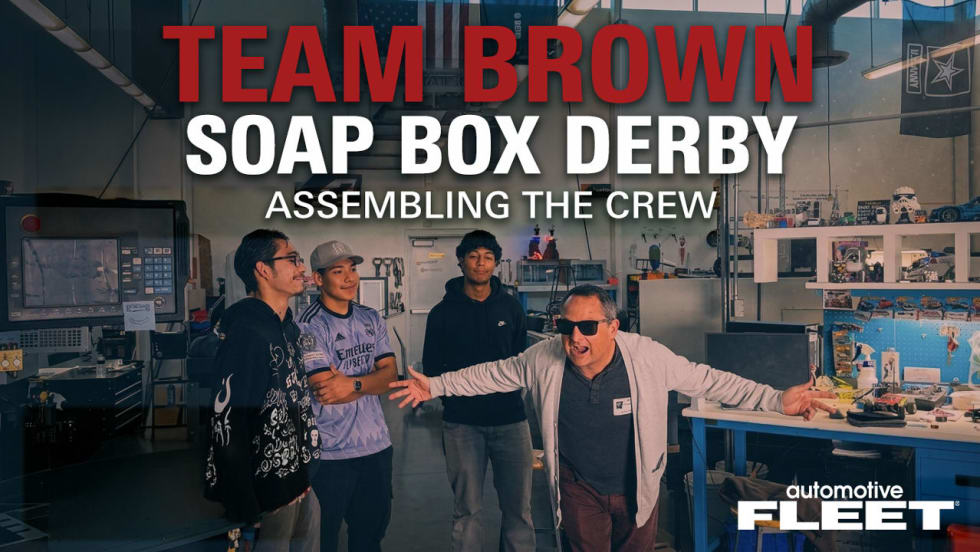
Soap Box Derby Challenge: Assembling the Crew
Meet Gabriel, Matthew, and Angel — the team helping bring this soap box derby build to life.
Read More →